Unity Slot Game Reward System in C# | Complete Guide
Imagine this: a new player opens your slot game and spins the reels for the first time—they don’t just see spinning icons; they feel anticipation. Then they hit a bonus symbol... and they earn virtual coins, free spins, or tokens. That first reward moment sparks delight and keeps them coming back.
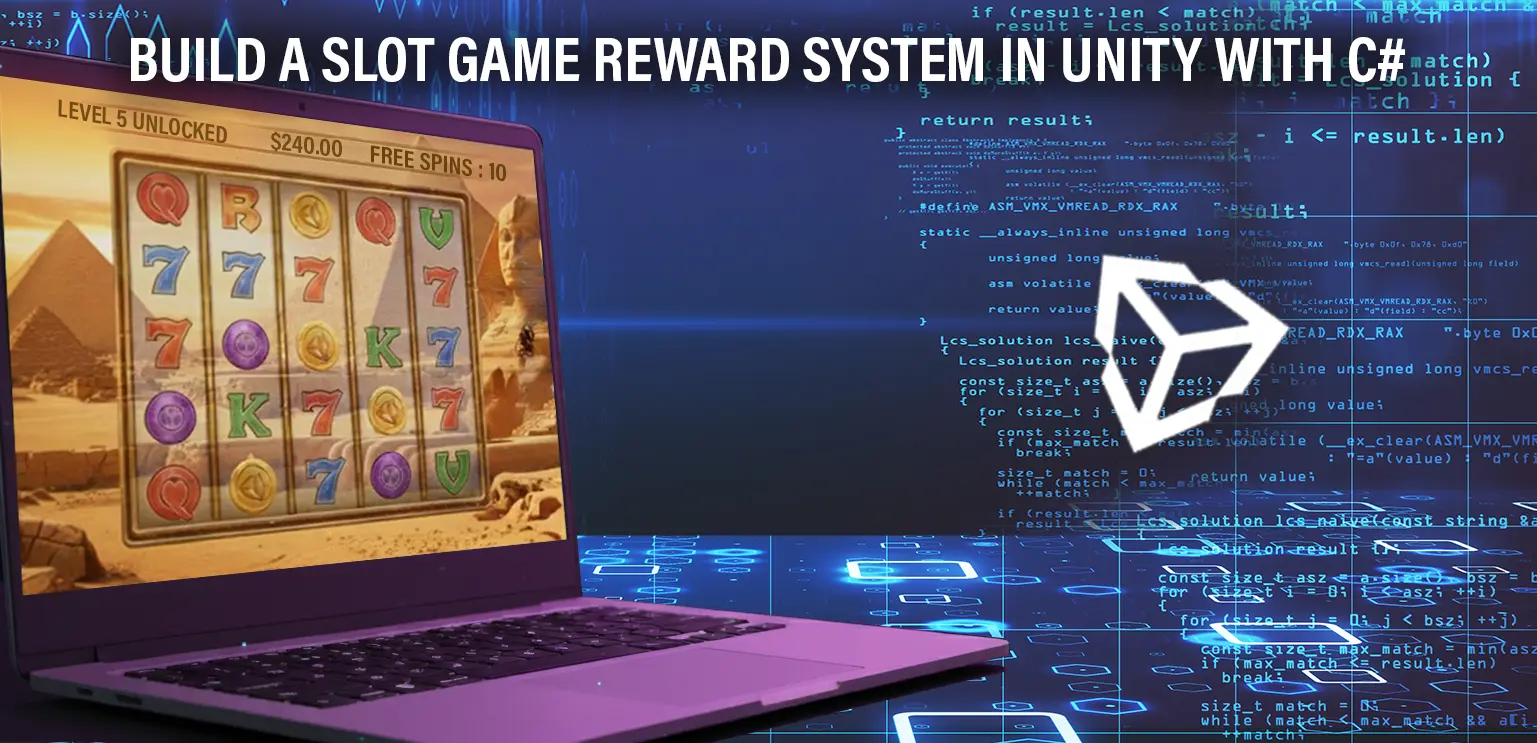
Working with game studios on slot projects at Gamix Labs, we've seen how a well-designed reward system can transform a basic spin into a memorable moment. In this guide, we’ll walk through how you can use Unity C# to design reward mechanics that truly resonate with players—and keep them coming back.
Why a Reward System Matters
A robust reward system in slot games isn’t just a nice add-on—it’s central to player retention and monetization:
- Builds positive reinforcement — players spin again for more.
- Bonus rounds, multipliers, streak mechanics add anticipation and excitement.
- Daily bonuses and loyalty tokens keep players engaged over long periods.
Most online guides focus only on daily login systems, missing key engagement elements like:
- Story-driven reward hooks
- Visual feedback loops
- Adaptive reward tuning
- Bonus rounds & escalations
This guide covers all of those.
What Top Competitors Cover (and What They Don’t)
I reviewed several high‑ranking tutorials:
- Richard Fu’s guide on daily login systems in Unity
- Many existing frameworks cover how to trigger a coin reward after a win and update the player’s wallet—but they often stop there, missing the deeper layers of engagement.
- YouTube tutorials on idle game daily rewards and progression systems
What they typically miss:
- Integration with slot game mechanics: syncing rewards with spin outcomes.
- Layering bonus rounds, multipliers, and escalating prize structures.
- Visual storytelling—animated feedback, themed UI tied to reward moments.
- Adaptive reward tuning (e.g. scaling rewards as player plays longer).
- Best practices for art/UI to reinforce reward psychology.
High-Level Design of Reward System in Unity C#
1. Define Reward Types & Triggers
Your game may include:
- Spin rewards: coins, tokens, multipliers
- Bonus triggers: scatter symbols, wild features
- Streak rewards: consecutive wins or plays
- Daily login rewards: escalating payouts
Use ScriptableObjects so designers can tweak these without touching code.
2. RewardManager Class (Core Logic)
public class RewardManager : MonoBehaviour
{
    [SerializeField] private int playerCoins;
    [SerializeField] private int spinStreak;
    [SerializeField] private RewardSettings settings;

    public void OnSpinResult(SpinResult result)
    {
        if (result.IsWin)
            AwardWin(result);

        if (result.HasBonusSymbol)
            AwardBonus();

        UpdateStreak(result);
        UpdateUI();
    }

    private void AwardWin(SpinResult result) {}
    private void AwardBonus() {}
    private void UpdateStreak(SpinResult result) {}
    private void UpdateUI() {}
}
3. Reward Settings Scriptable Object
Use Unity Scriptable Objects to configure:
- Win pay-tables
- Bonus round chances
- Streak thresholds
- Daily login schedules
This lets non‑coders tweak reward logic at runtime
4. Integrate with Slot Mechanics
Plug into your spin logic:
- When random RNG resolves, catch winning combinations.
- If a player lands enough bonus symbols—based on your set threshold—it’s time to launch the bonus round and reward them with something exciting, like free spins or a special mini-game.
- Use multipliers or cascading if architecture supports.
Ensure RewardManager is part of your game controller so logic stays clean and cohesive.
5. Visual & Audio Feedback
Many tutorials skip rewarding feedback design—but that’s crucial.
- Animate coins flying when the reward is granted.
- Show a glowing button for bonus trigger.
- Play satisfying audio cues.
- Combine soft branding subtly: e.g. “Gamix Labs’ signature spark animation” can be your unique visual style.
6. Adaptive and Player‑Data Tracking
Keep players engaged by adapting rewards over time:
- Increase rewards slightly after long play sessions.
- Keep a local login tracker or backend flag to unlock daily rewards.
- Collect analytics to tune the reward economy.
Missing Angles from Competitors (and Why They Matter)
| Gap in Competing Articles | Why It Matters |
|---|---|
| Connecting reward logic directly to slot spin events | Makes the system integral & responsive |
| Tiered bonus mechanics (e.g., multipliers, streaks, bonus games) | Boosts excitement beyond simple coin payouts |
| Emphasizing player feedback loop (animations, theming) | Emotional connection increases retention |
| Adaptive tuning based on player behavior | Helps avoid burnout or reward fatigue |
| Soft branding storytelling | Builds company impression without over-promotion |
Technical Walkthrough Section
Here’s a deeper look at some implementation tips:
Setting Up RewardSettings:
Use:
[CreateAssetMenu(menuName = "SlotGame/RewardSettings")]
public class RewardSettings : ScriptableObject
{
    public List<int> paylineRewards;
    public int bonusSymbolThreshold;
    public int bonusFreeSpins;
    public List<int> streakRewards;
    public DailyReward[] dailyRewards;
}
Start by defining the most common types of rewards—like small coin wins, multipliers for lucky spins, or daily token grants for returning players. These rewards lay the groundwork for your system and play a key role in keeping players consistently engaged.
The Spin Handler:
void Spin()
{
    SpinResult result = reelSystem.SpinReels();
    rewardManager.OnSpinResult(result);
}
public struct SpinResult
{
    public bool IsWin;
    public Dictionary<string, int> SymbolCounts;
    public int MatchedPayline;
}
Ensure SpinResult includes information like IsWin, SymbolCounts, MatchedPayline.
UI and particle effects:
When AwardWin() fires:
- Trigger coin panel animation.
- Chain a UI popup with “Win x2!” multiplier if applicable.
This visual loop creates delight and reinforces user behavior.
Tips from Gamix Labs Experience
- Always prototype reward logic in editor first, using simple UI placeholders.
- Test across beginner vs power users to avoid overpaying or underpaying.
- Use logging or a lightweight analytics system to monitor reward distribution and adjust.
- Match your slot art style and reward UI so that when players earn, they feel continuity and polish.
Conclusion
Designing a reward system in slot games using Unity C# is both an art and a science. You need clean, modular code, flexible configuration via ScriptableObjects, and compelling storytelling through visual feedback. Most existing guides stop at daily rewards or simple coin payouts—while you can go deeper with bonus rounds, multipliers, streak logic, and adaptive player engagement.
By blending technical structure with delightful player experience, and quietly incorporating your expertise like Gamix Labs, your slot game will stand out. If you’d like help designing this system or bringing reward animations and art to life, our team is ready.
Let me know if you’d like me to expand any section with full C# samples or UI best‑practices next!
FAQs
What’s the best way to build a reward system for a slot game in Unity?
Create a central RewardManager script that handles all reward logic and connects directly to spin results. Use ScriptableObjects to define reward types and values for easy tuning. You can also trigger bonus features like free spins or multipliers when specific symbol combinations appear.
Can I set up daily login rewards for slot games?
Yes. Use C# and DateTime to track last login and consecutive days. Reward the player based on streaks or fixed daily cycles. You can choose to reset the streak if a day is missed or apply softer penalties.
How do I add multipliers or cascading rewards?
Track streaks or special combinations in your RewardManager. Apply multipliers by modifying the paytable or adjusting reward logic before updating the player's currency.
Why isn’t Feedback UI important?
It actually is crucial. Without visual and audio feedback—such as coin animations, glowing buttons, or celebratory sounds—rewards feel flat and fail to create emotional engagement.
How do I balance reward frequency to avoid inflation?
Start with conservative paytables and monitor player behavior. Use adaptive tuning—gradually increase rewards for long sessions or reduce them if churn rises. Continue to refine based on live performance data.