Macau vs Singapore: Comparing Asia’s Leading Casino Markets
When discussing Asia's casino industry, two regions consistently dominate the conversation: Macau and Singapore.
At first glance, both are seen as premium casino destinations with global recognition. However, from a game development and product strategy perspective, they represent two fundamentally different approaches to building and sustaining casino ecosystems.
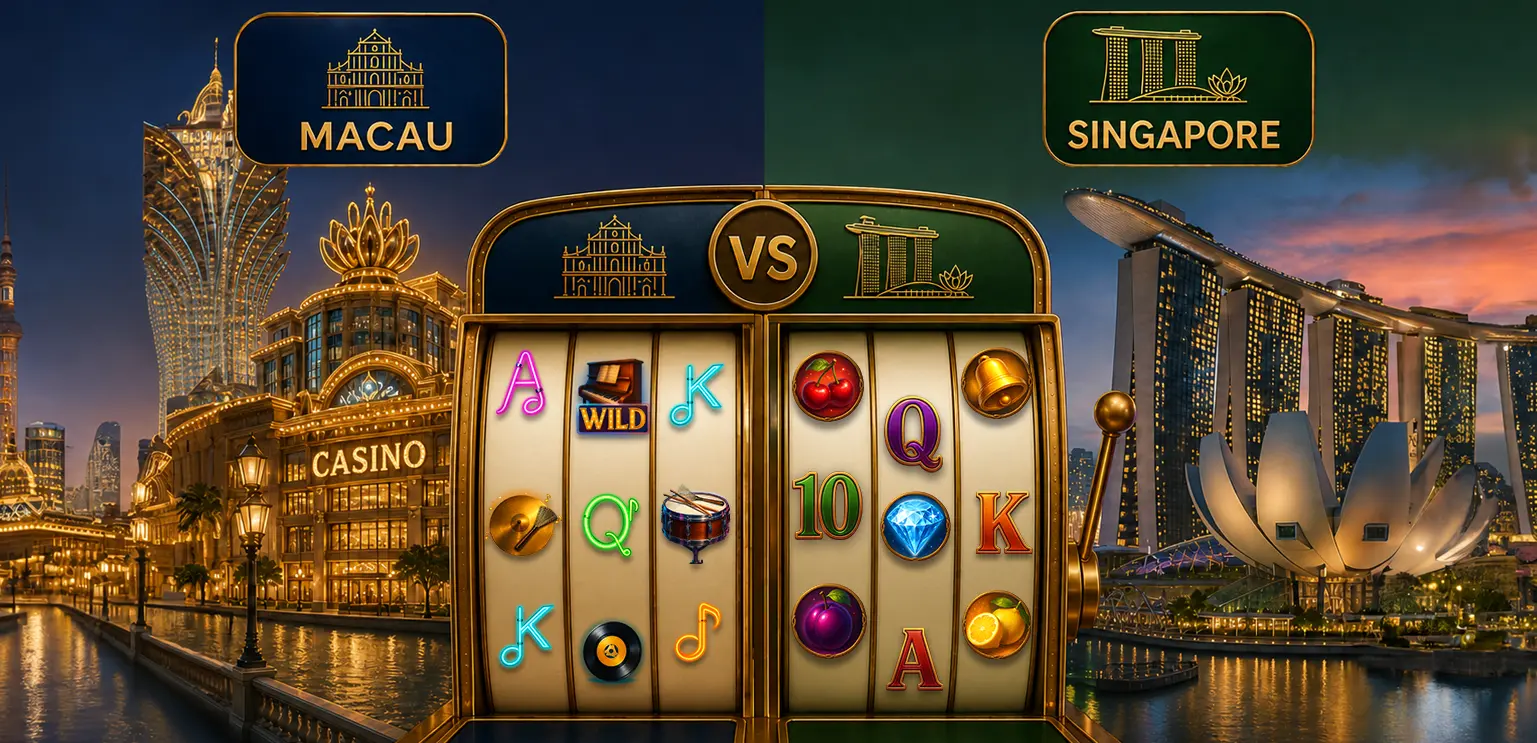
For developers and studios, this comparison is not about which destination is "better." It is about understanding how market structure, regulation, and player behavior shape game design decisions.
Industry Context: Why This Comparison Matters for Developers
Asia remains one of the most important regions for casino growth. However, it is also one of the most complex.
Markets differ widely in terms of:
- Regulation
- Player expectations
- Spending behavior
- Platform adoption
Macau and Singapore sit at opposite ends of the spectrum. One is volume-driven and high-stakes focused, while the other is tightly controlled and experience-driven.
For studios building slot games or casino platforms, understanding these differences directly impacts how games are designed, monetized, and deployed.
Macau: High-Volume, High-Stakes Ecosystem
🔹 Market Characteristics
Macau is often considered the global center of casino revenue. Its ecosystem is built around:
- High-value players
- Large-scale casino floors
- Continuous gameplay cycles
Unlike many Western markets, Macau's strength lies not in casual players, but in premium segments.
🔹 Player Behavior and Design Implications
Players in Macau tend to favor:
- Fast-paced gameplay
- High betting ranges
- Minimal interruptions
From a development perspective, this influences game design in several ways. Games targeting this market often prioritize simplicity in interaction while maintaining depth in payout systems. Visuals are refined but not overly complex, ensuring that gameplay remains the primary focus.
Session flow is also critical. Players expect seamless, uninterrupted play without excessive UI friction.
🔹 Production Strategy for Macau-Focused Games
Studios targeting Macau typically design systems that support scalability and high throughput.
This includes:
- Optimized reel systems for fast spins
- Efficient payout calculations
- Stable performance under long sessions
The emphasis is on reliability and consistency rather than experimental mechanics.
Singapore: Controlled, Experience-Driven Market
🔹 Market Characteristics
Singapore operates a highly regulated and limited casino environment. Unlike Macau, the market is built around integrated resorts and controlled access. The focus is not on scale, but on delivering premium, curated experiences.
🔹 Player Behavior and Design Implications
Players in Singapore expect a different type of experience.
There is a stronger emphasis on:
- Visual quality
- Immersive environments
- Structured gameplay sessions
From a design perspective, this encourages more polished UI systems, refined animations, and clearer progression systems. Games often feel more "crafted" rather than purely transactional.
🔹 Production Strategy for Singapore-Focused Games
For this market, studios invest more in presentation and experience design. This includes:
- High-quality UI/UX systems
- Cinematic animation flows
- Carefully balanced gameplay pacing
Rather than maximizing volume, the goal is to enhance perceived value per session.
Core Differences: Volume vs Experience
The contrast between these two markets can be summarized as a difference in philosophy. Macau prioritizes volume and high-value gameplay, while Singapore focuses on controlled, premium experiences. For developers, this translates into different production priorities. Macau-oriented games emphasize speed, efficiency, and scalability. Singapore-oriented games emphasize polish, immersion, and presentation. Understanding this distinction is critical when designing games for global deployment.
Technical Design Considerations
🔹 System Architecture Differences
Games targeting Macau often require systems optimized for continuous gameplay and high transaction frequency. This means minimizing delays, optimizing performance, and ensuring stability under heavy usage.
In contrast, Singapore-focused games can allocate more resources to visual systems and presentation layers, as session pacing is less aggressive. Teams working on casino game architecture and server infrastructure will recognize that these priorities lead to fundamentally different technical decisions at the system design stage.
🔹 UI and Interaction Design
UI design also differs significantly between the two markets.
In Macau-focused games:
- UI must be minimal and fast
- Players need to act quickly without delays
- Feedback loops are kept tight and efficient
In Singapore-focused games:
- UI can be more expressive
- Richer feedback and storytelling elements are appropriate
- Visual presentation contributes directly to perceived quality
🔹 Feature Design Approach
Feature systems behave differently depending on the market.
Macau games tend to use:
- Straightforward mechanics
- Rapid play cycles
- Simple but deep payout systems
Singapore games often include:
- More structured features
- Engagement through progression and visual storytelling
- Bonus sequences that feel intentionally crafted
Real Production Scenario: Designing for Both Markets
Studios targeting both markets often build adaptable systems rather than separate games.
For example, a slot game might use the same core logic but adjust parameters such as:
- Bet ranges
- Animation timing
- Feature frequency
- UI complexity
This approach allows developers to maintain a single codebase while adapting the experience for different audiences. It is a practical example of how modular slot game development frameworks enable studios to serve diverse markets without duplicating effort.
Challenges in Cross-Market Development
Designing for multiple markets introduces complexity.
Key challenges include:
- Regulatory requirements that differ between jurisdictions, requiring flexible compliance systems
- Player expectations that vary significantly, making it difficult to standardize gameplay
- Technical challenges when balancing performance with visual quality across different environments
These challenges highlight the importance of modular architecture and data-driven systems. Studios that invest in flexible frameworks early are far better positioned to expand across markets without rebuilding core systems from scratch.
What Goes Wrong When Studios Ignore Market Differences
One of the most common mistakes is treating all markets the same.
Games designed for Western or casual audiences often under-perform in Macau due to:
- Slower pacing that does not match player expectations
- Unnecessary complexity in UI and navigation
- Feature systems that interrupt rather than enhance gameplay flow
Similarly, games optimized purely for speed may feel shallow in Singapore's premium environment. This mismatch leads to reduced engagement and lower retention.
Successful studios avoid this by aligning design decisions with market expectations from the earliest stages of production. This kind of data-driven approach to slot game design is increasingly becoming a baseline requirement rather than an optional practice.
What High-Performing Studios Do Differently
Top-performing slot studios approach markets strategically. They build systems that are flexible and configurable, allowing them to adjust gameplay without rebuilding core systems.
They also:
- Invest in understanding player behavior at a deeper level
- Use data to refine design decisions
- Treat market differences as opportunities rather than limitations
More importantly, they plan for market diversity at the architecture level rather than retrofitting adaptations into finished products.
Future Trends in Asian Casino Markets
Both Macau and Singapore are evolving.
Key trends to watch include:
🔹 Macau's Market Diversification
Macau is exploring diversification beyond traditional casino models, incorporating entertainment, hospitality, and digital experiences to broaden its appeal beyond high-stakes players.
🔹 Singapore's Continued Premium Focus
Singapore continues to refine its premium experience approach, investing in integrated resort improvements and maintaining strict controls that keep the market high-quality and carefully managed.
🔹 Digital Platform Expansion
Simultaneously, digital platforms are expanding across Asia, creating new opportunities for developers. Studios that understand both high-volume and experience-driven markets will be best positioned to translate those insights into digital products as online and mobile adoption grows.
Strategic Takeaways for Developers
The comparison between Macau and Singapore highlights a broader lesson. There is no single "ideal" casino model. Success depends on how well games align with market expectations.
Developers must design systems that are:
- Flexible and configurable for different market parameters
- Scalable to handle volume in high-frequency environments
- Adaptable without requiring full rebuilds for each market
This includes building modular architectures, data-driven configurations, and reusable components. Studios that invest in these foundations early will have a significant structural advantage when expanding across Asian markets.
Conclusion
Macau and Singapore represent two of the most influential casino markets in Asia, but they follow very different paths. One is driven by scale and high-value gameplay, while the other focuses on controlled, premium experiences.
For game developers and studios, the real opportunity lies in understanding these differences and translating them into design strategies.
Those who can adapt their systems to fit diverse market needs will have a significant competitive advantage. Rather than designing for a generic global player, the most successful studios design for real market contexts and use that understanding to build better, more aligned products.
FAQ: Macau vs Singapore Casino Markets
Which market generates more casino revenue?
Macau leads globally in total casino revenue due to its high-volume, high-stakes ecosystem.
How is Singapore different from Macau?
Singapore focuses on controlled, premium experiences, while Macau emphasizes scale and high-value gameplay.
Which market is better for slot developers?
Both offer opportunities, but require different design approaches based on player behavior and regulation.
Do games need to be customized for each market?
Yes, gameplay, UI, and features often need adjustments to match local preferences.
What is the biggest challenge in targeting both markets?
Balancing performance, compliance, and player expectations across different regions.
Are these markets moving toward digital platforms?
Yes, digital adoption is increasing across Asia, creating new opportunities for developers.