Game Art Production Fundamentals: The Blueprint Behind Successful Games
When people think about game art, they often imagine stunning character illustrations, detailed environments, or cinematic visual effects. While these elements are certainly important, professional game art production is about far more than creating attractive visuals. It is a structured process that combines creativity, technical planning, optimization, collaboration, and production management to deliver assets that function efficiently inside a game.
A visually impressive asset that is poorly optimized or inconsistent with the game's style can create as many problems as it solves. Likewise, beautiful artwork that doesn't align with gameplay, technical constraints, or production timelines can slow development and increase costs. This is why successful studios treat game art production as a disciplined pipeline rather than a collection of isolated creative tasks.
Whether you're creating a casual mobile game, an indie project, a cross-platform title, or a casino game, a solid understanding of game art production fundamentals helps every asset serve a clear purpose—supporting gameplay, maintaining visual consistency, optimizing performance, and contributing to a polished player experience.
What Is Game Art Production?
Game art production is the complete process of planning, creating, reviewing, optimizing, and integrating visual assets into a game.
Unlike traditional illustration or graphic design, game art must satisfy creative, technical, and production requirements simultaneously. Every asset must not only look appealing but also perform efficiently within the game engine and support the overall gameplay experience.
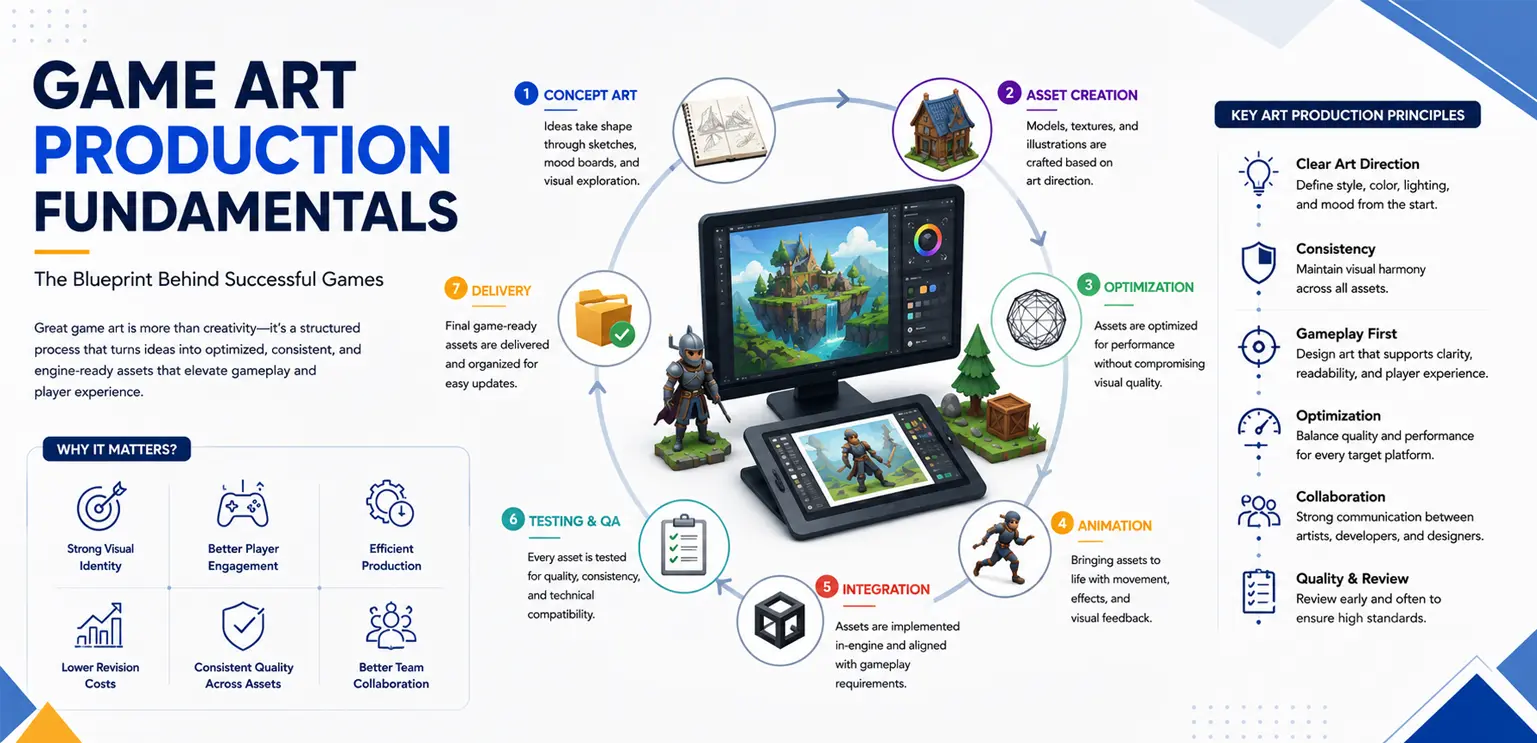
A typical game art production pipeline includes concept development, asset creation, animation, optimization, technical validation, and engine integration. Each stage builds upon the previous one, making consistency and planning essential throughout the project.
Why Strong Art Production Matters
Players often judge a game's quality within the first few moments of gameplay. The visual presentation establishes expectations, communicates the game's theme, and shapes the overall user experience. Strong art production delivers more than attractive graphics. It helps studios:
- Build a recognizable visual identity.
- Improve player immersion.
- Maintain artistic consistency.
- Reduce production revisions.
- Support efficient development.
- Optimize assets for target platforms.
When art production follows structured workflows, teams can produce higher-quality assets while minimizing unnecessary delays.
Start with a Clear Art Direction
Every successful game begins with a well-defined visual vision. Before artists begin creating assets, the production team should establish a shared understanding of the game's style, audience, platform requirements, and creative goals. Art direction typically defines:
- Visual style
- Color palette
- Lighting approach
- Character proportions
- Environment design
- UI language
- Animation style
Without clear art direction, individual assets may look impressive on their own but fail to create a cohesive player experience.
Build a Structured Art Pipeline
One of the biggest differences between amateur and professional production is the quality of the workflow. A structured pipeline allows multiple artists, animators, and developers to collaborate efficiently while maintaining consistency across hundreds or even thousands of assets. A typical production workflow includes:
- Concept art
- Asset production
- Internal reviews
- Technical optimization
- Animation
- Engine integration
- QA validation
Each stage should have clearly defined responsibilities and quality standards.
Design Art for Gameplay, Not Just Visual Appeal
One of the most common mistakes in game art production is prioritizing appearance over functionality. Every visual asset should support gameplay by helping players understand the game world, recognize important objects, and respond quickly to interactive elements. Good game art communicates information through visual design. For example:
- High-value items should be immediately recognizable.
- Interactive objects should stand out naturally.
- Characters should be readable at gameplay distance.
- UI elements should remain clear on different screen sizes.
When gameplay drives artistic decisions, players enjoy smoother and more intuitive experiences.
Maintain Consistency Across Every Asset
Consistency is one of the defining characteristics of professional game art. Players should experience every character, environment, icon, animation, and interface element as part of a unified and visually consistent game universe. Maintaining consistency requires standardized guidelines for:
- Shapes
- Materials
- Color usage
- Lighting
- Typography
- Effects
- Iconography
Art bibles and style guides help production teams preserve this consistency throughout development.
Optimization Is Part of the Art Process
Optimization should never be treated as a task performed after asset creation. Professional artists consider technical limitations from the beginning. Important optimization factors include:
- Texture resolution
- Polygon budgets
- Sprite atlas organization
- Draw calls
- Memory usage
- Compression settings
Balancing artistic quality with performance is especially important for mobile games, HTML5 titles, and browser-based casino games.
Collaboration Between Artists and Developers
Game art production succeeds when creative and technical teams work together. Artists create visually engaging assets, while developers ensure those assets integrate smoothly into the game engine. Successful collaboration depends on:
- Shared documentation.
- Clear technical specifications.
- Frequent reviews.
- Organized asset management.
- Continuous communication.
When departments collaborate effectively, production becomes faster and more predictable.
Animation Brings Art to Life
Static artwork forms the foundation of visual design, but animation creates interaction. Even subtle movement can significantly improve the player experience by providing feedback and reinforcing gameplay. Animation commonly supports:
- Character movement
- UI transitions
- Environmental effects
- Combat actions
- Reward sequences
- Slot symbol interactions
The goal is to create motion that feels responsive and purposeful rather than excessive.
Technical Art Bridges Creativity and Development
As game development projects grow in scale and complexity, technical artists have become indispensable, ensuring that creative assets meet both artistic expectations and technical requirements. They help ensure that visual assets remain both attractive and efficient by connecting artistic workflows with technical implementation. Technical art often includes:
- Shader creation
- Rigging
- Asset optimization
- Tool development
- Pipeline automation
- Engine integration
Strong technical art reduces production bottlenecks while improving overall asset quality.
Quality Assurance for Game Art
Art assets require testing just like gameplay systems. Visual QA ensures that assets perform correctly across different devices, screen sizes, and platforms. Typical review areas include:
- Visual consistency
- Missing assets
- Clipping issues
- Animation errors
- Resolution scaling
- UI readability
- Performance impact
Regular quality reviews reduce costly revisions later in development.
How AI Is Transforming Game Art Production
Artificial Intelligence is changing how studios approach art production, but its role is primarily supportive rather than creative. AI helps accelerate repetitive tasks, allowing artists to focus on higher-value creative work. Studios increasingly use AI for:
- Concept exploration
- Mood board creation
- Asset variations
- Background generation
- Production planning
- Image enhancement
- Workflow automation
Human artists remain responsible for artistic direction, storytelling, and maintaining a consistent visual identity.
Why Many Studios Outsource Game Art Production
Game development has become increasingly content-intensive. Modern projects often require thousands of visual assets delivered within strict production schedules. To meet these demands, many studios collaborate with external game art partners. Outsourcing provides access to specialized expertise in areas such as:
- 2D illustration
- 3D modeling
- Character design
- Environment art
- UI/UX design
- Animation
- Technical art
Studios such as Gamix Labs support publishers and developers by integrating into existing production pipelines, delivering engine-ready assets that meet artistic, technical, and performance requirements while helping teams scale efficiently.
Common Mistakes That Weaken Game Art Production
Many production challenges stem from weak planning rather than artistic ability. Some of the most common issues include:
- Inconsistent visual styles.
- Poor asset organization.
- Ignoring optimization.
- Weak documentation.
- Limited collaboration.
- Delayed reviews.
- Creating assets without gameplay context.
Avoiding these mistakes improves both production efficiency and final game quality.
Future Trends in Game Art Production
Game art continues evolving alongside new technologies and production methodologies. Several trends are shaping the future:
- AI-assisted production
- Procedural content generation
- Real-time rendering
- Cross-platform asset pipelines
- Automated optimization
- Cloud-based collaboration
While technology continues to advance, the importance of structured production pipelines and artistic expertise remains unchanged.
Strategic Takeaways
High-quality game art is not created through talent alone. It depends on disciplined production processes, technical planning, and strong collaboration. The key principles every developer should remember are:
- Define a clear art direction before production.
- Build structured and scalable pipelines.
- Design assets that support gameplay.
- Maintain consistency across every visual element.
- Optimize throughout development.
- Encourage collaboration between artists and developers.
- Use AI to improve productivity, not replace creativity.
- Integrate quality assurance into every production stage.
Studios that consistently follow these fundamentals produce assets that look better, perform better, and support long-term development goals.
Conclusion
Game art production is one of the most influential components of modern game development. It shapes the player's first impression, supports gameplay, reinforces storytelling, and contributes directly to the overall quality of the finished product.
Successful studios understand that great art is not created through isolated creativity but through structured workflows that combine artistic vision, technical expertise, optimization, collaboration, and continuous quality control.
As AI, real-time engines, and cloud-based production continue transforming the industry, the studios that master these fundamentals will be best positioned to deliver visually compelling, scalable, and production-ready games. Whether you're developing a mobile title, an AAA project, or a casino game, investing in strong game art production fundamentals is one of the smartest long-term decisions a development team can make.
FAQs
What is game art production?
Game art production is the complete process of planning, creating, optimizing, testing, and integrating visual assets into a game while meeting artistic and technical requirements.
Why is art direction important?
A clear art direction ensures visual consistency, strengthens the game's identity, and helps all artists work toward the same creative vision.
How does optimization affect game art?
Optimized assets improve loading times, reduce memory usage, increase frame rates, and provide a smoother player experience across different platforms.
Can AI replace game artists?
No. AI helps with repetitive production tasks and concept exploration, but human artists remain essential for creativity, storytelling, and maintaining artistic quality.
Why do studios outsource game art?
Outsourcing allows studios to access specialized talent, expand production capacity, and deliver high-quality assets without significantly increasing internal team size.
What is the biggest mistake in game art production?
One of the most common mistakes is treating art as a standalone creative task instead of integrating it into a structured production pipeline that supports gameplay, optimization, and collaboration.