How to Manage Remote Game Development Teams Successfully
Introduction: Remote Development Is Now the Norm in Game Studios Ten years ago, most game studios operated from centralized offices where artists, programmers, designers, and producers worked side by side. Communication happened naturally across desks or meeting rooms.
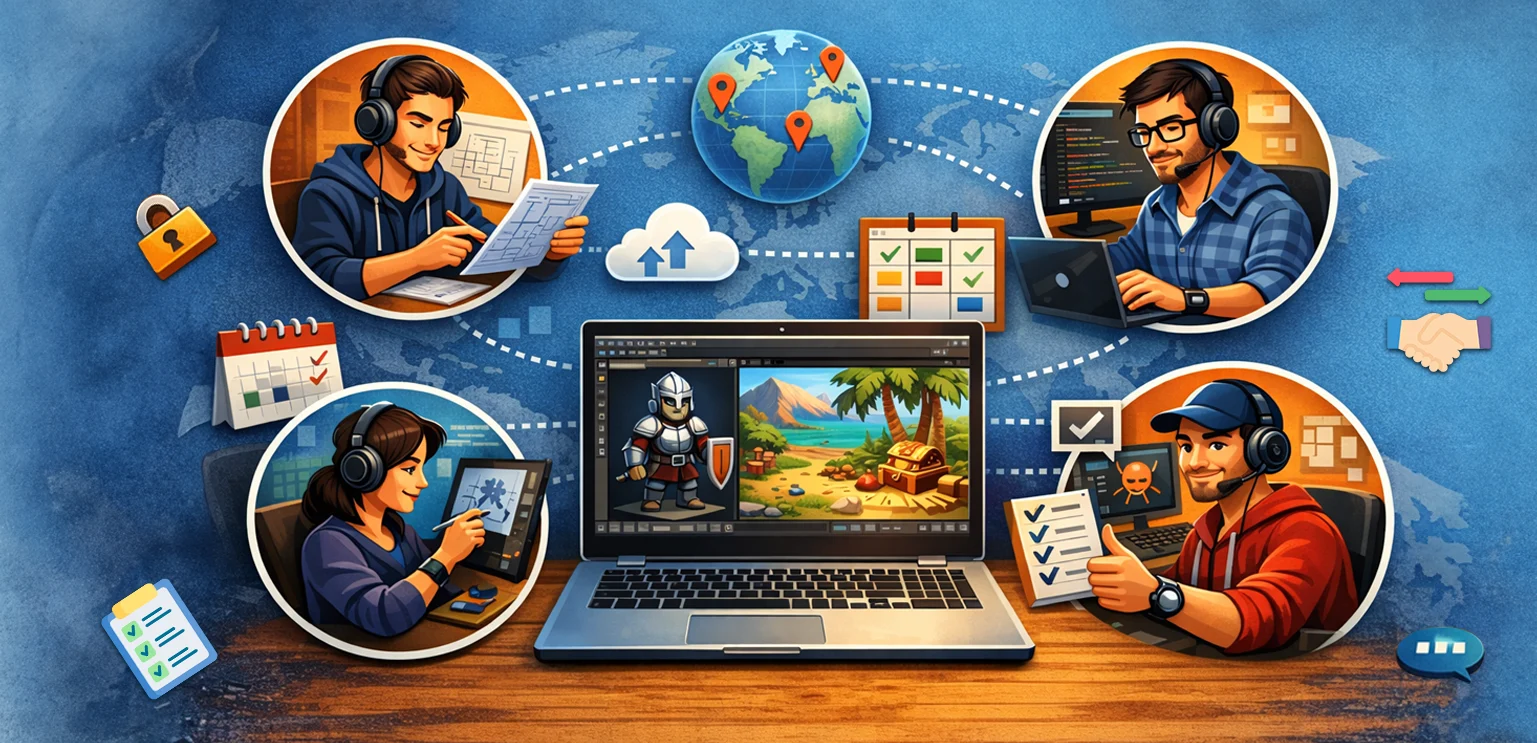
Today, the landscape is very different. Game development has become increasingly distributed, with teams working across multiple countries and time zones. It is now common for a single game project to involve:
- Designers in Europe
- Engineers in North America
- Artists in Asia
- QA teams in Eastern Europe
- Production leadership operating remotely
This shift accelerated during the pandemic but has since evolved into a permanent operating model for many studios.
Remote teams offer major advantages:
- Access to global talent
- Lower operational costs
- Flexible staffing models
- Scalable production pipelines
But remote game development also introduces unique challenges.
Without the right processes, distributed teams often struggle with:
- Communication breakdowns
- Production delays
- Unclear responsibilities
- Misaligned expectations
- Creative disconnects
Successful studios recognize that remote teams cannot simply replicate office workflows online. Instead, they require deliberate management strategies designed specifically for distributed production.
This guide explores how experienced studios manage remote teams effectively, ensuring productivity, collaboration, and high-quality game delivery.
Why Remote Teams Are Becoming Standard in Game Development
The global game industry has embraced remote work for several key reasons.
🔹 Access to Global Talent
Hiring locally limits the talent pool. Remote work allows studios to recruit specialists worldwide, including:
- Experienced game engineers
- Slot mathematicians
- Character artists
- Animation specialists
- UI designers
- Technical artists
For example, a studio may work with external partners for specialized tasks such as slot UI animation or symbol design while keeping core engineering in-house.
🔹 Scalable Production
Large projects often require temporary expansion of teams. Remote collaboration makes it easier to integrate:
- External art studios
- Contract developers
- QA testing teams
- Localization specialists
🔹 Reduced Operational Costs
Maintaining large office spaces is expensive. Remote teams reduce overhead related to:
- Physical infrastructure
- Utilities
- Relocation expenses
For many studios, remote work has become both a strategic advantage and a financial necessity.
The Unique Challenges of Remote Game Development
While remote work offers flexibility, it also introduces complexity. Game development is inherently collaborative. Teams must constantly align across disciplines, such as:
- Programming
- Art production
- Design systems
- Audio
- QA
- Production
Without clear coordination, remote teams can quickly become fragmented.
Common challenges include:
🔹 Communication Silos
Information may become isolated within specific departments. For example, artists might not be aware of design changes until late in production.
🔹 Time Zone Delays
Teams operating across continents may experience slow decision-making cycles.
🔹 Lack of Creative Collaboration
Game development often relies on spontaneous idea exchange, which is harder to replicate remotely.
🔹 Reduced Team Cohesion
Without face-to-face interaction, team members may feel disconnected from the broader project vision. Overcoming these challenges requires intentional leadership and structured workflows.
Building the Right Remote Game Development Structure
Effective remote teams rely on well-defined organizational structures. Studios typically organize distributed teams around clear discipline groups. A common structure includes:
- Game Design Team
- Engineering Team
- Art and Animation Team
- QA and Testing Team
- Production and Project Management
- DevOps and Platform Engineering
Each group should have a clear lead or supervisor responsible for coordination and decision-making. This structure ensures accountability while maintaining efficient communication channels.
Establishing Clear Communication Systems
Communication is the backbone of successful remote teams. Studios should implement multiple communication layers:
🔹 Daily Communication
Quick updates between team members. Examples:
- Daily standups
- Progress check-ins
- Quick problem-solving discussions
🔹 Weekly Coordination
Cross-team meetings that align development progress. These meetings typically include:
- Producers
- Lead developers
- Art directors
- Design leads
🔹 Strategic Planning Sessions
Higher-level discussions focusing on roadmap planning, milestone reviews, and production challenges.
Without structured communication systems, remote teams often fall into misalignment and delays.
Choosing the Right Collaboration Tools
Technology plays a major role in remote development success. Game studios typically rely on specialized tools for collaboration and production tracking.
🔹 Project Management Platforms
Tools such as:
- Jira
- ClickUp
- Monday.com
- Asana
These platforms track:
- Development tasks
- Milestones
- Bugs
- Feature progress
🔹 Communication Platforms
Instant messaging platforms are essential for day-to-day collaboration. Common tools include:
- Slack
- Discord
- Microsoft Teams
These platforms allow quick discussions and team coordination.
🔹 Version Control Systems
Game projects require robust version control to manage large codebases and art assets. Examples include:
- Git
- Perforce
- Plastic SCM
These systems allow distributed teams to collaborate without conflicts.
🔹 Asset Management Systems
Large game projects generate thousands of assets. Centralized asset libraries help teams manage:
- Textures
- Animations
- 3D models
- Sound files
Effective asset management reduces duplication and confusion.
Creating Efficient Production Pipelines
Remote teams perform best when workflows are clearly defined. Studios should establish production pipelines that outline how work moves from concept to completion. Typical pipeline stages include:
- Concept Design
- Pre-production Planning
- Asset Creation
- Implementation
- Testing and QA
- Optimization
- Release
Each stage should include:
- Clear deliverables
- Approval checkpoints
- Responsible team members
For example, in slot game production pipelines, visual assets such as symbols, backgrounds, and UI elements often pass through multiple stages including concept art, animation, technical integration, and final optimization.
Studios specializing in slot art production, such as Gamix Labs, frequently design structured art pipelines to ensure assets move smoothly between artists, animators, and engineers.
This type of pipeline design helps distributed teams maintain efficiency even when working across multiple regions.
Managing Time Zones Effectively
Time zone differences are one of the biggest challenges in remote development. Successful studios adopt strategies to minimize friction.
🔹 Overlapping Work Hours
Teams should maintain at least 2-4 hours of overlapping work time where everyone is available for real-time discussions.
🔹 Asynchronous Communication
Not every conversation requires immediate responses. Documentation, task boards, and recorded updates help teams collaborate asynchronously.
🔹 Clear Deadlines
Deadlines should always include time zone references to avoid confusion. For example:
"Submit by 5 PM UTC" rather than "Submit by end of day."
Maintaining a Strong Team Culture Remotely
One risk of remote work is losing the sense of team culture. Studios must actively foster a sense of community. Examples include:
- Virtual team events
- Online game nights
- Casual chat channels
- Recognition programs
Encouraging informal interaction helps build trust and strengthens collaboration. A connected team tends to be more motivated and productive.
Managing Creative Collaboration in Distributed Teams
Game development is a creative process, not just a technical one. Maintaining creative collaboration remotely requires special attention. Studios often use tools such as:
- Shared digital whiteboards
- Collaborative design documents
- Screen-sharing brainstorming sessions
Regular design reviews also help ensure that:
- Gameplay mechanics align with art direction
- Technical limitations are addressed early
- The creative vision remains consistent
Creative alignment is especially important for games where visual identity plays a major role, such as slot titles or character-driven experiences.
Ensuring Accountability and Productivity
Remote teams need clear expectations and measurable progress. Producers should define:
- Sprint goals
- Milestone deliverables
- Task ownership
Agile development methodologies work particularly well in distributed teams. Typical sprint cycles last two weeks, during which teams commit to specific deliverables. Progress tracking ensures accountability without micromanaging team members.
Quality Assurance in Remote Game Development
Testing becomes more complex when teams are distributed. QA teams must coordinate closely with developers to ensure issues are identified and resolved quickly. Best practices include:
- Centralized bug tracking systems
- Automated testing pipelines
- Regular build reviews
Remote QA teams should also have clear access to development builds and debugging tools.
Security Considerations for Remote Teams
Game development often involves proprietary intellectual property. Remote teams must follow strict security practices. Examples include:
- VPN access requirements
- Secure repositories
- Restricted file permissions
- Two-factor authentication
Studios should also implement clear policies regarding device usage and data protection.
The Future of Remote Game Development
Remote collaboration will continue shaping the gaming industry. Several trends are emerging.
🔹 Hybrid Studio Models
Many companies are combining remote teams with small physical hubs for key staff.
🔹 Global Talent Networks
Studios increasingly rely on specialized partners and external teams.
🔹 Cloud-Based Development
Cloud technologies allow developers to access powerful work environments from anywhere.
🔹 Real-Time Collaborative Tools
New tools are improving remote collaboration for tasks such as level design and asset editing.
As these technologies evolve, remote game development will become even more efficient.
Conclusion
Managing remote game development teams successfully requires more than simply allowing employees to work from home. It demands structured processes, strong leadership, and intentional communication strategies.
Studios that master remote collaboration gain significant advantages:
- Access to global talent
- Scalable production capacity
- Flexible project structures
- Reduced operational costs
However, these benefits only materialize when teams operate within clear systems that support collaboration, accountability, and creativity.
By investing in strong workflows, communication practices, and production pipelines, game studios can build distributed teams that deliver exceptional games, no matter where team members are located.
FAQ: Managing Remote Game Development Teams
What are the biggest challenges of remote game development?
The main challenges include communication gaps, time zone differences, lack of real-time collaboration, and maintaining team alignment across disciplines.
What tools are essential for remote game development teams?
Essential tools include project management platforms (Jira, Asana), communication tools (Slack, Teams), version control systems (Git, Perforce), and asset management platforms.
How do remote game studios maintain productivity?
Studios use structured workflows, sprint-based development cycles, clear task ownership, and regular progress reviews to maintain productivity.
How can studios maintain creative collaboration remotely?
Creative collaboration can be supported through shared design documents, digital whiteboards, video brainstorming sessions, and regular design reviews.
How do remote teams manage time zone differences?
Teams typically schedule overlapping work hours, rely on asynchronous communication, and use standardized time references for deadlines.
Is remote game development suitable for large projects?
Yes. Many large games are developed by distributed teams across multiple studios. With the right tools and workflows, remote teams can successfully manage complex projects.