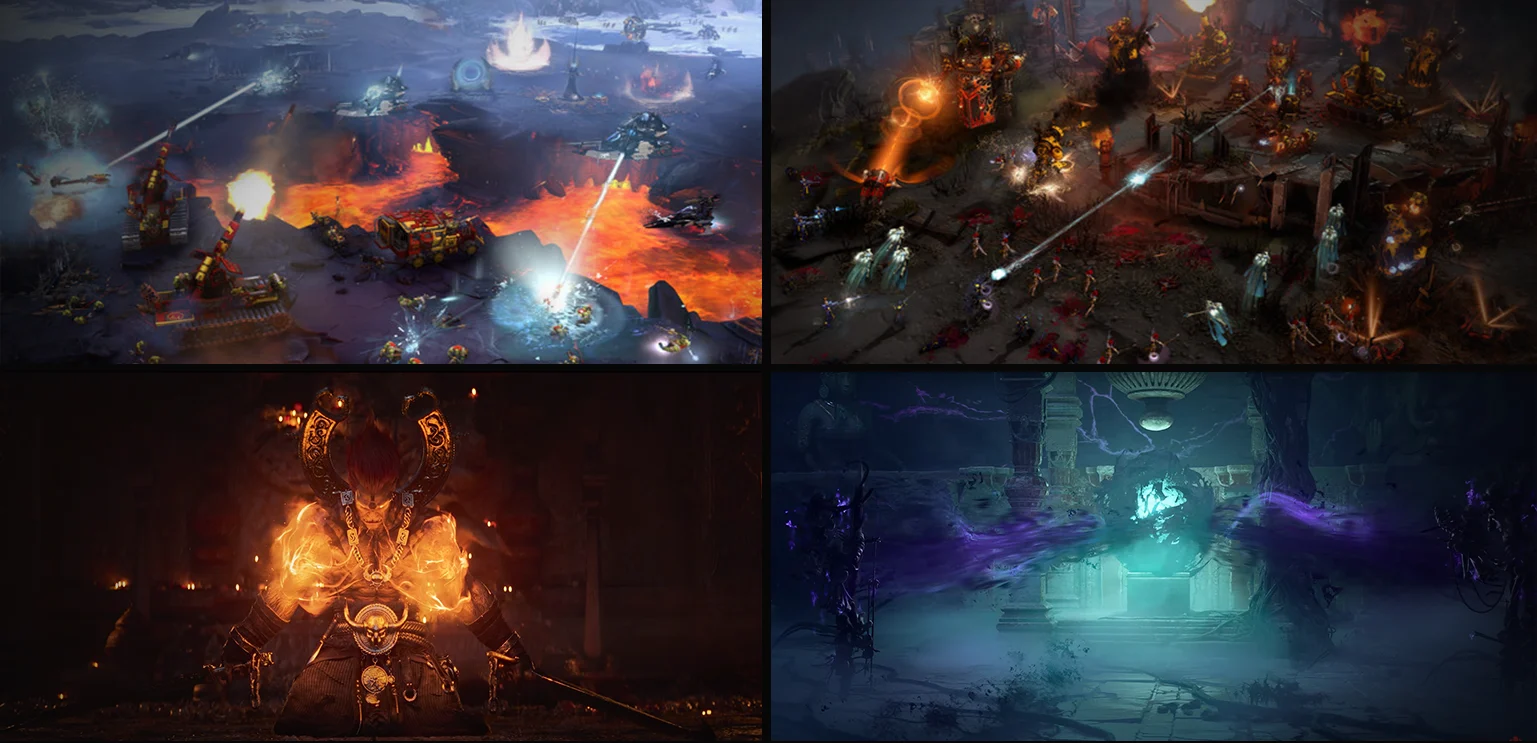
In the fast-paced and dynamic world of slot game development, navigating regulatory challenges has become a crucial aspect of success. As the industry continues to evolve, game developers and operators must stay abreast of ever-changing regulations to ensure compliance and mitigate potential risks. In this article, we'll explore some of the key regulatory challenges facing the slot industry and provide insights on how to navigate them effectively.
The first step in navigating regulatory challenges is to have a clear understanding of the regulatory landscape. Regulations governing the slot industry can vary significantly from one jurisdiction to another, ranging from licensing requirements to advertising restrictions and responsible gaming measures. It's essential for game developers and operators to conduct thorough research and stay updated on relevant regulations in each market they operate in.
Compliance with regulatory requirements is non-negotiable in the slot industry. Failure to comply with regulations can result in hefty fines, loss of reputation, and even the suspension of gaming licenses. Therefore, it's imperative for companies to establish robust compliance processes and procedures to ensure adherence to all relevant regulations. This may involve implementing internal controls, conducting regular audits, and staying in constant communication with regulatory authorities.
With growing concerns about problem gambling, regulators are emphasizing the importance of responsible gaming measures. Developers and operators must include features like age verification, self-exclusion tools, and clear responsible gaming messages to promote safe play. By prioritizing player protection, companies can show their commitment to social responsibility while building trust with both regulators and players.
Advertising restrictions present a major challenge for the slot industry, with many jurisdictions enforcing strict rules on gambling promotions. These regulations are especially strict when protecting vulnerable groups, such as minors, or preventing gambling from being promoted as a financial solution. To overcome these challenges, companies must ensure their advertising campaigns comply with all relevant laws and regulations, including securing the required approvals and certifications from regulatory authorities.
Despite regulatory challenges, the slot industry continues to innovate and grow. From adopting technologies like blockchain and virtual reality to introducing fresh game mechanics and creative themes, developers have countless opportunities for differentiation. However, it is essential that these innovations comply with regulations and always prioritize player safety and integrity.
Navigating regulatory challenges is an inherent part of doing business in the slot industry. By understanding the regulatory landscape, prioritizing compliance, implementing responsible gaming measures, navigating advertising restrictions, and embracing innovation, companies can successfully navigate regulatory challenges and thrive in this competitive market. By remaining proactive and adaptable, game developers and operators can ensure long-term success while earning trust and credibility with both regulators and players. Staying ahead of industry trends and regulatory requirements helps maintain a strong reputation and fosters lasting player engagement.
How Simplified Tools Are Changing the Game Industry
Game development used to be a complex process that required years of coding knowledge and technical expertise. But today, no-code and low-code platforms are making it easier for anyone to bring their game ideas to life—without writing a single line of code. This shift is opening doors for indie developers, designers, and even non-technical creators who want to break into the gaming industry.
What Are No-Code and Low-Code Game Development Platforms?
No-Code Platforms – These tools allow users to build games using drag-and-drop interfaces, pre-made assets, and visual scripting. Examples include GDevelop, Buildbox, and Construct.
Low-Code Platforms – These require minimal coding, offering templates and easy-to-use scripting options. They provide more flexibility while still being beginner-friendly. Examples include Unity’s Bolt, Unreal Engine’s Blueprints, and GameMaker Studio.
📉 Lower Barrier to Entry – Traditional game development requires coding skills, but with no-code and low-code tools, anyone can start creating games without a technical background.
⚡ Faster Development – Instead of spending months learning programming, developers can focus on designing, storytelling, and gameplay.
💰 Cost-Effective – Hiring programmers can be expensive. These platforms let solo developers and small studios build games with minimal costs.
🎨 Increased Creativity – By removing the complexity of coding, creators can experiment more freely and innovate in game design.
📈 Growing Market – More indie developers are releasing games, and even big companies are integrating no-code/low-code tools for rapid prototyping.
Can No-Code Replace Traditional Game Development?
While these platforms are powerful, they have limitations. No-code tools are best suited for simple 2D games, mobile apps, or prototypes. For advanced 3D games, custom mechanics, and high-performance applications, traditional coding is still essential. However, the rise of AI and automation is continuously improving these tools, making them more capable.
As technology evolves, no-code and low-code development will continue to grow. AI-powered design tools, improved visual scripting, and better performance optimization will allow creators to build more complex games. This trend is not just making game development accessible—it’s also shaping the future of how games are created.
At Gamix Labs, we stay at the forefront of game development trends. Whether you're looking for high-quality game art, development support, or industry insights, we’re here to help bring your vision to life.
🚀 Are You Exploring No-Code or Low-Code Game Development?
Let’s discuss how these tools can shape the future of gaming! Contact us today!
Slot games have become a global phenomenon, captivating players across online casinos, mobile platforms, and land-based establishments. As the demand for high-quality slot content continues to rise, companies are stepping up to deliver innovative games that engage and entertain players. In this blog, we'll explore the top 10 slot gaming companies, offering insights, tips, and valuable information for both players and industry enthusiasts.
Live casino games have come a long way since their inception, thanks to advancements in technology. What started as simple live streaming of table games has evolved into sophisticated platforms that offer a truly immersive and interactive gaming experience. At the heart of this evolution are three key technological components:
Streaming technology forms the backbone of live casino games, enabling real-time video and audio transmission to players’ devices. High-definition cameras capture every detail, while advanced streaming protocols ensure smooth playback with minimal latency for seamless gameplay.
While live casino games aim to replicate the authentic casino experience, they still rely on Random Number Generators (RNGs) to ensure fairness and randomness. These complex algorithms generate random outcomes for each game round, ensuring that every player has an equal chance of winning.
A key feature of live casino games is interactivity, allowing players to engage with dealers and fellow players in real-time. Live chat functionality and interactive interfaces enhance the social aspects of gameplay, creating a more immersive and engaging experience.
Behind every successful game is powerful software that drives the entire experience. From managing player interactions to handling financial transactions, this software plays a crucial role in ensuring a seamless gaming experience. Some key features of live casino software include:
Intuitive interfaces make it easy for players to navigate the game lobby, place bets, and interact with dealers, enhancing the overall user experience.
Note: All these currencies exist on the Ethereum blockchain and have market value, which falls and up time by time.
With real money at stake, security is paramount in live casino gaming. Advanced encryption protocols and robust security measures protect players' personal and financial information, ensuring a safe and secure gaming environment.
As technology evolves, the future of casino gaming becomes brighter, offering more immersive and engaging experiences for players. Emerging technologies like virtual reality (VR) and augmented reality (AR) can transport players to fully immersive virtual casino worlds.
In addition, Advancements in AI and machine learning will further enhance game personalization, tailoring experiences to each player’s preferences and behavior.
From streaming technology to advanced software, the technology behind casino games delivers immersive and highly engaging player experiences. As players demand more interactive gameplay, technology’s role in shaping the future of live casino gaming becomes increasingly significant. Next time you play blackjack or roulette, remember the intricate technology working behind the scenes to make it possible.
At Gamix Labs, we're passionate about pushing the boundaries of live casino technology and delivering cutting-edge gaming experiences to players worldwide. Stay tuned for more insights and updates on the latest advancements in live casino gaming technology.
Macau, a vibrant region known for its unique blend of Chinese and Portuguese heritage, fulfilling global casino gaming bridges by advancing and reshaping the market stats. The small but mighty region of Macau has emerged as a powerhouse in the global gaming industry. Also referred to as the "Las Vegas of the East or Las Vegas of Asia", Macau has not only transformed itself into a premier destination for high-stakes gambling but has also significantly impacted the worldwide gaming market.
Macau's emphasis on collaboration and knowledge-sharing with international gaming authorities have facilitated the exchange of best practices and regulatory experiences. This cooperation has contributed to the continuous improvement and harmonization of global gaming regulations.
We have covered Top Casino Games and Top Casinos of Macau in an earlier blog; in this article, we delve into Macau's influence on industry trends, its impact on game development strategies, and how it has attracted international investments.
Macau's casino industry has experienced more remarkable growth than any other country, transforming the region into a premier destination for gambling and contributing to its rapid growth. The fusion of Eastern and Western influences creates an unmatched ambience that sets Macau apart from other gaming destinations.
With the liberalization of the gaming market in the early 2000s, Macau's casino industry has witnessed unprecedented expansion, attracting millions of visitors each year. This growth has catapulted Macau to the forefront of the global gaming scene.
In a significant recovery for Macau's tourism industry, visitor arrivals to the region surged by an impressive +101.3% year-on-year in January, totalling 1,397,748, as reported by the Statistics and Census Service (DSEC). This marks the first time since the pandemic-induced closure of borders in 2020 that monthly tourism figures have surpassed one million.
Macau's significance has exerted a profound influence on reshaping trends in the global gaming market. Macau's VIP gaming segment has had considerable influence on high-roller culture worldwide and also led to a significant shift towards Asia as a premier gaming destination, with Macau at the forefront.
The region's robust gaming offerings, luxurious resorts, and vibrant entertainment options have attracted millions of visitors, as mentioned above, including high-rollers, from worldwide. Macau's ascendancy has spurred a greater focus on Asia as a market with immense potential and has prompted global gaming companies to expand their operations in the region. As a result, casinos around the globe are trying to emulate the allure and sophistication of Macau's high-roller offerings to attract discerning clientele.
Macau's success in regulating a large-scale gaming industry while prioritizing player protection has served as inspiration for jurisdictions seeking to strike a balance between economic benefits and responsible gaming practices.
In the world's largest gaming hub, Macau, seven companies have submitted bids for new casino licenses, according to an announcement made by the region's government, published by Reuters. This is a mark that has set a crucial step in the ongoing development and expansion of Macau's thriving casino industry.
News Covered by Reuters: "Macau's top officials, including the city's Economy and Finance secretary Lei Wai Nong and Secretary for Administration and Justice André Cheong, attended the opening together with top executives from Macau casinos Las Vegas Sands (LVS.N) Macau unit Sands China (1928. HK), Wynn Macau (1128. HK) and MGM China (2282. HK)."
Developers have drawn inspiration from Macau's iconic casinos, incorporating elements such as popular games, architecture, and the lively atmosphere into their creations and getting great outcomes on their investment, which makes sense as it creates a new buzz in the casino industry.
Instead of influencing, Macau also enhances the gaming experience of players through integration with virtual platforms, including online casinos and mobile gaming, which has expanded the reach of the industry, enabling players to enjoy the excitement of Macau-style gaming from the comfort of their own homes or on the go.
The influence of Macau's gaming industry can be seen in the proliferation of casino-themed games across various platforms. These games aim to capture the thrill and glamour associated with Macau's casinos, providing players with a taste of the real-world experience. The success and popularity of such games highlight the enduring appeal of Macau's gaming culture and its ability to captivate players worldwide.
According to Gambling.com, "Most of the blackjack and roulette games at Macau Casino are live dealer titles; there are also plenty of interesting types of regular table games playable."
Macau boasts a transparent, non-discriminatory, and free market economy. It holds a distinct membership in the World Trade Organization (WTO) separate from mainland China, according to data provided and published in State.gov
In the 2018 Index of Economic Freedom, a publication by The Wall Street Journal and The Heritage Foundation, Macau secured the 34th spot among 180 economies worldwide and ranked 9th in the Asia Pacific region.
The reason for the growth of Foreign investment in Macau is that it doesn't face restrictions, as there are no special regulations governing such investments. Both domestic and overseas firms are subject to the same business regulations, including the Commercial Code (Decree 40/99/M).
According to Gambling.com, More than 45 top-tier game studios supply their titles to Macau Casino, including Play’n GO and Playtech.
Macau heavily relies on the gaming sector and tourism, but the government aims to diversify its economy by attracting foreign investments and maintaining an investor-friendly environment. Corporate taxes are kept at a low rate, with a 12 per cent tax applied to companies whose net profits exceed MOP 300,000 (USD 37,500). For net profits below this threshold, the tax rate ranges from three per cent to 12 per cent. The top personal tax rate stands at 12 per cent. Casino concessionaires are subject to a 35 per cent tax on gross gaming revenue, with an additional four per cent contribution
allocated to culture, infrastructure, tourism, and a social security fund.
Macau: Role Model for Regulation and Responsible Gaming
Macau has not only emerged and impacted the casino world but also depicted itself as a model for regulation and responsible gaming, with its robust regulatory framework impacting global gaming regulations. The region's regulatory system serves as a benchmark for many jurisdictions worldwide.
Macau's regulatory framework encompasses various aspects of the gaming industry, including licensing, operation, and supervision. The Gaming Inspection and Coordination Bureau (DICJ) plays a pivotal role in overseeing and enforcing regulations. Its stringent licensing process ensures that only reputable operators with a proven track record and financial stability are granted licenses. This approach has contributed to maintaining integrity and professionalism within the industry.
The DICJ collaborates with gaming operators to establish responsible gambling programs that include measures such as self-exclusion programs, responsible gambling information centres, and mandatory training for casino employees.
Macau's operators are committed to promoting responsible gambling behaviours and providing resources for players to make informed decisions about their gambling habits.
Macau's emergence as a gaming hub and its influence on the global gaming industry is unparalleled. As a gaming hub that has achieved remarkable success, Macau has not only shaped industry trends and influenced game development strategies but has also attracted substantial international investments through its free trade regulation. Moreover, it become a role model in responsible gaming for the world, also reshaping and advancing the casino industry through the integration of advanced technologies like AR and VR in the casino landscape. As Macau paves the way for the future of gaming, its influence is set to endure and shape the industry for years to come.
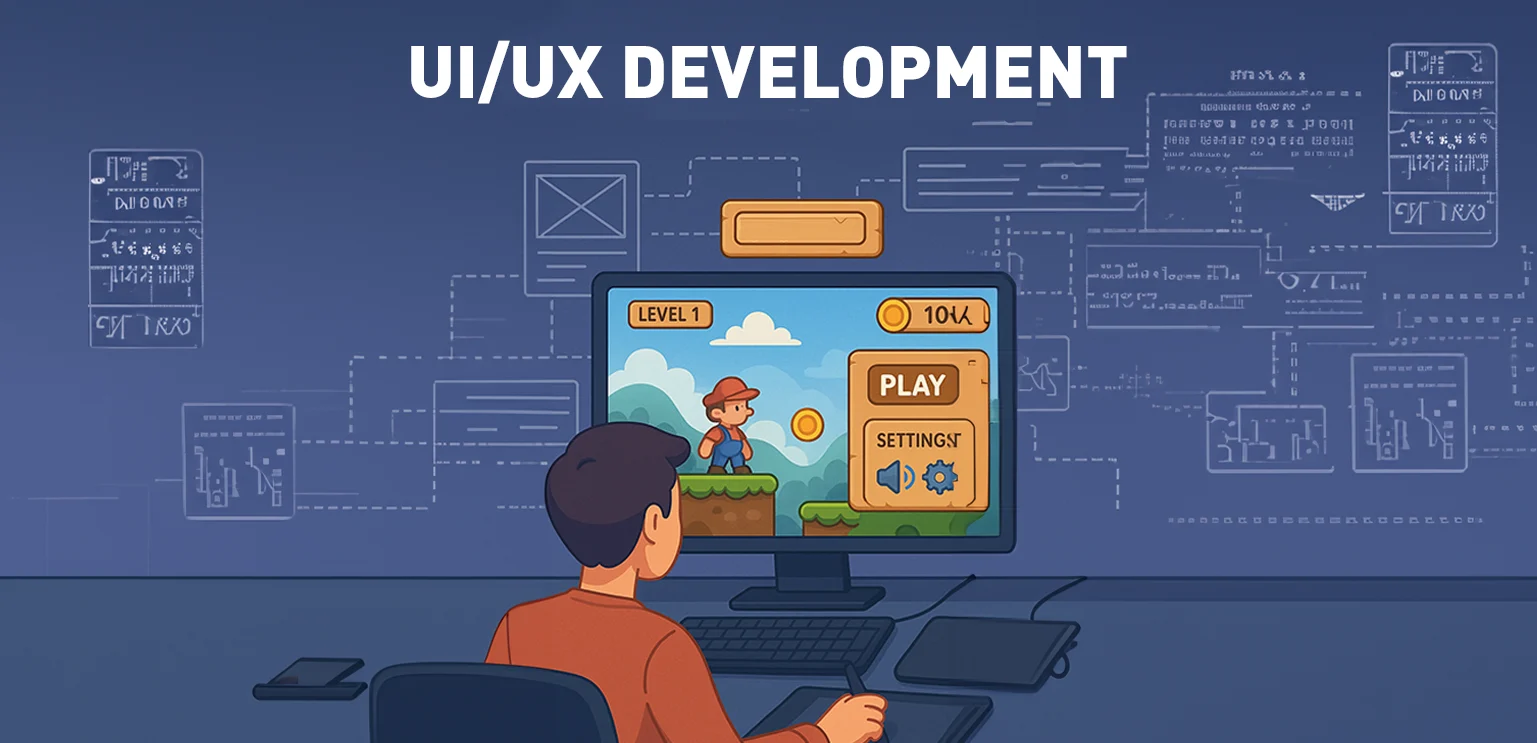
The gaming landscape has been revolutionized and has come a long way since the days of Pong and Tetris. Today, games are immersive and complex, with sophisticated graphics, sound design, and storytelling. But one aspect of gaming that is often overlooked is the user interface (UI) and user experience (UX) design.
UI/UX has the power to transform routine activities into enjoyable, game-like experiences that captivate and engage users effectively. It also bridges critical development gaps, ensuring seamless functionality while enhancing visual appeal and intuitive interactions for players. A well-crafted user interface combined with consistent user experience covers much more than aesthetics, driving retention and overall satisfaction.
In the gaming industry, UI/UX forms a crucial foundation, shaping every visual, interactive, and feedback-driven game element. It encapsulates design, controls, and interactions, ensuring players experience seamless engagement and immersion throughout their gameplay journey.
UI/UX design influences how players perceive and engage with the game. A well-designed UI/UX can enhance the player's experience and increase engagement, while a poor design can result in frustration and lead to player abandonment.
In this blog, we will explore the role of UI and UX in gaming and why it is essential for game developers to prioritize these aspects of game design.
First, let's clarify what we mean by UI and UX. UI refers to the visual and interactive elements of a game that allow players to interact with the game world. UI (User Interface) includes menus, buttons, health bars, and other on-screen elements that provide information to the player. It should also be optimized for different devices, including mobile devices and desktop computers.
User Experience (UX) design is responsible for the overall experience of the player when interacting with the game. UX involves designing game mechanics, controls, and feedback that are intuitive and enjoyable for the player. UX should also take into account the player's skill level and provide a challenge that is appropriate for them.
Importance of UI/UX in Gaming: Examples and Analysis
UI and UX are critical aspects of game design as they directly affect the player's experience.
Clash of Clans is one of the most renowned mobile games of all time, known for its intuitive design. The game’s UI is clean and simple, helping players easily navigate and access various features without confusion. Its UX is well-crafted, with tutorials guiding players through mechanics, boosting confidence and enhancing engagement throughout gameplay.
The next example is from the classic game, Super Mario Bros. Super Mario Bros game's UI is straightforward, with a minimal HUD that provides essential information to the player, such as the score, time remaining, and number of lives. The game has a well-designed UX, with intuitive controls that help players to jump and run through the game world.
Result: In both of these games, Clash of Clans and Super Mario Bros. The UI and UX contribute to the overall experience of the game and prove that well-designed UI and UX can make a game more enjoyable.
The players are more likely to continue playing the game over time because they enjoy the experience and find it easy to use because of the good UI/UX.
Players are more likely to make in-game purchases when they enjoy the experience and find navigation seamless. A well-designed UX makes features easy to explore, encouraging engagement and driving higher spending within the game.
We have learned about the importance and benefit of well-designed UI/UX in gaming from the above paragraph. In the next section, we will discuss best practices for designing UI and UX for gaming projects.
Designers should focus on essential gaming elements, removing unnecessary options to optimize core mechanics and game objectives effectively. Flappy Bird is a perfect example of simplicity, where players tap to navigate obstacles by flapping wings. Similarly, Angry Birds offers a minimal UI with only the bird, obstacles, and a score tracker displayed at the top.
A unified colour scheme, typography, and button style throughout the game can help in achieving consistency in the game. "Among Us" game used a consistent colour scheme, with each player character having a specific colour that is used throughout the game. Typography, button styles, Menus and UI elements have also been used with consistency.
Usability can be improved by ensuring that the game's controls and mechanics are easy to understand and use. Minecraft is an exemplary game that provides simple controls, with players using WASD keys to move, a space bar to jump, and the mouse to interact with objects. In this game, objectives are clear, allowing players being able to build and explore freely in the game environment.
Most games today are developed for multiple platforms, requiring UI/UX designs that are responsive and adaptable across devices. Designers must ensure layouts and interactions work seamlessly on different screen sizes and support various input methods. "Fortnite," the game's UI and UX are optimized for both mobile and PC platforms, with different control schemes and interface elements for each platform.
Visual cues help designers to provide feedback to players and convey important information during gameplay. Call of Duty has utilized the potential of visual cues, such as sound effects and visual indicators, in the game. Visual cues are used to signal when a player has been hit by an enemy or when they are running low on ammunition in the Call of Duty game.
This blog explores the critical role of UI/UX in gaming, highlighting its importance through examples, benefits, and best practices. By examining real-world games, readers gain insights into how well-designed UI/UX can make or break a game’s success.
If you are searching for industry-recognized UI/UX services for game projects, Gamix Labs is your trusted partner. As a leading game development company, we specialize in delivering exceptional games with innovative UX and visually striking UI design. With years of experience, our expert team collaborates closely with clients to create engaging, fun, and highly interactive gaming experiences.
Gaming is all about immersion, and gamers love getting immersed in the game world, but creating an immersive game world is such a complex and multi-layered task that requires innumerable hours of planning, storytelling, visuals, and sound design while keeping an eye on each detail and having a deep understanding of the mechanics for specific gameplay.
In this blog, we cover key topics and techniques to help you create an immersive game world. This includes establishing a strong narrative as the foundation of your game, along with other essential strategies that enhance gameplay and player engagement.
5 Tips and Techniques to Create an immersive game
Let's start the reading by establishing a strong narrative with examples of games that became most successful by applying these techniques in their games.
It is a notable fact that developing a strong narrative is one of the most crucial aspects of any game. Furthermore, it is a challenging task to engage players and keep them busy in the gameplay without a well-crafted story. A strong narrative not only helps to establish the immersive game world but also provides players with a reason to care about the characters and their actions within the game.
To create a compelling narrative in games, developers should carefully design the gameplay around a detailed backstory. This includes crafting the history of the game world, defining its cultures and societies, and outlining the relationships between different factions and characters. A well-developed narrative not only enhances player immersion but also strengthens engagement, making the game more memorable and enjoyable.
Well, the story of writing a compelling narrative doesn't end here; it plays as the foundation for any game's design and will help to guide the decisions you make throughout the development process.
What to keep in mind while creating a narrative for gameplay is still a big question.
So, whenever you start to create a narrative, it's also essential to consider the player's role in the story. What is their motivation for being in the game world, and how do they fit into the larger narrative?
Designing a player character that is relatable and has clear goals and motivations can help to immerse players in the story. So, before writing a compelling storyline for the gameplay, start considering the power-ups and role of the characters.
"Assassin's Creed," which has a strong narrative with a clear protagonist whose story unfolds throughout the game, is the finest example of compelling a strong narrative.
Giving players a sense of control is crucial for creating an immersive game world. Players should feel they can explore and interact with the game freely, rather than just being passive participants. Allowing meaningful choices and control over actions enhances the player experience, deepens engagement, and increases investment in the game world.
So, it's important to provide them with meaningful choices that have a real impact on the story and the world around them. Game designers and game producers can provide them with choices that can be as simple as deciding which path to take through the game world or as complex as deciding the fate of a major character.
Allowing players to explore the game world at their own pace and in their own way can give them a sense of ownership over their experience. Another way to give players control is to provide them with tools to customize their gameplay experience. This can include options such as character customization, difficulty settings, and the ability to choose different play styles or strategies.
"The Witcher 3 " gives players a strong sense of control by letting them make choices that influence the story’s outcome, demonstrating player agency.
Realism, as well as Fantasy, both influenced gamers toward gaming, and it is a thoughtful aspect while creating any immersive game world to keep a balance between realism and Fantasy according to the game.
Most game producers lean heavily toward one side of their game, which results in the failure of the gaming project. However, finding the right balance can be key to creating a world that feels believable and engaging for any player and can reach more audiences and masses.
Developers can make games feel realistic by paying close attention to world-building, character design, and game physics and mechanics. Realism helps ground the game world, making it feel authentic and believable for players, which enhances immersion and overall player experience.
However, fantasy elements are also crucial for capturing players' imaginations and allowing for a sense of wonder and adventure. The fantasy world can include things like magic, mythical creatures, and other fantastical elements that break from reality. But it's important to ensure that they are still grounded in some sort of logic or internal consistency so that they don't feel out of place.
An example of a game that has a balance between Fantasy and Realism is "World of Warcraft."
Designing an immersive game requires all your attention to a variety of factors, including visualization, sound, and music, in a well-mannered way. With the right usage of visualization and sounds, developers can enhance the mood and atmosphere of their game. For instance, the sound of footsteps on different surfaces can be complemented by visual effects like dust or debris being kicked up, helping to create a more immersive experience for players.
Ambient sounds, music, and sound effects contribute to creating a sense of immersion for players. So, consider using dynamic music that changes based on the player's actions, which can help to further enhance the sense of being in a living, breathing world. For example, the music may become more intense during a boss battle or more soothing during peaceful exploration.
Using high-quality textures, lighting, and effects can help to create a realistic and visually appealing world that draws players in. It's also important to use color schemes and design elements that match the theme and tone of the game. For example, a horror game may use darker colors and shadows to create a sense of unease, while a bright and colorful game may use vibrant hues to create a more cheerful and upbeat atmosphere.
For example, "The Last of Us Part II" creates an immersive experience for players by using dynamic music that changes based on the player's actions and by using high-quality textures, lighting, and effects.
Testing and Iteration: All possible Feedback work
Testing and iteration are two main factors in creating any game successfully, from mobile games to blockbuster AAA titles. These two factors of game development process help you to get to the right place. Indeed, immersion is a delicate balance that is influenced by many factors, including sound, visuals, story, and gameplay mechanics as mentioned above. Testing a game with a group of players and gathering their feedback can help you identify areas where immersion can be improved and where to be reduced.
One effective way to test and iterate on the game is through the use of playtesting. This involves having a group of players test the game and provide feedback on their experience. Developers can use this feedback to identify areas that need improvement and make changes accordingly. It's important to conduct playtesting throughout the development process, from early prototypes to near-final versions of the game.
It is important to include accessibility features, such as subtitles or colorblind modes, to make games more inclusive and engaging for a wider audience. At the same time, developers should ensure the game runs smoothly and maintains high-quality visuals and sound across all devices, providing a consistent and enjoyable experience for every player.
"Minecraft" became a hugely successful game due to its continuous updates and incorporation of feedback from its players.
By this reading, you must have known about the techniques of creating an immersive gaming world. We have concluded every major point that you would apply in your next gaming project and extracted the full benefits of game development. Additionally, each point has been discussed with a successful game example for further detailed understanding.
If you are also looking for a team that has the potential to align your vision to your final product, you can connect with us. Gamix Labs provides full-stack game development services from creating storylines to final game release.
Game development is a critical process that requires mastery to create immersive games. In recent times, we have published several blogs about the benefits of outsourcing game development and game art services, as well as how to choose an outsourcing game development company for your gaming projects. In this context, Gamix Labs possesses several qualities that can help you understand why it is a good choice for your gaming project.
So, before going on, let's have a look; what does Gamix Labs do?
Gamix Labs is a game development services company and stand as one of the fastest-growing game development companies in India. Our team focuses on creating high-quality video games and has delivered over 250+ projects to date. We have a rigorous quality control process to ensure that our games meet the highest standards.
We take a collaborative and client-centred approach to every project, working closely with you to understand your specific requirements, preferences, and goals. Our team will guide you through every step of the process, from concept design to final product delivery, ensuring that your vision is realized in the final product and hits the market!
To know more about Gamix Labs and its services, click here.
Now, let's come to topics and add our mastery of skills that we brew in every project delivery. However, it is tough to mention each attribute. So, here are some ways that Gamix Labs ensures quality and consistency in in-game artwork and development:
Gamix Labs possess a highly efficient and streamlined workflow for game development. We have standardized processes for creating game assets, which helps to ensure consistency in the artwork and development process.
Gunman Battle, a multiplayer game, is an example of our streamlined workflow process in that we keep every little thing on a note to ensure that all levels have a consistent look and feel.
With a highly professional and skilled art team, we are always up to provide creative direction in our clients' games and create a clear vision for the game and ensure it works cohesively with the final product.
Gamix Labs is developing multiple Slots with different art styles. We have a clear creative direction that outlines the specific look and feel of each game according to the game.
Gamix Labs team knows the power of clear communication as it plays a critical role in game development. We emphasize communication between team members, including the development team, the quality control team, and management, to ensure smooth project delivery within the timeline and budget.
We leverage communication and development tools such as Jira, Slack, and more to ensure transparency with our clients and teams working throughout each step of our game development process, which also helps to ensure that the final product meets our client's expectations.
Gamix Labs is committed to adhering to industry standards, including staying up to date with the latest technology and techniques, as well as adhering to best practices for game development.
By reviewing our portfolio, you can assess our latest work and the technological advancements that have been incorporated into our projects. We have created almost every type of game, including multiplayer to web games, NFT, casino and more.
We prioritize bug-free games and ensure the same for our clients. Our quality control team plays a crucial role in the game development process. QA team is comprised of experts who are skilled at identifying even the smallest issues and working with the development team to resolve them.
Gamix Labs team recently developed a Tambola game that includes a multiplayer mode. Our QA team conducted extensive testing to ensure that the game runnig smoothly on different devices and platforms. We also conducted a mass test by playing the game during our office hours, which helped us to identify any potential issues or glitches that needed to be addressed.
So, here you have read about our qualities that would help to ensure our ethics; let's explore our process to develop your game.
What is our strategy for delivering projects within budget and on time?
We follow these rules to deliver gaming projects to our clients.
We follow the pre-production process before developing any game to bring the full outcome of our client's investment. This phase is also known as the Planning phase of game development, where we iterate on the idea rigorously and decide on delivery deadlines.
Gamix Labs team works with the client to develop the game's concept and set its objectives. Gamix Labs team identifies the key features and game mechanics and determines the platform(s) on which the game will be released. Once the high-level design document is created, the team evaluates the feasibility of the project and suggests necessary changes to implement within.
Production stage is where the team starts developing the game. In this phase, the Gamix Labs team creates the game's core mechanics, art, user interface, and any other necessary features that are required to be delivered in the game. During this stage, the team may also develop a prototype and use cases of the game to test its mechanics and gameplay. Our team uses agile methodologies to ensure efficient development and communication.
Post-Production stage is known as the quality assurance stage and the launching stage. In this stage, our team tests the game to identify any bugs, performance issues, or other problems. Gamix Labs team conducts comprehensive testing to ensure that the game is playable and enjoyable for the target audience. Our team also performs compatibility testing to ensure that the game works correctly on different devices and platforms.
We take immense pride in our abilities and the value we offer to our clients. We are confident that we possess the necessary expertise, skills, and creativity to deliver exceptional results for your gaming needs. Our commitment to excellence and attention to detail set us apart from the competition. We strive to exceed our client's expectations in every project we undertake.
If you are seeking a reliable and competent game development partner, we believe that we are the ideal choice.
Developing games is a more challenging task than playing video games: no, I'm not sure, maybe I'm wrong or maybe I'm right, but AI-powered game development is such a typical task and you would learn that through this blog.
AI in video game development is one of the most talked-about topics, and the gaming industry has been using AI in game development for a long time. Various games use advanced AI to create open-world environments and more. With AI, game developers can enhance the behavior of non-playable characters, generate unique game content through procedural content generation, and provide personalized gameplay experiences for each player.
AI algorithms can help game publishers analyze players' gameplay patterns, preferences, and skill levels to customize their gaming experience. Moreover, the AI market is experiencing growth due to the rising demand for advanced gaming experiences and the increasing utilization of AI-powered virtual assistants and chatbots within games.
Artificial Intelligence is expected to grow in the gaming market in the coming years. The market size of AI in gaming is projected to grow from $1.5 billion in 2020 to $4.5 billion by 2025, at a compound annual growth rate (CAGR) of 25.0%, according to a report by MarketandMarkets.
However, while there are numerous benefits of AI in game development, there are also some drawbacks that developers need to be aware of, such as ethical implications. AI can potentially perpetuate biases and stereotypes and exclude certain groups of players. Therefore, game developers need to ensure that AI in their games is fair, diverse, and inclusive to benefit all gamers, not just specific groups.
So, let's dive into the discussion of AI fairness in the game development process to avoid the exclusiveness of the gameplay.
Fairness is a crucial aspect of video games, enabling players to enjoy gameplay without discrimination in lives, powers, or features. It ensures consistency in game rules for every player, maintaining balanced difficulty and accessible gameplay across all skill levels. Fair games avoid bias toward specific players or groups, creating an inclusive environment that enhances engagement and player satisfaction.
If the game is not fair to an individual or group, it can lead to frustration, anger, and even loss of interest in the game. According to a study by SuperData, 64% of players stated that they would stop playing a game if they felt it was unfair. I stopped playing certain games when I found myself limited to live after an event in the gameplay.
The Role of AI in Balancing Fairness and Player Experience
Since its origin, balancing fairness and the player experience has been a key challenge in game development. AI is defining itself as an auxiliary tool to bridge the gap in-game balance. AI algorithms can adjust the game's difficulty level to provide a challenge that is appropriate for each player's skill level and can help to create NPC as well to add an exclusive layer of immersion in the gaming world.
Developers should remember they are creating games for humans, ensuring balance in gameplay to keep players engaged. Games should not be too easy or too difficult, as either extreme can cause frustration and reduce player retention.
While creating game effects and other resources with AI, developers should ensure that it should be creative enough to grab players' attention and should distinguish from duplicating the same content several times could exclude certain groups of players.
Gamers should be a primary consideration throughout game development, including during AI integration and gameplay design decisions. Transparency in AI use helps players understand its impact on difficulty, NPC behavior, and game content generation. A survey by the Entertainment Software Association found 70% of players want to know how AI is used in games.
The importance of transparency in AI integration is to ensure that players are aware of how AI is impacting their gameplay experience. Without transparency, players may feel uncertain or unaware of how AI is affecting their gaming, leading to frustration or a loss of trust in the game. This is similar to how people are leaving social media platforms due to a lack of transparency in their practices. Therefore, game developers must prioritize transparency while integrating AI into video games to ensure a fair and engaging gaming experience for all players.
The Need for Diversity and Inclusion in AI Development
Diversity and inclusion are other factors to consider, just like the transparency of AI-powered game development. To achieve fairness in video games, game developers must work on diversity and inclusion to include all gamers in their games. AI can potentially perpetuate biases and exclude certain groups of players, which can negatively impact your game.
If AI is used to generate NPCs, it may unintentionally reinforce stereotypes based on race, gender, or other characteristics. Such biased NPCs can frustrate players and potentially cause them to stop playing the game.
Developers should train AI on diverse datasets and consult diversity experts to prevent perpetuating harmful biases in games. This approach ensures games remain inclusive and accessible for all players, regardless of background, abilities, or personal characteristics.
It is an unbiased truth that AI has the potential to enhance video games in numerous ways. Still, it must be implemented with ethical considerations to offer fairness in the gameplay. So, game developers must balance the innovation of AI with the fairness, transparency, diversity, and inclusion that players expect in gameplay.
If you are looking for a reliable game development company, Gamix Labs is an excellent choice for your project. We provide comprehensive gaming solutions, and our portfolio showcases our expertise, helping you evaluate our development capabilities effectively.
AI is not limited to game designing and enabling amazing game features; AI is becoming far better day by day and enabling developers to create much more than the last decades. Nowadays, AIs are bridging the gap between Art & Science by enabling developers to create stunning graphics and game assets through a combination of machine learning and the right sets of parameters.
Game art is no more time taking tasks with AI, as AIs are now capable of creating unique characters, environments, and items automatically or helping developers in ideation, rendering, and even conceptualization about game art. Some game development studios have already created history using these technologies in their games, like The Elder Scrolls IV: Oblivion, No Man's Sky, Horizon Zero Dawn, and much more.
Well, this blog is not around these two games: The Elder Scrolls IV: Oblivion and No Man's Sky. There are many more piles of information gathered in this blog like we are going to discuss AI that enables you to create immersive games by creating unique game art for your game and the importance of AI-based game art usage in development.
Usage of Procedural Content Generator in Game Development
Let's learn the use cases of AI in game art designing and creation then we will learn about productive AIs. These two games, The Elder Scrolls IV: Oblivion and No Man's Sky, used Procedural content generation to create vast landscapes and offer personalized experiences to players using sophisticated algorithms and machine learning.
We know you must have read articles on The Elder Scrolls IV: Oblivion and are amazed at its realistic environments and immersive game worlds, but do you know that AI creates those amazing and stunning graphics? Indeed, AI played a big role and did a great job of various artists in this game.
Procedural content generation AI tools helped developers in creating the game with a small team of six artists only, while the game has a vast landscape with various environmental features.
How did it come in seen? Maybe you would ask the same question. How is it possible to create such a vast landscape in open-world games?
So, here's your answer, the process of designing a landscape starts with a small team of artists, as mentioned above. Those artists created a set of rules for the game world.
What will be the locations of towns and cities?
How will the terrain look in different areas? Where will be trees and other vegetation found?
Set different parameters to create different and dynamic art sets.
AI algorithm used Perlin noise to generate realistic environmental patterns, including rivers, mountains, valleys, and ridges.
No Man's Sky is not just famous for its gameplay but game art, which was created with the help of AI. Some game research says, "No Man's Sky has taken procedural generation and usage of AI in the game to the next level. The game has an interesting expansive universe with billions of planets to explore, which is generated through procedural algorithms. The right combination of algorithms and procedural generation techniques helped developers to create unique planets, flora, and fauna for each player.
No Man's Sky developers used AI to create random and unpredictable planets that feel real. And used mechanisms like in The Elder Scrolls IV: Oblivion to create different landscapes using different sets of pre-defined art, environmental backgrounds, and game art assets. However, No Man's Sky's AI system also enables the game to learn from player interactions and create a dynamic and ever-changing game world that can be different for each player.
The impact of AI on game development goes beyond just generating game assets by using procedural content generation. AI has revolutionized the entire development process, allowing game studios to create more immersive and engaging games with fewer resources and less time. We will mention those pointers and how the gaming industry is being revolutionized with AI. Also, in the next paragraph, how game developers are getting help from AI in Art creation.
Revolutionizing Game Art Creation: AI Makes it as Easy as a Click
Procedural content generation (PCG) has indeed been a longstanding technique being used in the gaming industry. PCG refers to using algorithms and AI to generate game content, such as levels, textures, characters, and other elements, instead of manually creating them; this technique helps developers create vast landscapes in less time while giving a personalized gaming experience.
However, the gaming industry has seen the emergence of new AI-powered tools and platforms that are specially designed for game art creation. Mid Journey, Make Logo AI, and DALL-E are some tools loaded with amazing features. These tools can help artists and developers rapidly and easily create a range of game art in different game styles rapidly and easily.
Mid Journey is another trending topic, just like Chat GPT and is free-open source AI that helps in image creation. It is also an AI-powered platform designed to empower artists and game developers to create futuristic game characters, generate high-quality textures, and more by entering keywords. The tool helps developers and artists to create and generate high-quality textures, lighting, and other effects automatically using machine learning algorithms.
Mid Journey has a drag-and-drop interface with hundreds of exciting and auxiliary game art development features, allowing creation from sketch design to implementing art style or conceptualization before starting a new game.
Midjourney can upscale AI-generated images to their maximum resolution, while other AI image creation tools and softwares are currently limited to 1024 x 1024 resolution.
OpenAI developed an advanced AI model named DALL-E for image creation that can create almost every type of surreal and imaginative game art. The name derives from a combination of the surrealist artist Salvador Dali and Pixar's animated character WALL-E. The model is capable of generating a vast range of imaginative and surreal images, which is reflected in its name.
DALL-E has undergone training using a neural network to analyze textual inputs and produce corresponding images based on the input text and by input image, as the AI has an image upload option for better results. Similar to Mid Journey and other AI tools for game art creation, DALL-E has been trained on a massive dataset of images and text descriptions. A further notable feature of DALL-E is its ability to comprehend and generate images based on abstract concepts like "loneliness" or "curiosity" and more.
NVIDIA GauGAN is a product of NVIDIA Groups named after Paul Gauguin. It is an AI-powered tool that empowers developers and artists to create photo-realistic images from simple sketches. The tool features help artists create high-quality digital art through a deep-learning neural network trained on millions of images to recognize patterns and features in natural landscapes.
Furthermore, NVIDIA GauGAN includes advanced tools to adjust lighting and perspective and help developers add special effects like fog and reflections in the game art and other game assets. The tool is highly intuitive and easy to use, even for those unfamiliar with traditional digital art tools.
The integration of AI has brought a significant transformation in the gaming industry, now with various AI platforms like ** Mid Journey ** facilitating game developers and artists new ways to create amazing games with fewer resources and in less time.
In a decade, the gaming industry has been transformed by various new technologies; however, game art creation is beyond all. Looking ahead, AI has the potential to continue transforming the gaming industry, offering players an unparalleled gaming experience.
Gamix Labs is a Full-cycle game development studio in India, offers a wide range of game development services including game art, 2d animation, testing and porting services for all major platforms. We are expert in creating Slot game art, symbol creation, machine design, character and animation, including provide Land based Slot game development services across the globe.