It all started with an idea. A passionate entrepreneur once dreamt of launching a slot game that could stand out in a crowded market. He had the vision. He knew what themes would attract players. He imagined vibrant visuals, addictive gameplay, and a smooth user experience. But when it came to choosing a company to build this dream, he got stuck.
He was overwhelmed by choices. Every company claimed to be the best. But who could he really trust to turn his vision into reality?
If you’re in the same place, you’re not alone.
Choosing the right slot game development and design company can make or break your game. Whether you're building a mobile slot game, online casino content, or even an NFT-based slot experience, one thing remains the same—you need a reliable partner who understands both tech and art, but more importantly, someone who understands you.
Let’s break down how you can find that perfect partner.
Not every game development company understands the mechanics of slot games. Make sure the team you choose has:
A strong portfolio of slot or casino games.
Experience with different slot formats (classic, video, 3D, themed slots, etc.).
Understanding of RNG, pay-line logic, gamification, and bonus systems.
At Gamix Labs, we've worked on various slot titles, from sleek mobile slots to bold, high-volatility casino experiences, always blending visual storytelling with engaging mechanics.
In an industry where new slot games are launched every week, quality, trust, and creativity are your biggest competitive advantages.
Choosing a reliable slot game development and design company isn’t just a business decision—it’s an emotional one. You’re trusting someone with your dream, your investment, your brand.
So choose wisely. Choose someone who listens. Who delivers. Who truly cares.
At Gamix Labs, we combine deep industry experience with creative passion to build slot games that players love and publishers trust.
If you're ready to bring your slot idea to life, we're here to help—every spin of the way.
Let’s create something amazing together.
Contact Gamix Labs today to discuss your vision.
What should I look for in a slot game development company?
Check experience, design skills, communication, technology use, and long-term support. A reliable company balances creativity with technical expertise.
Why is game design important for slot development?
Design grabs attention, builds excitement, and reflects the theme. Good visuals and animations improve player engagement significantly.
How can I verify a company's reliability?
Review portfolios, read client testimonials, ask for references, and check their past project delivery timelines carefully.
Which technologies should a reliable company use?
Game engines like Unity or Cocos2d, secure backend systems, scalable architecture, and smooth cross-platform performance are essential.
Should I choose a long-term partner or a one-time vendor?
A long-term partner offers updates, maintenance, and growth support, making them more valuable than a one-time service vendor.
Imagine you're on your way to work, scrolling through your phone, and you tap on a game to pass the time. It's simple—just a tap here, a swipe there—but it's incredibly engaging. Before you know it, you've spent 15 minutes immersed in this straightforward yet addictive game. This is the magic of hyper-casual games.
At Gamix Labs, we've witnessed firsthand how these seemingly simple games can captivate millions and generate substantial revenue. Let's delve into what makes hyper-casual games profitable and explore the design tips, cost considerations, and trends shaping this genre in 2025.
Hyper-casual games thrive on straightforward mechanics. Think of games like Flappy Bird or 2048—easy to learn but hard to master. The goal is to create an experience that players can jump into without tutorials.
The core gameplay loop should be addictive. In Stack, for example, the satisfaction of perfectly aligning blocks keeps players returning. A compelling loop encourages repeated play sessions.
Clean, colorful visuals instantly grab attention—even in a sea of other apps. Games like Color Switch use bright colors and simple designs to attract users. Eye-catching visuals and clean design are key to keeping players engaged and coming back.
Release a minimum viable product (MVP) and gather user feedback. Use this data to make informed updates, ensuring the game evolves based on player preferences.
That's the magic of good design.
Now, imagine that same game not only being easy to play but also offering layers of challenge the more you explore.
That’s the sweet spot hybrid-casual games are hitting — combining the quick fun of hyper-casual titles with deeper gameplay that keeps players coming back.
Incorporating technologies like augmented reality (AR) and artificial intelligence (AI) can offer unique gameplay experiences and personalization.
Gamix Labs: Your Partner in Hyper-Casual Game Development
At Gamix Labs, we specialize in crafting engaging hyper-casual games that resonate with players. Our team stays abreast of industry trends to ensure your game not only entertains but also achieves commercial success. From concept to launch, we're here to guide you every step of the way.
The hyper-casual genre remains one of the most profitable and fast-growing areas in mobile gaming. By focusing on simple yet engaging designs, understanding monetization strategies, and staying ahead of emerging trends, developers can create games that captivate audiences and generate substantial revenue.
Partnering with experienced teams like Gamix Labs can further enhance your game's potential in this dynamic market.
What makes hyper-casual games profitable in 2025?
Simple controls, a tight “tap-reward-repeat” loop, short sessions, and clean visuals help hyper-casual games hook players fast. Pair that with rapid A/B testing, quick updates, and smart user acquisition, and you get low friction, high reach, and solid ad revenue.
Hyper-casual vs. hybrid-casual: which should I build?
Hyper-casual is all about instant fun and scale; hybrid-casual keeps the easy entry but adds meta layers (progression, cosmetics, light narrative) to lift retention and LTV. If you want deeper revenue per user in 2025, hybrid-casual often wins—without losing that pick-up-and-play feel.
What design tips actually move the needle?
Keep one clear goal, one gesture, and one-screen clarity. Make the core loop satisfying (snappy feedback, rising challenge, quick replays). Use bright, readable art, and ship an MVP early—then iterate from player data, not guesswork.
How do hyper-casual games make money without hurting retention?
Lead with ads (rewarded videos, light interstitials) and tune frequency to avoid fatigue. Add optional IAPs (skins, continues, ad-free) for a hybrid model. Keep rewards meaningful and skippable so players feel in control—engagement first, monetization second.
What trends should I plan for in 2025?
Expect hybrid-casual depth, social virality via TikTok/Reels, and meta systems that stretch playtime. AI will personalize difficulty and offers; AR experiments and live events can spark spikes. Build for quick tests, fast content drops, and creator-friendly moments to fuel organic growth.
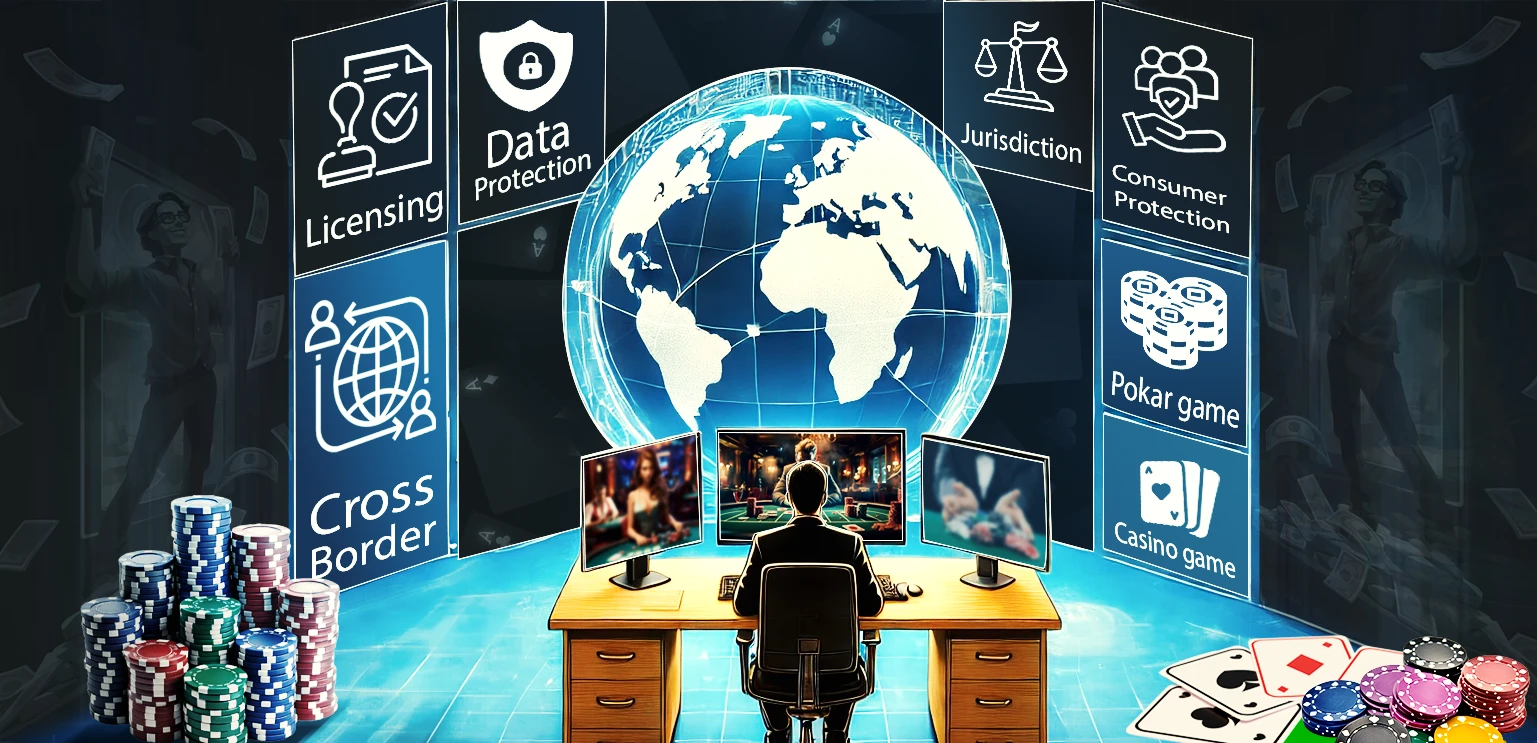
In the world of online gaming, real money games have become a popular and exciting way for players to win rewards. These games offer players a chance to earn cash or prizes by showcasing their skills and luck. However, for game developers and operators, the road to offering real money games isn't always smooth. One of the biggest hurdles they face is navigating the complex landscape of regulations and ensuring global compliance.
Real money games allow players to stake actual money for a chance to win cash prizes and rewards. These games include online poker, blackjack, fantasy sports, and other skill-based or competitive gaming experiences. However, developing real money games poses challenges, especially in ensuring compliance with local and international gaming regulations.
Regulations for real money games exist to protect both players and operators, ensuring safety and fairness in gameplay. These rules safeguard players’ personal and financial information while preventing illegal activities like money laundering in gaming platforms. Without proper regulation, the gaming industry could face fraud, unfair practices, and a loss of trust among players.
Additionally, governments worldwide impose specific rules to protect consumers from gambling addiction or excessive losses. Developers and operators must ensure they are compliant with these regulations to maintain their reputation and avoid potential legal penalties.
One of the biggest challenges for real money game developers is that regulations vary greatly across different countries. What is legal in one jurisdiction may be completely prohibited in another. In some countries, real money games are fully regulated and allowed, while others have strict bans or vague rules that make compliance tricky.
For example, the United States has a patchwork of state-level regulations for online gambling. Some states like New Jersey and Pennsylvania have legal and regulated online gambling markets, while others like Utah completely prohibit it. This creates a confusing environment for developers who want to offer their games to players in different states.
In Europe, regulations can vary from country to country as well. The UK has one of the most regulated gambling markets in the world, ensuring players are protected and operators are held to high standards. On the other hand, some countries in Eastern Europe have more relaxed regulations or even no clear regulations at all.
The landscape of gambling regulations is constantly evolving. Governments regularly update their laws to address new trends, such as mobile gaming or cryptocurrency betting. Developers must stay on top of these changes to ensure they remain compliant.
To operate legally, real money games often require specific licenses. Obtaining these licenses can be time-consuming and expensive. Moreover, each region may require a different license, which adds to the complexity for developers working in multiple markets.
Offering real money games across borders often involves understanding different legal requirements for each country. Some regions have strict rules on advertising and player targeting, while others might impose high taxes on winnings or profits. Navigating these cross-border restrictions can be a major headache for developers.
With real money games, the protection of players' personal and financial information is paramount. Developers must comply with data protection regulations such as the EU's General Data Protection Regulation (GDPR) to ensure players' data is kept safe.
Governments have implemented measures to safeguard players from gambling addiction and to ensure fairness in games. Developers must incorporate responsible gaming features like self-exclusion and time limits, which require careful planning and implementation.
How Gamix Labs is Helping Developers Navigate Compliance
At Gamix Labs, we understand the complexities of developing real money games and the challenges of legal compliance. Our expert team ensures games adhere to local and global regulations, delivering seamless, safe, and enjoyable experiences for players. From obtaining licenses to implementing responsible gaming features, we support our partners through every step of development and compliance.
We use industry-leading technology to ensure all real money games meet the highest standards of fairness, security, and reliability. Our games employ advanced encryption to protect player data, and we collaborate with regulators to maintain compliance with evolving laws.
Conclusion: Navigating the Future of Real Money Games
As the online gaming industry grows, real money games will continue to play a significant role in the market. Success in this space depends on navigating the constantly changing regulatory landscape and understanding legal requirements thoroughly. By staying informed, obtaining proper licenses, and ensuring compliance with data protection and consumer laws, developers can thrive.
At Gamix Labs, we’re committed to helping developers and operators tackle these regulatory challenges. So, they can focus on what they do best: creating fun, engaging, and rewarding games for players worldwide.
What are the main regulatory challenges for real money games?
The biggest issues are different laws across countries and states, costly and changing licensing rules, strict payment and anti-money-laundering checks, and ongoing rule updates that force developers to keep adapting their games and operations.
How do licensing and local laws affect a game launch?
You usually need separate licenses or local partners for each market. That means longer, pricier launches, geoblocking for restricted areas, and extra steps like KYC and AML checks before players can join.
Why is player data protection so important in real money games?
Real money games handle personal and financial info, so following rules like GDPR, using strong encryption, and limiting data access is essential to avoid fines and keep players’ trust.
What responsible-gaming features should developers add?
Include self-exclusion, deposit/time limits, reality checks, and easy links to help services. Regulators often require these, and they help players stay safe while keeping your product reputable.
Can developers offer real money games all over the world?
Not immediately. Most take a step-by-step approach: secure key licenses, work with local partners, use geo-controls and tailored payment options. True global availability usually comes later.
Game development is an exciting process that brings ideas to life in the form of interactive entertainment. However, many people often confuse game design with game programming. While both are crucial for creating a successful game, they serve different purposes and require different skill sets. In this blog, we’ll break down the key differences between game design and game programming in simple terms.
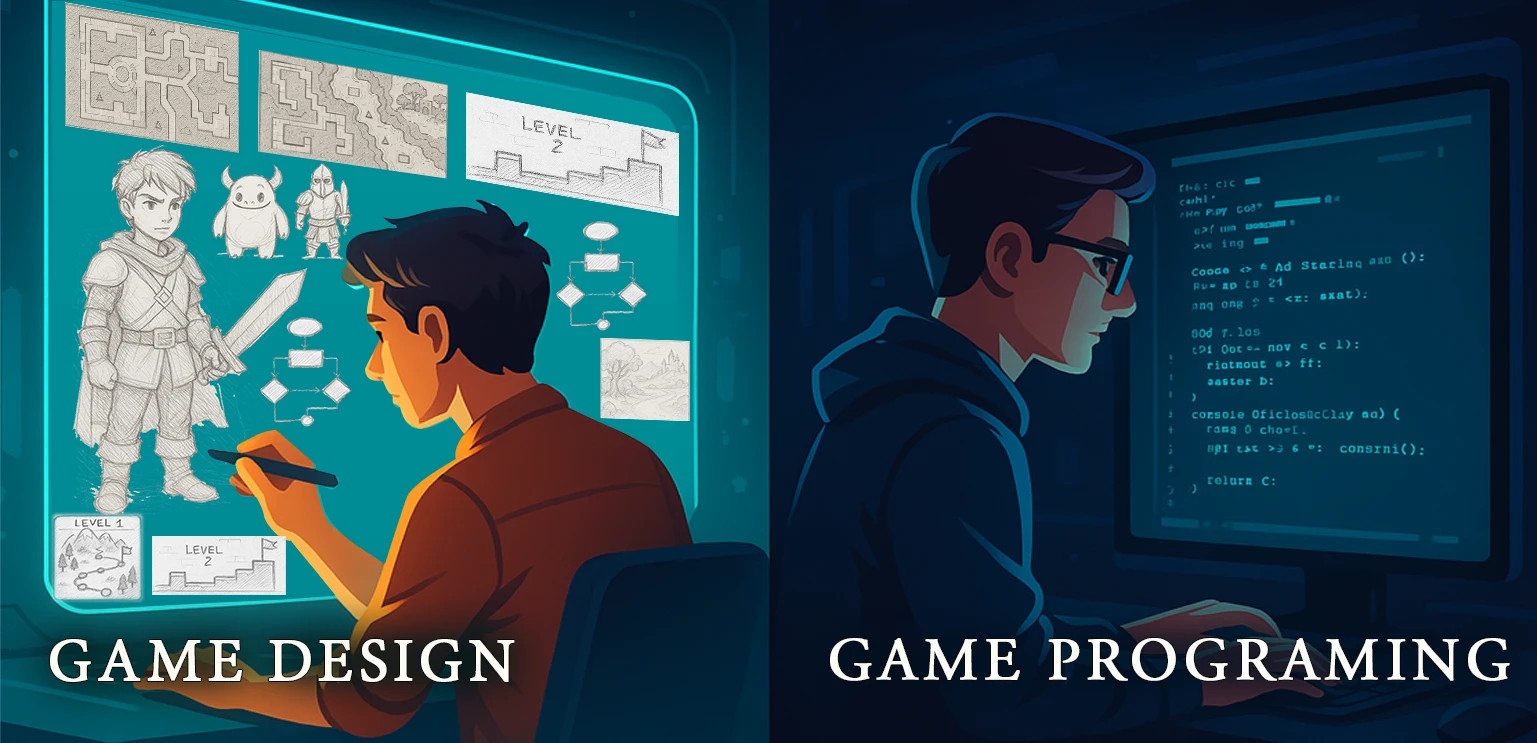
Game design is all about creating the vision of the game. Game designers are responsible for crafting the gameplay, rules, story, characters, and overall player experience. They focus on making the game engaging, fun, and balanced.
Game programming, also known as game development or coding, is the technical side of making a game work. Game programmers write the code that power the game’s mechanics, physics, AI, and interactions. Without programmers, the game wouldn’t function!
How Game Designers and Game Programmers Work Together
Game designers and programmers work hand in hand to turn a concept into a playable experience. Designers create the blueprint, while programmers build it into reality.
If you love storytelling, creativity, and designing player experiences, game design might be the perfect fit for you. On the other hand, if you enjoy problem-solving, coding, and working with technology, game programming could be your calling.
Game design and game programming are two sides of the same coin. One focuses on creating the vision, while the other turns that vision into reality. Both roles are essential for making great games, and successful game development relies on strong collaboration between designers and programmers.
At Gamix Labs, we bring together expert designers and programmers to create high-quality games that engage players worldwide. Whether you're looking to develop a mobile game, PC title, or something in between, our team is here to help.
What’s the difference between game design and game programming?
Game design shapes the idea — rules, levels, story, and how the game feels. Game programming turns that idea into a working product by writing code for mechanics, physics, AI, and performance. One dreams it up; the other makes it run.
What skills do I need to become a game designer?
You’ll want creativity, a feel for player psychology, strong level- and systems-thinking, basic prototyping skills, and clear communication. Play testing and iterating from feedback are also key — designers build fun, not just features.
What skills are essential for game programmers?
Good programmers know languages like C# or C++, understand data structures and math, can optimize performance, and debug reliably. Familiarity with engines (Unity/Unreal) and version control makes collaboration much smoother.
How do designers and programmers work together on a game?
Designers propose mechanics and produce specs or prototypes; programmers estimate feasibility and implement the systems. Then both test, tweak, and iterate — frequent playtests and clear bug reports keep everyone aligned and the game improving.
Which should I choose: game design or game programming?
Pick design if you love storytelling, systems and player experience; pick programming if you enjoy solving technical problems and building tools. If you’re unsure, try small projects in both — many roles (like technical designer) let you mix creative and technical work.
Slot games have immense popularity in the gambling world, and their popularity enhanced the availability of Slot machines. Now, Slots are available from casinos to our cell phone screens. Indeed, slots are no more limited to physical casinos; gamblers can even enjoy and try their luck to win jackpots through Live casinos or Video slot games.
Slots have been running and attracting gamblers for hundreds of years, and since the 1900s, it has taken a special place in casinos globally.
So, till this reading, you must have learned about this week's topic; Slots. Indeed, you are right and reading a fruitful blog, rich with Slots' information. If you are curious about Slot and want to know the know-how of the Slots, this is for you.
In this blog, we will discuss all Slots, including Slot game development, Slot game art development, Slot development costing, Slots features, benefits of outsourcing Slot game development services, and much more that would amaze you. So, please keep reading and start learning from its revenue growth.
A news published in PRN stated, "The slot machine market is poised to reach USD 8.21 billion during 2020-2024, progressing at a CAGR of over 10% during the forecast period."
Canadian Gaming Association has also shown a report which stated that legalized gaming has nearly tripled in size since 1995, from $6.4 billion. And, it made $15.1 billion in 2010.
Another factual research shows that Slot makes 50% of casino revenue, while some reports show that Slot shares 85% of casino revenue.
According to German news channels, Online slots helped them see a good revenue generation hike. Within a few months, Germany received an increase in tax revenue of about 15.5% because of the expanded online slot market.
In the above section, we have mentioned some revenue stats of Slot games in different reigns of the world. Now, we are going to make you aware of fun facts that may be surprising to you.
We have heard a lot of myths about Slots and video slot games, like the number of reels and number of players, and revenue stats, but there are more things that can surprise you and make you numb for a moment. Let's start with its age.
🔹 Slots are Older than the Oldest Person on the Earth
Many people are not aware of the fact that Slots are older than any person living in this era; it has been 140 years since the first slot machine was invented back in the 1880s in the US. For an idea, those slots were simple and ancestors of video poker machines.
We have always heard that Las Vegas is the city of casinos and has the highest number of Slot machines. Although this is not a fact, actually the hub of Slot casinos is Japan. Indeed, Japan is not only famous for Pachinkos, but studies revealed that there is a slot machine for every 27 people in Japan, while in the United States, there is one machine for every 350 Americans.
Moreover, Japan's Pachinko (Pachinko's Parlors) market generated more revenue than Las Vegas, Macau, and Singapore combined in the year 2015.
🔹 Most Profit-Sharing Game in the Gambling Industry
If you are exploring Slot games for the first time, you may not find this fact amusing or factual, although it's certainly proven that slot machines are the single most profitable game in the casino industry.
For many years, some well-known Slot games have consistently increased revenues for casinos, both offline and online. Those masterpieces are still favorites among players since they are always in vogue and would never go out of style.
We have heard many YT's masters discussing strategies to win Slot's jackpots or to grab the winning amount by a number of wheels and other non-factual talks. However, Slots are designed with an RNG game system and won't give you a chance to make strategy; the game is simple to play, as you must have seen on reels. Lastly, no strategy remains to win Slots; it is just your luck.
Like other games and sports, casino games also have professional players; however, people are confused when they know that professional Slot players also exist.
Professional slot machine players don't concentrate on honing their slot techniques. However, they continue to invest a lot of time in researching the greatest payout percentages and evaluating slot machines to offer themselves the best long-term winning prospects, as there is no way to improve your game or develop a strategy for playing slots.
It's also fascinating to note that online video slots pay higher than offline slot casinos and also pay high bonuses and other benefits to online gamblers, which cannot be redeemed by offline players. Click here to learn more about the Casino's features.
RTP percentages range from the middle of the 80s to the low 90s on most land-based slot machines. In comparison, online slots typically have RTP values between 94% and 98%.
This is one of the biggest misconceptions about Slots that there are "hot" or "cold" slots; it is just a misconception, nothing else. Don't let yourself adopt this talk anymore since you'll hear a lot of players talking about something that doesn't exist.
Since Slots are engineered to be fully random, slots cannot become hot or cold. Each spin generates a fresh result that stands alone from the preceding ones.
Here, we have discussed interesting facts and revenue of Slots. In the next section, we will discuss what a slot is in detail.
Slots or video slots are a part of casino games that can be played online or offline. Slot game is a type of bet-and-spin game. The spinning wheel is the game's key element. The user only needs to press the "Spin" button to have an incredible gaming experience; this game does not require abilities or previous gaming expertise to win.
Players can place bets and spin the reels to hit winning combinations of symbols and earn payouts.
A video slot game is played on a computerized console similar to slot machines that are played in real casinos. Although, video slot games typically have a larger number of pay lines and more interactive features than traditional slot machines, which were designed with hard wares.
Moreover, video slots are often based on popular themes or characters from movies, television shows, or other forms of media, while physical slot machines are used to design with classic art.
Video slot games also have immense popularity among gamblers because they offer a wide range of themes and features, including wild symbols, scatter symbols, free spins, and progressive jackpots.
The classic slot game is, as its name suggests, these slots traditional and designed with simple variations. It is also famous as three-reel slots and is played using basic rules with a single pay line.
For example: If the player gets landed three similar symbols in a pay line, he/she will win the game.
Video slots, also known as five-reel slots, are the most popular digital slots. Video slots work digitally and are designed with special features like wild symbols, scatter symbols, and bonus rounds that can increase your chances of winning.
For example: In this gameplay, the player can win through different sets of pay lines, as these games can be developed with 10+ pay lines and special symbols.
Progressing slots are also referred to as accumulated jackpots because of the way that jackpots are structured. Progressive Slots are developed with jackpot features, which means that the prize grows every time a player takes a spin. When the jackpot is won, it will reset to a predefined sum.
For example:Progressive slots have various slot machines in gameplay and a defined amount being collected from every player. When they hit any slot under the progressive Slot, the amount goes to the jackpot.
Pinocchio, a well-known cartoon character, has a 3D slot machine game as one example. As a result, the players can enjoy a captivating narrative with five reels and bonus features.
Including 3D animations and compelling narratives can help draw in new players. With the help of 3D game development, firms can thus access a new market that isn't present in conventional slots.
Players can have a casino-like experience with realistic graphics and movements with the use of Oculus headsets. As a result, they immerse themselves in the slot game for hours at a time. In comparison to screen slot games, the virtual reality format offers the players a more realistic experience.
Note: There are mainly three types of slots exist Physical Slots, Video Slots, and Progressive Slots, and all other slots types Penny Slots, Multi reel Slots, and I-Slot are different variations of slots. VR Slots, 3D Slots, and Mobile Slots are platforms that can be used to launch this experience and don't change gameplay, except players' experience level.
Now we have learned about Slots and types, let's talk about their volatility and how it works.
Online casinos' slots work with a random number generator (RNG) that determines the position of the symbols. An algorithm used by an RNG cycle goes through hundreds of numbers per second to give a unique result. So, it fetches unique and unpredictable whenever a player presses "spin," The result fetched with the RNG system never becomes relevant to the next coming numbers.
RNG works impartially and generates random numbers for each spin. Therefore, the outcome of any subsequent spins is unrelated to the result of the prior spin.
Slot machines can be configured with different volatility levels. The danger of losing a bet is referred to as "Volatility." Since there are three primary types of volatility, the developer can modify the logic of the slots according to the set of volatility: High, Low, or Medium.
For players who desire to win more frequently, low volatility is a good option. For each win, the payments are less, nevertheless. These slot machines are, therefore, low-risk. Players become more involved as they gain more wins as a result.
The high-volatility slot machine game is at the other end of the range. These have the biggest jackpots and prizes. However, there is a greater chance of losing. Players seeking greater risk and greater potential returns can play these games.
Slots are popular for their amazing features, as those features help developers in improving the gameplay experience for players. So, in this section, we are going to discuss some of the most popular features of a slot game.
Payline is a mandatory feature of Slots and can be from a single line to 1024 pay lines. Payline can be understood as a winning scale; if the user is able to arrange a set of symbols according to pay lines, he will win the game. The more pay lines of slots allow the players more chances to win.
There are many slots that are developed with unique interactive features like Reel Hold, where players are allowed to choose, which reel they want to hold in place for the next spin. These games help players in boosting winning chances and give you high returns.
Wilds are another amazing feature of Slots. A wild symbol can substitute for all other symbols except scatters and special symbols. Wild symbols play a vital role in creating win-win situations for players. However, there are four types of wild in slot machines: Walking Wilds, Shifting Wilds, Expanding Wilds, and Random Wilds.
Scatter symbols play magically, and they can work as a bonus symbol and can be paid anywhere instead of the place where it falls on the reels. Users can win big bonuses with scatters, and the more scatter symbols result, the more winning percentages for you. Although, scatters are special symbols and cannot be substituted by Wild symbols.
A mystery symbol is a special symbol; those symbols can transform into other symbols to create winning combinations. These symbols add an element of surprise and excitement to the game, as the player doesn't know which symbol the mystery symbol will reveal until the reels stop spinning.
Spins or Free spins are the most popular features of Slots, and they mostly include free spin features in their games to offer engaging gameplay, as Free spins give extra chances to players to spin the slot machines.
A Multiplier is a bonus card included with every regular win. A simple multiplier starts from 2x and doubles the winning value of the game. Developers can create games from 2x multipliers to 16x multipliers. Therefore, multipliers come in three types: Regular Multipliers, Wild Multipliers, and Progressive Multipliers.
Progressive Jackpot is a feature of Slots; however, people also recall progressive jackpot machines as Progressive Jackpot Slots. Progressive Jackpot holds a sum of every betting that is being played on different slot machines until it is withdrawn from a player.
Cascading reels, also known as tumbling reels or rolling reels. Cascading reels are one of the most popular features of video slot games. This feature causes winning symbols to disappear from the reels and new symbols to take their place, potentially leading to additional wins on the same spin. Cascading reels add excitement and variety to the gameplay and can lead to some impressive payouts for the player.
A mini-slot feature enabled players to play mini-slots within a Slot; some games have multiple mini-slots within a slot. This concept is on boom nowadays, and most casinos are enabling this feature in their slot machines. Mini slots add an element of skill and decision-making to the game and can lead to some generous payouts for the players.
A bonus wheel, also known as a prize wheel or spin wheel, is a special feature that you would see in video slot games. With the bonus wheel, a certain combination of symbols on the reels allows the player to spin the wheel to win a prize.
A pick bonus, also known as a pick-and-win bonus or a pick-em bonus, is a special feature found in some video slot games. It is another popular feature known as "Pick a bonus", where users are allowed to pick a bonus manually. The options may include different objects, symbols, or symbols, and the player must choose one to reveal their prize.
In a Megaways game, the number of symbols that appear on each reel can vary from spin to spin, and the number of possible combinations can reach into the millions. Some Slots experts also say that Slot games can be a win in 117,649 ways.
Well, here we have told about various Slot features that can be integrated with the gameplay. However, there are also some aspects that should be considered while developing any Casino game.
If you are looking to develop a Slot, it may take innumerable hours of brainstorming to create a blueprint that can lead you to achieve a successful result. In this section, we are breaking down those parts for you in a brief session.
Produce demographics before brainstorming to launch your own game in the industry, as this is a famous saying that the house always wins, but the house is because of their strategies and mind game behind the gameplay. So, you would always require to collect demographics first before further going ahead; if you are targeting China's market, you would have to come up with Dragon's game theme that would help to connect with the audience.
For development, you can consider having experts in the Slot development team, or you can hire an outsourcing agency to develop your game. An agency can help you in filling all the gaps and would reduce development time through risk mitigation and other essential pros.
The next thing that you have to mind is how you will release your product, as everything works with great presentation. So, you would have an idea of how you will showcase your product and what will be the key features of your product. This will include the animations, artwork, and audio.
Another crucial factor for any game is experience. You would have to ensure that the game must be optimized and perform robustly even with heavy game assets and can deliver top-class performance. All these aspects establish a preliminary belief that the game is good and can be trusted.
"Slots are immersing people the same way as video games" this is a fact or can be said to be a fun fact, revealed in a study by MIT. So, it is detrimental to design Slots with additional features to engage gamers in the gameplay. It is not always necessary to set low volatility or high-paying games to engage gamers, but to ensure that players are being rewarded timely and have fun while playing, we have introduced you to additional features of Slots that can help you to retain your customers.
An avid gambler who enjoys playing a certain game on an Electronic Gaming Machine in the casino might prefer to do it from the ease of his own home. Therefore, digitalization can be of use, and we go into the world of online gaming.
Omni platform support is a need for a solid company that creates high-quality games to ensure that users can play the Slots hassle freely on any device: Android, iOS, PC, or tablet.
We have learned a lot of things about Slot games, from Slots types to their additional features, facts and revenue stats, and more. In this section, we will let you know the step-by-step process of slot game development, or simply, you are going to learn how to build a slot game in detail. Moreover, we have added Market research and other section that would help you in developing games from scratch.
While developing any casino game, the main challenge is to build fair gameplay with rewards and simple play games at the same time, so players can enjoy it well.
Idea generation is the first process for any game; whether you are equipped with an idea or not, you would have to start with this process. In idea generation, which is also known as brainstorming, it is considered to develop an idea about a game and how it will look in the same process, you can discuss your idea with your team and gaming consultants.
They would help you in deciding what the game should look like and how it can be different from existing games by deciding the Slots theme, Slot art Style, Slots Features, Mechanics to be used in the gameplay, including payment integration, and platform to be developed for.
To identify your goals, you would have to conduct market research, like what people wish to enjoy and how you would target the industry through your products.
Slot Game Idea -- Is your idea unique and creates a difference in the casino industry?
Trends -- Will your Slot be marketable, or will it be preferred for gaming in the gambling industry?
Language- What are the reigns you are going to cover with the game? Does it require language localization?
Platform -- Which platform can target most of your players?
These questions can help you in creating a development budget for your game and also give you an idea of which will be the best platform to introduce your Slot games or if it should be an omni platform.
A risk analysis should be done after market research. A risk assessment involves identifying potential dangers, assessing the risks, documenting them, and putting the solution into action.
Additionally, market research and risk analysis would help you in deciding whether you can go with an outsourced team or can creating an in-house team can lead you to succeed.
GDD is a document produced for each game, known Game design document. It is mostly designed by game designers and requires expertise in game development. So, in this process, you would have to hire a game designer or agency services to outline game development requirements.
The GDD involves all types of requirements and concepts of Slot games that help developers, designers, and artists to move forward with one goal and work simultaneously without misconception.
Slot features that need to add in the game.
Art concept and story of the game.
Technology stack to be used for Slot development accordingly.
Development Time frame and project completion schedule.
In this step, you will have to start working on the concept of the Slots and designing the aspects of the game. Here, you would have to take services or create a team to design the concept art of the game.
The outcome of this step ate for concept purposes that can be modified in later stages of slot game development. You can ensure to design initial sketches, wireframes, and mockups in this stage. Other important game art, like characters, symbols, backgrounds, etc., can also be sketched out and modified later.
A prototype is a version of the game that is used to test and refine its mechanics and features. When you get completed with wireframes and initial artwork creation, you will able to create a prototype for the slot game.
Prototyping can help game developers identify and fix problems with the game's design, as well as gather feedback from players to improve the final version of the game.
Producing Prototyping can be a crucial step in the development of a slot game, as it allows developers to experiment with different ideas and ensure that the game is fun and engaging for players with mechanics that are required to be implemented.
Building Slots covered a lengthy process to become a polished version, and Slot art designing work comes in a few final Slot development stages. In this stage, you have a prototype to follow and start art creation for your game.
The slot art team can start rendering characters, symbols, and machines for the final product. Here, UI/UX designing team also lined up with tasks to offer a good user experience with updated artwork for the game.
Initial coding start for the primary version of the game just starts after producing a prototype and analyzing the project risk, and collecting solutions documents of risks.
Indeed, this is the war ground for developers, where they start writing code and working on the salient features of the game.
As for developing casino games and Slots, RNG is the most important factor for development; developers start to work on the RNG and other aspects like:
Winning amount
RNG for games
Bonus prizes
Special features
Payment Gateway
During the development journey of slot games, developers also work on other related software that offers transactions and other gaming needs. Furthermore, if you are developing Electronic Gaming Machines or Land-based Slots, developers will start working on Slot machine software development and payment integration software or hardware in this phase only.
Slots are games of gamblers, and they always expect to have an excellent payment gateway as these games run on constant transactions. So, your Slot game developers have to ensure that they are creating a robust and reliable payment gateway for Slots.
So, if you are developing Slots for cross-platform, then Unity or Unreal would be the best Slot game development tools, as these tools are loaded with features that help developers translate games to multiple other platforms.
Game testing is an important part of each game development, and most firms do rigorous testing to offer impeccable gameplay experiences to their customers. However, when the game is developed, QA and testing team conducts thorough testing for each functionality of the Slots and also submits their game code to licensing authority to acquire a license for an individual casino game.
There are mainly five testing norms for Slot games as follows:
Unit Testing - Where Slot Quality Analysts and Game testers will check each component's functionality
Integration Testing - In this testing, they will check for issues that arise after integrating API or other services integration.
System Testing - QA will ensure that the game is developed with its technical, functional, and business requirements.
Hardware Testing- This testing mainly requires Land-base Slot machines that are assembled in a Slot machine for TITO or Cash transactions.
Beta Testing – In this testing, you can try playing the game for free in demo mode to get a feel for the gameplay and features. This will allow you to see if the game is working properly without risking any money.
When you are ready with your Slot and its license, create a plan for marketing according to the platform. If you are going to launch your Slot on iOS/Android, create a marketing budget or consult with ASO for the same, you can also do online marketing for releasing your game on other platforms like Facebook. Each app store or gaming portal has its laws and regulations, so ensure that you understand them before publishing your slot game.
Many times game publishers think that they should only work one time on their games, and they forget that there are lots of chances to retain players. Mini updates can also work as retention tools for your players.
So, always try to update your game with new features; adding more reels to your game or giving bonus prizes can work out for your game growth. Moreover, some updates are mandatory for security reasons, so keep your Slot team there to update you.
Video Slot game development has been explained thoroughly in this long reading session. Here, we also covered the most important information for the land based development process.
We have discussed thoroughly about video slot game development, which is similar to Land-based Slot machine development; however, there are some different curves that you would have to follow for Land-based Slot machine development.
Developing Land-based Slots starts with conceptualization, and designing is the first stage. It involves theme creation, the storyline of the game, UI/UX, visual elements creation, and animation.
When the prototype and game visual element have been finalized, the game developers start developing the game, and the hardware development team starts developing a platform for the casino. In this phase, the development and QA teams work together to create the game and ensure that it is fair and fun to play.
If you are launching the game with real currency gameplay. Make sure that the game is licensed and regulated by a reputable organization, such as the Malta Gaming Authority or the UK Gambling Commission. The regulatory approval process typically involves an in-depth review of the game to ensure that it is fair and compliant with all relevant laws and regulations.
When the game has been approved by reputable authorities, it is ready for manufacturing and distribution to casinos and other gaming venues. This typically involves marketing, partnering with a manufacturer and distributor to produce the game and make it available to players.
The development cost of any Slot game can vary from another one. And mostly development cost depends on a number of factors, and features, including the complexity of the game.
In general, the cost of developing a slot game can range from tens of thousands of dollars for a simple game with basic features like three reels with scatter, mega win, or simple artwork. And a Slot would also cost hundreds of thousands of dollars or more for a more complex game with multiple features and high-quality graphics.
Additionally, we have put an expected cost for game development only. There are also ongoing costs associated with maintaining and updating the Slot, as well as the cost of licensing and regulation by third-party organizations.
So, you should focus on the relevant path of development according to your business requirements and then compare for the best prices.
Well, there are ways to reduce the cost of Slot development through hiring an experienced game development studio and developing a simple game with minimalist features in the first version of the game.
Hiring an outsource studio can be an auxiliary in your game development journey. With a small team and expert Slot, a game development outsourced services company, you can reduce the labor cost, and it will also enable you to scale up or down as needed.
Begin with a minimalist features list for your first version. It will enable you to add new features and content in the next update or when you hit the market successfully because developing complex games with various features can beat your progress.
There is one more way to reduce costs to use existing game engines and development tools to develop your game rather than building everything from scratch to develop your game. Although, it requires proficiency in game development and relevant genre. For this, you can hire an outsourcing studio to develop your Slots.
What are the Benefits Of Hiring an Outsource Slot Game Development Studio?
The slot is a casino game that requires casino development expertise to develop games that are loaded with several features, have a cash transactions facility, and also need to be verified by reputable authorities.
So, here we are discussing several potential benefits of outsourcing the development services of a slot game to a specialized studio.
This is one of the major benefits of hiring an outsourcing agency for Slot game art or game development services. It is always more cost-effective than hiring in-house employees and spending on their training for project completion to outsource service within the agreed deadline. Moreover, it also saves the cost of buying premium software and other tools that are used to develop Slots.
Development studios that specialize in creating slot games will have a deep understanding of the technical and creative aspects of game development. Their expertise also helps to fulfill the gaps and offer high quality and engagement for players.
Outsourcing enables businesses to add or eliminate resources on a project-by-project basis without the need to hire permanent employees. So, it would always help you in saving on numbers; you can work with one developer for the long term or hire a dedicated game development team for the short term.
By hiring an outsource game development company, you can free up your own team and work on other aspects like marketing, customer support, and other aspects while the development team does their tasks. This can ensure that your company grows and remains competitive over time.
Hiring an outsource game development studio can also provide access to a global pool of talented developers, which can be useful if you are looking for specific expertise or want to tap into different cultural perspectives.
We hope this blog helps you in learning each term of Slot games from starting conceptualization to market release. We discussed information about Slot game development, Land-based game development, and much more. We have also shared facts, fun facts, revenue, and an easier process to develop a Slot game for your audience.
The slot is a video game that falls under the casino game genre. A player wins the slot when the symbols on their reels land on the winning pay lines combination.
What is RNG in Slot games?
RNG is known as Random Number Generator features integrated with almost every Casino game.
What are the technologies behind Slot game development?
Slot games can be developed using Cocos, Unity, and Unreal engine, with the help of C++, C#, Java, JavaScript, Phyton, Lua, and HTML.
What is the cost of slot game development?
It costs $10,000 to build a basic Slot game with minimalist features; however, additional costing will be liable for authority approval and other aspects.
Why should we hire Gamix Labs for Slot game development services?
Gamix Labs is a full-cycle Slot game development company, provides Slot game development services, Slot game art designing services, and Slot animations services. Moreover, Gamix Labs' team has immense experience in developing Slot game for cross-platform as well as Land-based Slots.
What are the types of Slot games?
There are several types of Slots played all over the world; however, some of the famous slots are Video Slots, Progressive Slots, and more. Other games are:
- Classic Slot games
- Video Slot games
- Land Based Slot games
- VR Slot games
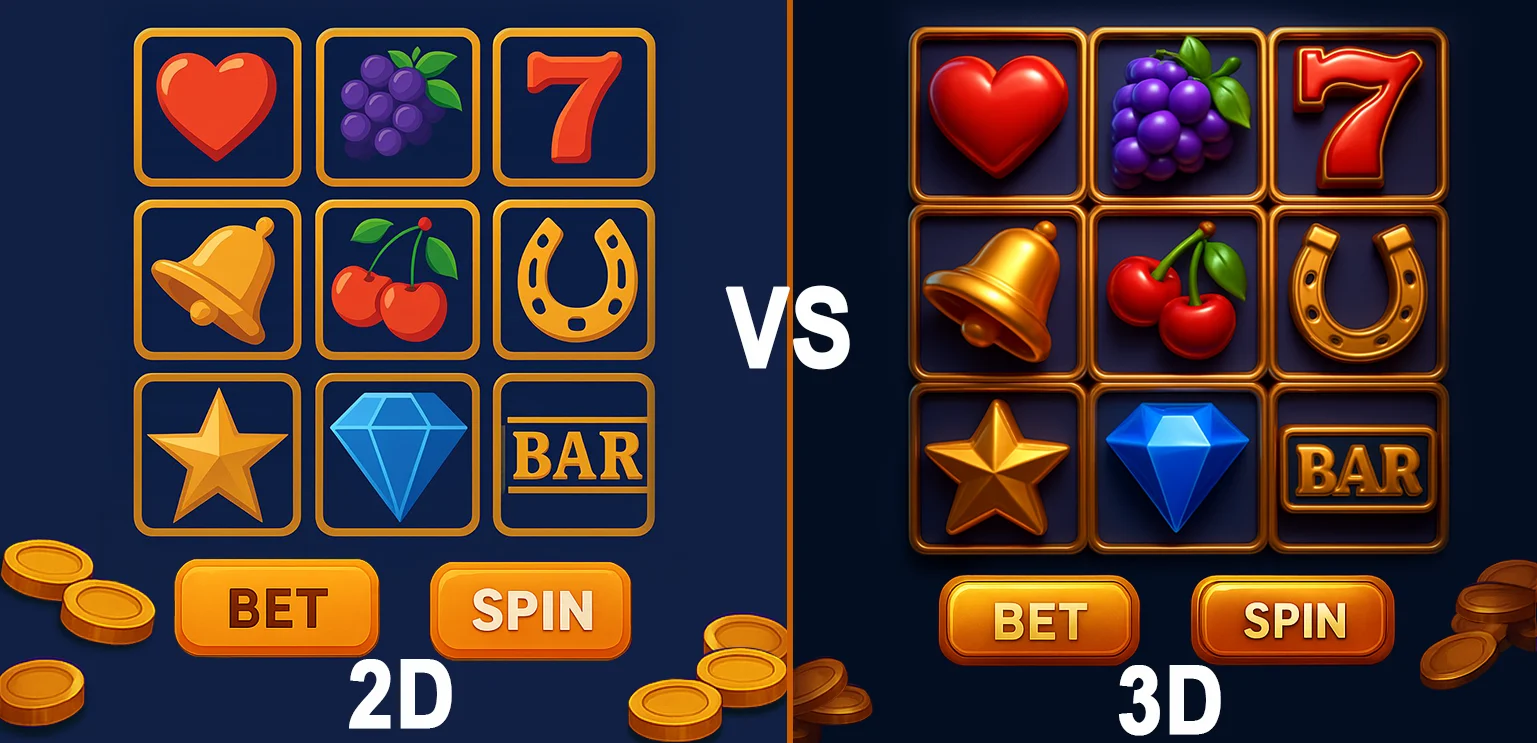
In the visually competitive world of slot games, the choice between 2D and 3D art is more than just aesthetic—it can shape the game’s tone, affect performance, influence costs, and even determine how well players engage. At GamixLabs, we’ve worked with both 2D and 3D styles across dozens of slot projects, and we know when each one makes sense. In this guide, we’ll break down the strengths of each art form, the challenges they bring, and how to make the right decision for your project.
2D art in games involves creating flat visuals that use only height and width, without any depth, to represent characters, symbols, and environments. It’s a classic approach that offers clarity, simplicity, and a wide stylistic range.
Many classic and casual slot games use 2D art because of its straightforward style and nostalgic appeal. Think of fruity icons, Egyptian scrolls, or cartoon characters—these are often illustrated in 2D to feel light, nostalgic, and instantly readable.
3D art brings an object to life with depth—adding height, width, and depth. Models are rendered in 3D software and can be animated from multiple angles, with lighting and shadow effects.
3D art is ideal for immersive themes—like fantasy, sci-fi, or action slots—where visual realism and dynamic effects matter. Characters, animated reels, and cinematic intros all benefit from the realism and fluidity of 3D.
Casual players, especially older ones, often prefer 2D because it feels familiar and fast. Younger players may expect 3D polish or hybrid effects that reflect other games they play.
Deadlines and budgets matter. A tight launch date might favor 2D, allowing rapid prototyping and iteration. If you have more time and resources, 3D can unlock richer animation and immersive effects—but only if you have the capacity to support it post-launch too.
Comparing Performance and Optimization Between 2D and 3D Graphics
2D assets load faster and consume less memory, which is crucial for maintaining a smooth 60 FPS on mobile.
3D requires careful LOD (Level of Detail) settings, polygon optimization, and texture compression to avoid lag or overheating devices.
At GamixLabs, our tech artists fine-tune performance whether it’s a flat PNG or a high-poly model.
GamixLabs has crafted slot games that showcase the vibrant appeal of 2D design as well as the immersive depth of 3D visuals. Our teams of illustrators, modelers, and animators collaborate closely to match the game’s tone and budget with the right visual approach. Whether it’s a sleek, flat-icon game or a layered, animated universe, we ensure it looks and performs beautifully.
Choosing between 2D and 3D art in slot games is about more than style—it’s a strategic decision. It affects performance, budget, and how players perceive your game. With thoughtful planning, either style—or both—can create immersive, engaging experiences.
At GamixLabs, we help you find the sweet spot between design and performance, ensuring your game not only looks amazing but plays beautifully, too.
Typically, creating 2D assets is faster and more cost-effective than producing 3D visuals. 3D requires more tools, time, and technical skill.
Is 3D always better visually?
Not always. 2D can be just as striking, especially in stylized or themed slots. The right choice often comes down to the game's tone and the preferences of its players.
Do 3D slots work on all devices?
Not perfectly. Older phones may struggle with performance unless assets are well-optimized.
Can you convert 2D assets to 3D later?
Yes, but it's not automatic. 3D versions need to be modeled from scratch using 2D concept art as a base.
Should beginners start with 2D?
For faster results and lower costs, yes. Many indie or first-time slot creators start with 2D before scaling up.
Can you mix both in one game?
Definitely. A lot of top-performing games combine 2D and 3D elements to achieve both efficiency and visual impact.
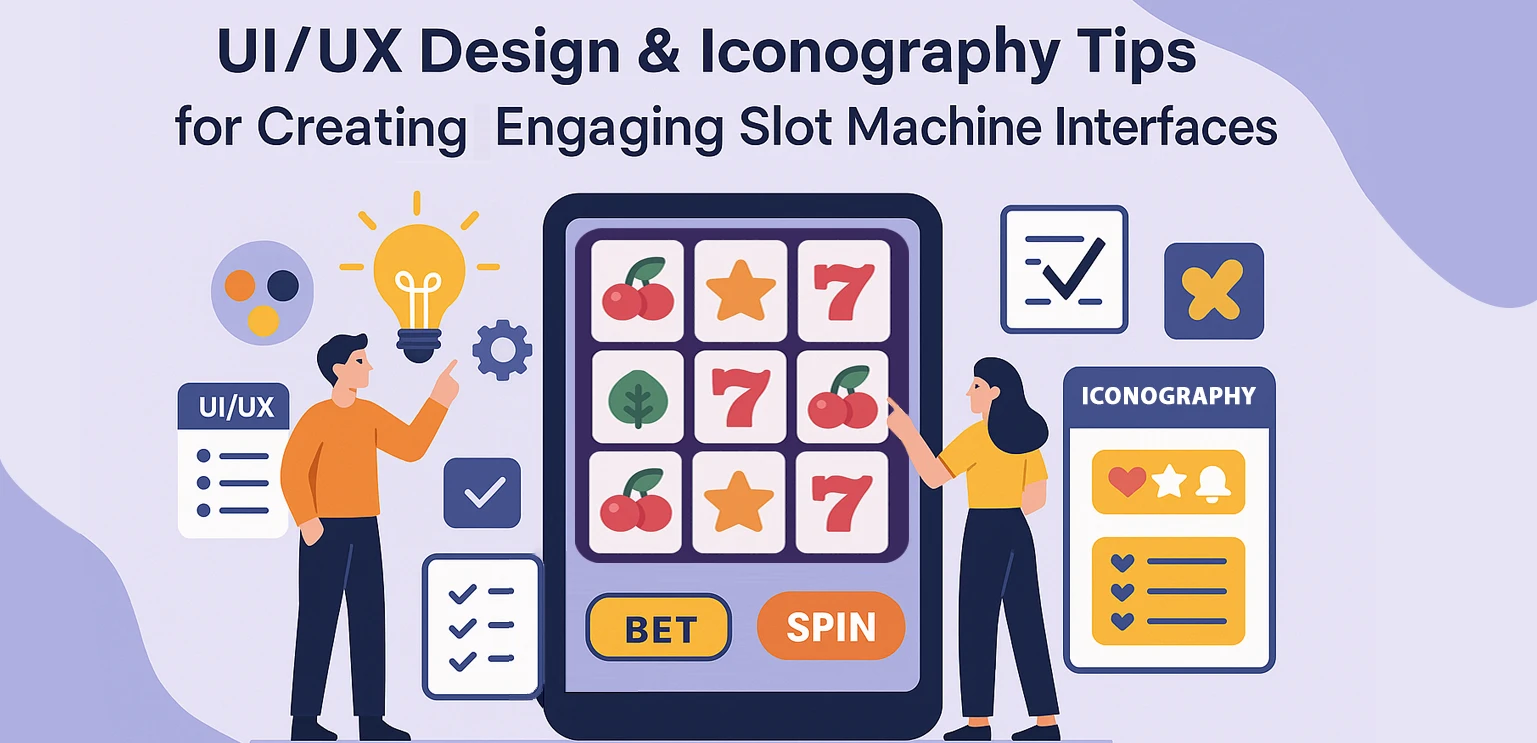
Creating an engaging slot machine game is not just about big wins or dazzling themes—it’s about making every spin feel smooth, intuitive, and delightful. At GamixLabs, we understand that a slot game’s interface is the first thing a player touches—and often the reason they stay. With attention to detail in UI/UX design and iconography, we build games that feel familiar yet fresh, functional yet fun.
Players today expect more than flashy graphics. If the interface is confusing, too busy, or hard to navigate, they’re gone in seconds. Good UI/UX keeps them spinning longer, enjoying the game without ever thinking about how it works. It’s invisible when done right—but impossible to ignore when done wrong.
A slot game’s core loop involves placing a bet, spinning the reels, watching them roll, and collecting rewards seamlessly. This entire cycle must feel effortless for players, as even the slightest hesitation or misstep can break their immersion.
Menus, popups, and tutorials must not interrupt the core spin cycle. Keep auxiliary features like paytables or settings just one tap away—never buried.
At GamixLabs, UI/UX is never an afterthought. We design, test, and refine every element—ensuring gameplay feels great on every device, in every market.
Designing a slot machine interface isn’t just about good looks—it’s about guiding players through exciting spins, effortless actions, and rewarding moments. With smart UI/UX practices and carefully crafted iconography, your game becomes a joy to play and hard to put down.
At GamixLabs, we merge form with function—ensuring every pixel, tap, and symbol supports a world-class experience.
In the dynamic world of digital entertainment, modern slot games have transformed from simple mechanical devices into sophisticated, math-driven experiences. But behind the flashing reels and animated bonuses lies a powerful balance of technology, fairness, and fun—anchored by RNG (Random Number Generators) and RTP (Return to Player).
As a company dedicated to game services and innovation, we believe in pulling back the curtain to reveal how core systems truly work. This approach not only builds trust with players but also showcases how modern slot games are created with both transparency and entertainment at their core.
How RNG Powers Unbiased Outcomes in Modern Slot Games
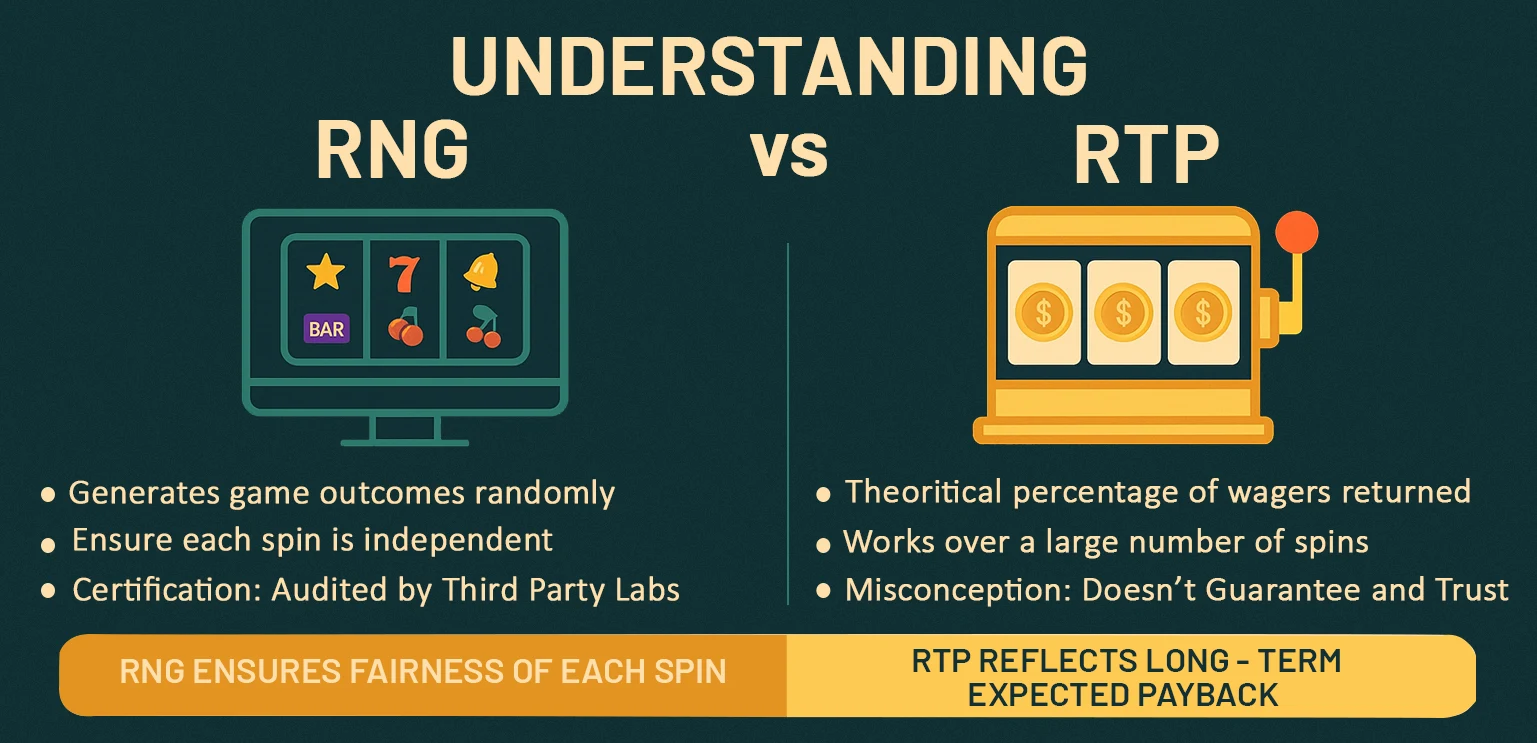
At the core of every slot game is Random Number Generator (RNG) technology, designed to ensure every spin is completely random and fair. The RNG constantly generates countless number combinations every second, independent of whether anyone is playing. The instant a player presses “spin,” the system selects one of these random sequences to determine the outcome immediately.
🔹 But what truly matters is how RNG builds trust:
Each result is independent: Your last spin doesn’t affect your next.
Tamper-proof: RNGs are embedded in certified systems audited by third parties like eCOGRA or GLI.
Constantly tested: Fairness checks ensure that results aren’t skewed in favor of casinos.
In short, RNG technology ensures players are never competing against an algorithm designed to deceive—but against chance itself.
Return to Player (RTP) refers to the projected percentage of total wagers that a slot game is expected to give back to players across extended gameplay. Shown as a percentage, RTP is based on extensive long-term simulations. For instance, a slot with a 96% RTP is theoretically built to return ₹96 out of every ₹100 bet over time, although individual gameplay sessions may yield very different results due to chance and unpredictability.
Players often confuse RTP with "guaranteed winnings." But RTP works over massive spin volumes—not individual sessions. So yes, you could win big on your first spin or lose 10 in a row—it’s all part of the randomness.
The magic of slot game fairness lies in how RNG and RTP co-exist. While RNG ensures each spin is unique and random, RTP ensures that, statistically, the game pays out according to its promised return.
Game developers use mathematical modeling and long-term simulations to fine-tune this balance. This is part of a process known as volatility balancing:
Audio-visual triggers: Rewarding sounds and visual effects drive anticipation.
Gamification: Loyalty points, missions, tournaments, and levels add depth.
But where we stand out is our emphasis on ethical psychology. While most competitors mention "exciting features," they often overlook how those features are developed responsibly.
Most online slots are games of chance. But a new generation is emerging—skill-based slots, where your decisions influence outcomes.
Think: slot mechanics + arcade-style interaction.
Introduces a hybrid model of entertainment and skill.
Few competitors address this, but we’re helping shape this future, working closely with studios exploring AI-driven dynamic difficulty, player choice mechanics, and RTP variance based on skill levels.
Players today want transparency, and rightly so. While certification is often done behind closed doors, some providers go the extra mile by publishing audit results. This includes:
RNG accuracy reports.
RTP variance over time.
Live payout percentages.
By encouraging developers and casinos to share this data openly, we’re helping reshape an industry that thrives on trust.
Conclusion: Merging Luck, Fairness, and Fun with Purpose
The perfect slot game isn’t just about spinning and winning—it’s about balance.
Between randomness and structure.
Between entertainment and responsibility.
Between excitement and trust.
As a company deeply involved in game development and services, we’re proud to advocate for slot experiences that are fair, transparent, engaging, and ethical. Because when game mechanics are aligned with player trust, everybody wins.
No. RNG systems are built to be completely random and are certified by independent authorities like eCOGRA or iTech Labs. This ensures they can’t be manipulated or predicted by players or casinos.
Is a high RTP always better?
Generally yes, as high RTP slots return more to players over time. However, game volatility and personal play style should also guide your choice.
What’s the difference between RTP and volatility?
RTP shows the average % of total wagers a game returns over time, while volatility reflects how often and how much it pays. High volatility brings larger but rarer payouts; low volatility offers smaller, more frequent wins.
Are online slots safer than land-based ones?
Often yes. Online slots usually offer higher RTPs and undergo stricter digital audits. They also display RTP data more transparently and include built-in responsible gaming tools.
How do I verify if a slot game is fair and certified?
Always check for RNG certifications from trusted labs such as eCOGRA, GLI, or iTech Labs. Also, make sure the casino holds a valid license from reputable authorities like the UK Gambling Commission (UKGC) or the Malta Gaming Authority (MGA)
How to promote games online?
A successful online game promotion roadmap can be built using social media platforms, personalized websites, search advertising, and experiential marketing strategies.
At GamixLabs, we often ask ourselves: what keeps players engaged in our slot games? Is it the glint of a jackpot, the buzz of hitting a bonus, or simply the joy of spinning reels? Through years of research and hundreds of game launches, we’ve found that making a slot game addictive isn’t about tricking players—it’s about creating joy, surprise, and a seamless experience that feels rewarding and never dull.
Slot games are built on a simple, human truth: people love rewards. That feeling of hitting a low-tier win—or just missing a big one—creates anticipation and engagement. Here’s how we design those moments:
🔹 Intermittent reinforcement: Instead of predictable rewards, we vary wins. Sometimes small, sometimes bigger. This unpredictability keeps the anticipation alive—and studies show it's more addictive than constant small payouts.
🔹 Near-miss effect: A reel spinning to two matching symbols with the third just out of reach creates a nearly emotional “just missed” effect. It builds the desire to keep playing.
🔹 Milestones and progression: Adding “10 spins till bonus round” or achievement trackers taps into our love of completing goals and earning something meaningful.
Sound and Visual Effects: Crafting Excitement Through Every Detail
A big win isn’t just about the payout—it’s a full sensory experience filled with energy, movement, and sound that pulls the player deeper into the moment.
🔹 Sonic cues: The chime of a small win pulses just right. A deep horn or uplifting tune signals bigger rewards. These layers build emotional peaks in the experience.
🔹 Animated celebration: Reels expand, lights flash, confetti falls—these visuals give players an emotional lift that words can’t match.
🔹 Responsive UI: Even a simple spin button pressing down, shaking slightly, and popping back gives playful weight and feedback that feels satisfying.
Unpredictable excitement is great—but if sessions go too long or too short, players disengage. We carefully design pacing to ensure sessions feel fun and leave players wanting more:
🔹 Session duration targets: Typical slots aim for 5–7 minutes, which is long enough to feel immersive and short enough not to drain energy.
🔹 Balanced volatility: We tune the mix of frequent small rewards and reward spacing so players stay engaged without feeling punished.
🔹 Mini-games and bonus rounds: Sprinkled with the right frequency so that when one appears, it's a real treat—not a rare reward or an overused feature.
🔹 Device-aware adjustments: On mobile, we narrow reels, simplify animations, and shorten spin times to match play-on-the-go styles.
🔹 Behavior-driven tuning: If a player is near losing focus, we might introduce feature spins. If they're doing well, we ramp up visual complexity to keep the excitement high.
🔹 Variable UI density: We adapt spacing, button sizes, and even colors to support clarity whether on the phone, tablet, or desktop.
Yes, monetization matters—but players stay longer when they don’t feel pressured. That’s why GamixLabs favors soft, user-friendly funnels:
🔹 Transparent offers: Players can get extra spins or bonus credits, but only when it feels fair—not aggressive or annoying.
🔹 Value-first approach: Offers are worth purchasing. We don’t rely on fear of missing out; we rely on clear value (e.g., special themes, bigger bonus chances).
🔹 Cooldown timers: We use timers or daily rewards to encourage return play, reduce pressure, and enhance trust.
We’re social creatures. Slot games that acknowledge that connection create deeper engagement:
🔹 Leaderboards & comparisons: Seeing friends’ names or scores sparks friendly competition and a sense of community.
🔹 Sharing wins: Prompts to share big wins to social platforms (if the player chooses) let players show excitement to friends.
🔹 Community events: Challenges where players collaborate (e.g., spin x times for a shared prize) help players feel part of something bigger.
An addictive slot game is rarely born from flashy visuals alone. It grows from careful design that honors human behavior—reward patterns, delightful experiences, fair monetization, smart pacing, and emotional feedback. At GamixLabs, this is our craft: creating slot experiences that players revisit, because they’re fun, friendly, and feel just right.
What’s the difference between volatility and addiction?
Volatility describes reward frequency and size; addiction is influenced by how game design taps into reward loops—not just volatility. We design responsibly to keep it fun, not compulsive.
Are win sounds really that powerful?
Absolutely. Sounds shape emotion. A well-timed chime or crescendo heightens the reward feeling—often more than the visuals.
How can I test pacing effectively?
Run session-length analysis and run surveys asking players how long they’ve been playing and if they’d like to stop. Adjust game length and bonus pace based on feedback.
Should I require payment for extra spins?
Optional extras are better than paywalls. Make them feel valuable, not mandatory—a trust-building move.
How important is personalization?
Very—it helps players feel the game 'knows them.' Even small tweaks like animation speed make a big emotional difference.
At GamixLabs, we believe that performance is more than just numbers—it’s the invisible magic that keeps players immersed from the first spin to the last. Whether on a sleek desktop or a compact phone in someone’s pocket, your game should load quickly, feel fluid, and leave no room for frustration.
That’s why we’ve refined our optimization techniques to cover every angle—from fast-loading assets to smart runtime adjustments. In this article, we'll walk you through what really matters, backed by our technical know-how.
Images and sounds are the first things your players interact with. But heavy files can drag down load times and frustrate users, especially on mobile networks. To ensure fast entry into gameplay, we use:
Efficient formats like WebP (for images) and Ogg (for audio) to reduce file sizes without quality loss.
Sprite sheets to group related images into a single texture—reducing HTTP requests and speeding delivery.
Lazy loading for essential assets only, queuing extras later to speed up the initial load.
Predictive streaming, a proactive version of lazy loading, where assets load just before they’re needed.
Building high-performance HTML5 slot games isn’t just good practice—it’s essential. At GamixLabs, we combine smart asset management, efficient rendering, intelligent profiling, and adaptive techniques to create smooth, engaging experiences across all devices.
Let’s partner to build HTML5 slot games that sparkle both visually and technically.