Why Studios Outsource Game Art Today
There was a time when outsourcing game art was viewed primarily as a cost-cutting tactic. Studios turned to external vendors only when internal bandwidth ran short or deadlines became unmanageable. That perception has changed dramatically.
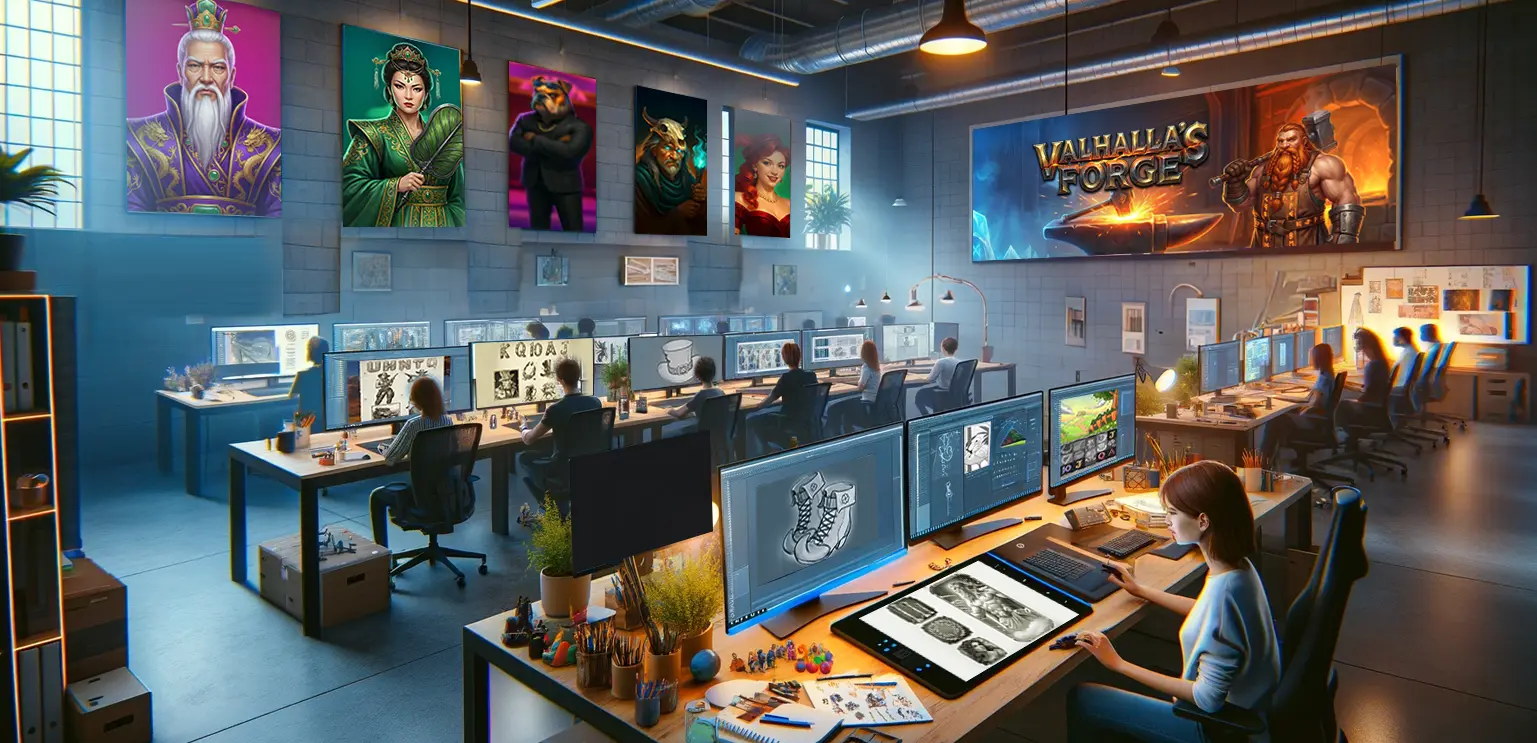
Today, outsourced game art is no longer treated as emergency support—it has become a core production strategy for studios of every size, from indie developers to AAA publishers and casino content providers. The reason is simple: Modern game production demands more content, faster iteration, and greater visual quality than many internal teams can sustainably deliver alone.
For studios scaling output without compromising quality, outsourcing has evolved from a convenience into a competitive advantage.
Industry Context: Why Internal Art Teams Alone Are Struggling to Scale
Game art requirements have grown significantly over the past decade. Games now demand not only higher visual fidelity, but also larger asset volumes, more content updates, platform-specific adaptations, and Live Ops-ready pipelines. This creates pressure across every art discipline:
- Concept art
- Environment production
- Character design
- UI/UX assets
- Animation
- VFX
- Promotional creatives
Simultaneously, hiring and maintaining large in-house teams has become increasingly expensive and operationally complex. For many studios, scaling internal art departments fast enough to meet demand is no longer practical. That is why outsourced art partnerships are becoming standard in modern development pipelines.
Why Outsourced Game Art Has Become a Strategic Production Model
🔹 Access to Specialized Talent Without Permanent Headcount
One of the biggest advantages of outsourcing is immediate access to specialists. A studio may need stylized environment artists for one project, slot symbol designers for another, and cinematic UI animators for a Live Ops campaign. Building full-time internal teams for each niche is often inefficient. Outsourcing allows studios to access specialized expertise only when needed, creating far more flexible production models.
🔹 Faster Production Scaling During High-Demand Periods
Production demands are rarely consistent. Studios often experience spikes during:
- Pre-launch asset creation
- Feature expansions
- Live Ops event production
- Marketing campaign preparation
Outsourcing provides elastic capacity, allowing teams to scale output quickly without long-term hiring commitments. This flexibility is particularly valuable for studios managing multiple titles simultaneously.
🔹 Improved Cost Efficiency Without Sacrificing Quality
While outsourcing is not always "cheap," it is often more cost-efficient than expanding internal teams. Internal hiring includes salaries, benefits, management overhead, software costs, onboarding time, and utilization risk. With outsourcing, studios pay for deliverables and production capacity rather than maintaining permanent overhead. When managed correctly, this creates significantly better cost-to-output efficiency.
How Outsourcing Fits Into Modern Game Art Pipelines
The most effective studios do not treat outsourcing as isolated task delegation. Instead, they integrate external art teams directly into structured production pipelines.
This typically involves: Internal teams defining art direction, production standards, and review frameworks, while external partners execute asset creation within those systems. When properly integrated, outsourced teams function less like vendors and more like production extensions. This is especially common in slot and casino development, where high asset throughput and repeatable production systems make pipeline integration particularly valuable.
Studios such as Gamix Labs often operate within these models by aligning external production closely with internal pipeline standards—allowing partners to contribute production-ready slot symbols, UI systems, animations, and promotional assets without disrupting workflow continuity.
Outsourcing Beyond Cost: Why It Improves Strategic Focus
A major but often overlooked benefit of outsourcing is strategic focus. When internal teams are overloaded with production tasks, they have less time for:
- Core gameplay innovation
- Design iteration
- Technical optimization
- Creative experimentation
By offloading production-heavy art work, studios can keep internal talent focused on high-value creative and strategic tasks. This often improves not just efficiency, but overall product quality.
Common Outsourcing Models Used by Studios
Different studios structure outsourcing differently depending on scale and goals. Some use project-based outsourcing, where external teams deliver complete asset packages for specific milestones. Others adopt embedded team models, where outsourced artists function as long-term extensions of internal departments.
More mature studios often build hybrid pipelines, combining internal art direction with outsourced production execution. The best model depends on project complexity, content volume, and management maturity.
Challenges Studios Face With Outsourced Art
Despite its benefits, outsourcing is not without risks. The most common problem is poor pipeline integration. Studios that treat outsourcing as simple task delegation often encounter:
- Inconsistent quality
- Communication bottlenecks
- Revision overload
- Missed deadlines
Another issue is weak documentation. Without clear style guides, references, and production specs, outsourced teams struggle to match expectations. Outsourcing succeeds only when paired with strong internal production systems.
Best Practices for Successful Game Art Outsourcing
Studios that consistently succeed with outsourced art typically follow several principles. They establish clear visual documentation before production begins, including style guides, references, and technical specifications. They build structured review pipelines with regular feedback loops rather than waiting until final delivery. They also choose partners based on pipeline compatibility and specialization—not simply price. The best outsourcing relationships are built on production fit, not just budget.
Future Trends: Where Outsourced Game Art Is Heading
Game art outsourcing is evolving beyond simple asset production. Studios increasingly expect external partners to contribute at a higher strategic level, including:
- Pipeline consultation
- Technical art support
- UI/UX implementation
- Animation system integration
- Live Ops content planning
Simultaneously, AI-assisted production tools are reshaping how outsourced teams operate, improving iteration speed while increasing demand for high-level artistic oversight. The future of outsourcing will be less about low-cost labor and more about specialized production partnership.
Strategic Takeaways for Studios
The rise of outsourced game art reflects a broader shift in how modern studios scale production. Outsourcing is no longer a fallback option. It is a deliberate operational strategy that allows studios to:
- Increase output without expanding headcount
- Access specialized talent on demand
- Improve production flexibility
- Keep internal teams focused on strategic work
Studios that build strong outsourcing pipelines gain a measurable production advantage over those relying solely on internal teams.
Conclusion
The growing demand for outsourced game art is not a temporary trend—it reflects the realities of modern game production. As games become more content-heavy and development cycles accelerate, studios need scalable production models that maintain quality without creating unsustainable overhead. Outsourced art partnerships provide exactly that.
When integrated properly, they improve efficiency, unlock specialist expertise, and help studios scale faster without sacrificing creative control. For many studios today, outsourcing is no longer just a smart option. It is becoming an essential part of competitive game development.
FAQ: Outsourced Game Art
Why do game studios outsource art?
Studios outsource art to scale production, access specialized talent, and improve efficiency without expanding internal teams.
Is outsourced game art lower quality than in-house art?
Not necessarily. Quality depends on the partner, pipeline integration, and production standards.
What types of game art are commonly outsourced?
Concept art, 2D/3D assets, UI/UX design, animation, VFX, slot symbols, promotional art, and Live Ops content.
Is outsourcing game art cost-effective?
Yes, when managed properly. It reduces overhead and improves cost-to-output efficiency.
What is the biggest challenge in outsourcing game art?
Maintaining consistent quality and pipeline alignment between internal and external teams.
How do studios choose the right art outsourcing partner?
They evaluate specialization, portfolio quality, communication processes, technical compatibility, and production reliability.