Mobile Gaming Innovations Transforming Online Casinos
What began as a platform migration from desktop to smartphone has evolved into a complete transformation of how casino products are designed, monetized, and maintained. Today, mobile is no longer just the dominant access point for players; it is the environment that defines product expectations.
For operators and studios, this means success is no longer determined by game quantity alone. It depends on whether your casino experience is built around the behaviors, constraints, and opportunities of modern mobile users.
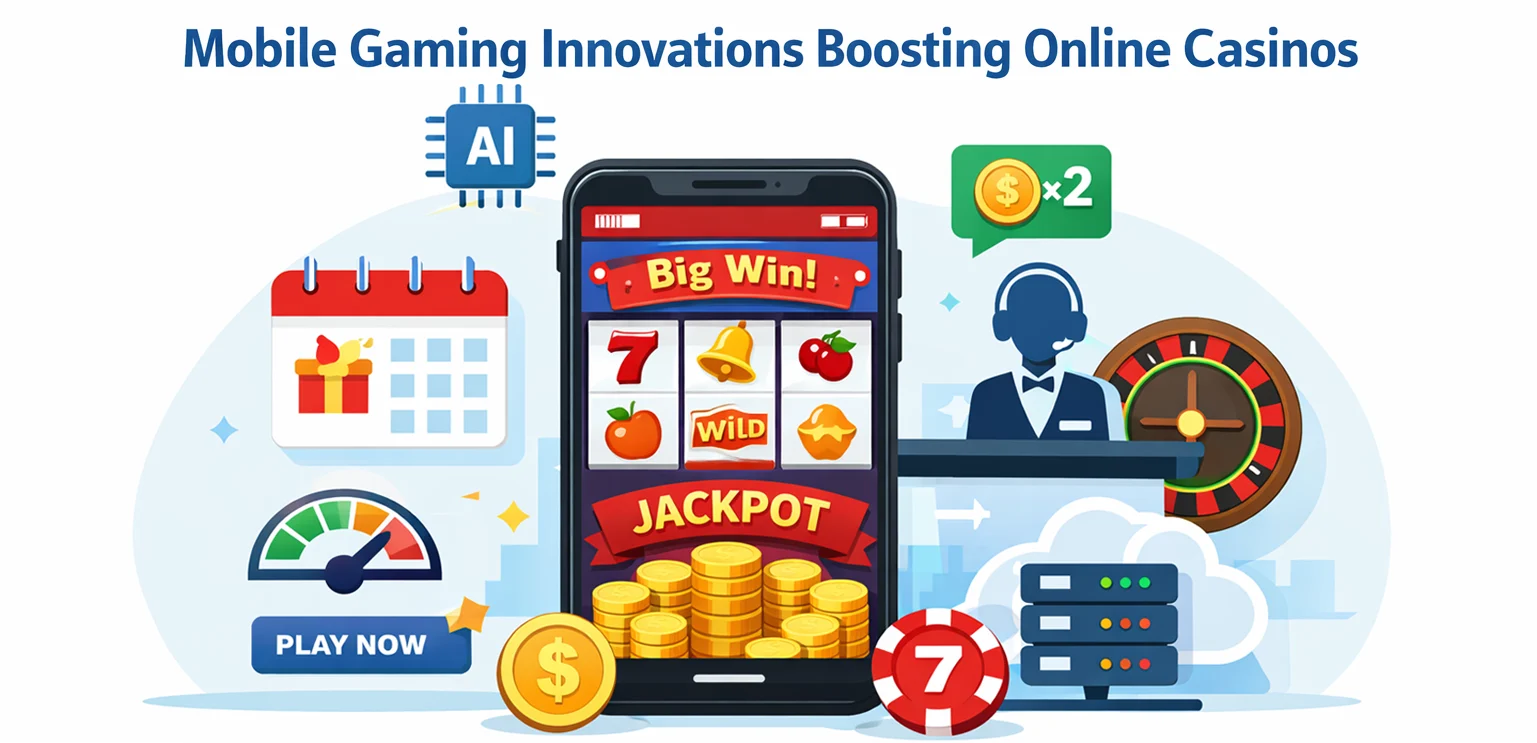
The most successful casino platforms in 2026 are not merely “mobile compatible.” They are mobile-native ecosystems, designed around speed, personalization, retention, and constant iteration.
Industry Context: Why Mobile Innovation Matters More in Casino Than Most Gaming Segments
Mobile innovation affects every game category, but in online casinos its impact is amplified because of how players engage with the product. Casino players typically exhibit:
- Shorter but more frequent sessions
- Low tolerance for friction
- High sensitivity to performance issues
- Rapid switching between competing products
Unlike traditional games, where players may tolerate onboarding or complexity, casino users often decide within seconds whether to continue or leave. That means seemingly small improvements in load speed, UX flow, responsiveness, or personalization can create disproportionate business impact.
This is why many of the most important innovations in online casino today are not flashy features—they are systemic mobile-first design decisions.
Instant Play Architecture Has Changed Acquisition Economics
Perhaps the most commercially impactful innovation in recent years has been the rise of instant-play architecture.
Players increasingly expect games to launch immediately, with no downloads, no waiting, and no visible loading friction. This expectation has transformed how casino products are engineered.
Studios are now building games around lightweight delivery models that prioritize:
- Asset streaming
- Compressed textures
- Modular content loading
- Aggressive optimization of animation/audio payloads
This shift is particularly important because acquisition funnels are directly affected by load times. A delay of even a few seconds between click and gameplay can significantly reduce conversion.
From a production standpoint, this has forced studios to rethink asset creation pipelines. Art, animation, and UI systems must now be designed for performance from the start—not optimized later. Teams working on slot production at scale, including specialists such as Gamix Labs, increasingly build reusable art frameworks and modular symbol systems specifically to support instant-play deployment models.
The result is that build-size strategy is no longer just an engineering concern—it is now a core product and monetization consideration.
Mobile-First UX Design Has Become a Revenue Driver
Many early mobile casino products simply shrank desktop interfaces to fit smaller screens. That approach no longer works. Modern mobile casino UX is built specifically around touch behavior, thumb zones, and rapid one-handed interaction patterns. The best-performing mobile casino games now treat UX as part of monetization strategy rather than visual polish. Every interaction—from bet adjustment to spin confirmation—is optimized to reduce cognitive load and friction.
More importantly, developers have learned that mobile UX influences perceived game quality just as much as art direction. A polished slot with poor touch ergonomics will often under-perform a visually simpler game with cleaner UX execution. This has led to new design standards across the industry, including larger tap targets, contextual UI simplification, and progressive disclosure of advanced controls only when needed.
AI-Driven Personalization Is Reshaping Player Retention
Personalization has become one of the most strategically valuable innovations in mobile casino ecosystems. Because mobile platforms generate rich behavioral data, operators can now tailor aspects of the experience based on player habits, preferences, and session patterns. This includes dynamic adjustments to:
- Bonus surfacing
- Promotional timing
- Content recommendations
- Session pacing
- UI messaging
The most advanced implementations go beyond CRM-style personalization and begin influencing gameplay presentation itself. For example, some systems adjust pacing or reward presentation based on whether a player historically engages in short bursts or long sessions.
However, this area requires careful balance. In regulated environments, personalization must remain compliant and transparent. Poorly implemented systems risk both regulatory scrutiny and player backlash. Still, when done correctly, personalization is one of the strongest retention levers available to mobile casino operators.
Live Ops Has Shifted from Optional Feature to Core Product Strategy
One of the biggest mindset changes in casino development is that games are no longer treated as static releases. They are now live-service products. Seasonal events, limited-time challenges, progressive reward systems, themed content drops, and rotating campaigns have become standard across leading platforms.
What makes this significant is not the presence of events themselves—it is the fact that modern games are now architected around supporting Live Ops from day one. That means developers must build for:
- Remote content updates
- Configuration-driven events
- Backend-triggered promotions
- Modular front-end systems
Without this infrastructure, Live Ops quickly becomes unsustainable.
Studios that still design games as one-time deliverables often struggle when operators request post-launch flexibility. In contrast, teams that roadmap Live Ops support early can scale content updates efficiently without repeated redevelopment.
Enhanced Feedback Systems Have Elevated Player Engagement
Another major innovation is the sophistication of feedback systems within mobile casino games. Winning no longer feels satisfying simply because of payout values. It feels satisfying because of how effectively the game communicates reward.
Modern mobile slots combine animation, timing, audio, particle effects, and pacing into highly refined feedback loops designed to maximize emotional reinforcement.
This is particularly important because in casino products, perceived reward often matters as much as actual reward. A small win presented with premium feedback can feel more meaningful than a larger payout with weak presentation. As a result, studios now design win states and interaction feedback with the same intentionality previously reserved for gameplay mechanics.
Adaptive Audio and Dynamic Presentation Are Reducing Repetition Fatigue
Repetition has always been a structural challenge in slot and casino games. The underlying gameplay loop is intentionally repetitive, which means variation in presentation becomes critical for long-term engagement.
Mobile gaming innovation has introduced more dynamic audio and presentation systems that vary based on context rather than replaying static loops endlessly. Adaptive audio systems now adjust music intensity, trigger layered reward sounds, and vary effects based on win size or gameplay state. Combined with dynamic animation systems, this creates a more responsive and less repetitive player experience.
This trend will accelerate further as AI-assisted audio generation becomes more production-ready.
Cloud Infrastructure Is Enabling Cross-Platform Continuity
Mobile innovation is also transforming backend expectations. Players increasingly expect seamless experiences across devices, whether moving from mobile to tablet or desktop. Cloud-backed systems now allow operators to sync:
- Progress
- Preferences
- Wallet state
- Personalized settings in real time
This infrastructure also enables faster experimentation through remote A/B testing and feature rollouts. For developers, backend flexibility is no longer a platform feature—it is a product requirement.
Which Innovations Actually Matter Most? A Strategic Ranking for Studios
Not all innovations deliver equal business impact. From a production and ROI perspective, the most important innovations for most operators are:
- Instant play and performance optimization, because they improve acquisition and reduce funnel drop-off.
- Live Ops systems, because they increase retention and long-term monetization.
- Personalization systems, because they improve engagement and relevance.
- UX optimization, because it affects every interaction and directly influences player comfort.
Features like AI audio or advanced animation systems can add value, but they generally matter only after foundational systems are strong. This prioritization is where many teams make mistakes—they invest in flashy features before fixing core mobile experience fundamentals.
Common Mistakes Studios Make When Adopting Mobile Casino Innovations
A recurring issue in the market is over engineering. Studios often try to implement every emerging trend at once, resulting in bloated products, unstable systems, and fragmented user experiences.
Another common mistake is adopting innovation without clear business reasoning. Not every product needs AI personalization or advanced adaptive systems. The right innovation depends on the operator’s goals, player base, and platform maturity.
Finally, many teams underestimate the production implications of these systems. Mobile innovation often requires backend, frontend, UX, and content pipeline changes—not just isolated feature additions.
Future Outlook: Where Mobile Casino Innovation Is Heading Next
Looking ahead, the distinction between casino products and broader mobile gaming ecosystems will continue to blur.
We are already seeing casino mechanics increasingly influenced by mainstream mobile game design through:
- Meta progression systems
- Achievement frameworks
- Social layers
- Hybrid monetization models
Simultaneously, AI will play a larger role in personalization, content generation, and operational automation.
The studios best positioned for the future will be those that stop viewing mobile innovation as a checklist of features and start treating it as a product philosophy.
Conclusion
Mobile innovation has transformed online casinos from static content libraries into dynamic, evolving entertainment platforms. The biggest winners in this market are not simply the studios building more games—they are the ones building smarter systems around those games.
For developers, product teams, and casino operators, the strategic question is no longer whether mobile innovation matters. It is which innovations deliver real competitive value—and how quickly your pipeline can support them.
In 2026, mobile-first thinking is no longer an advantage.
It is the baseline.
FAQs
What mobile innovation has had the biggest impact on online casinos?
Instant-play architecture has arguably had the biggest impact because faster loading directly improves acquisition and conversion rates.
Why is Live Ops important for mobile casino games?
Live Ops keeps content fresh through events, promotions, and updates, improving retention and long-term monetization.
How does AI improve mobile casino products?
AI supports personalization, content recommendations, adaptive pacing, and operational automation.
Why is mobile UX critical in online casinos?
Because casino players have low tolerance for friction, and poor UX can quickly reduce session length and retention.
How do adaptive audio systems help casino games?
They reduce repetition fatigue and create more engaging, responsive reward feedback loops.
What should studios prioritize first when modernizing mobile casino products?
Performance optimization, instant play support, UX improvements, and Live Ops infrastructure should come before experimental features.