Slot Game Art Services: How to Choose the Right Studio
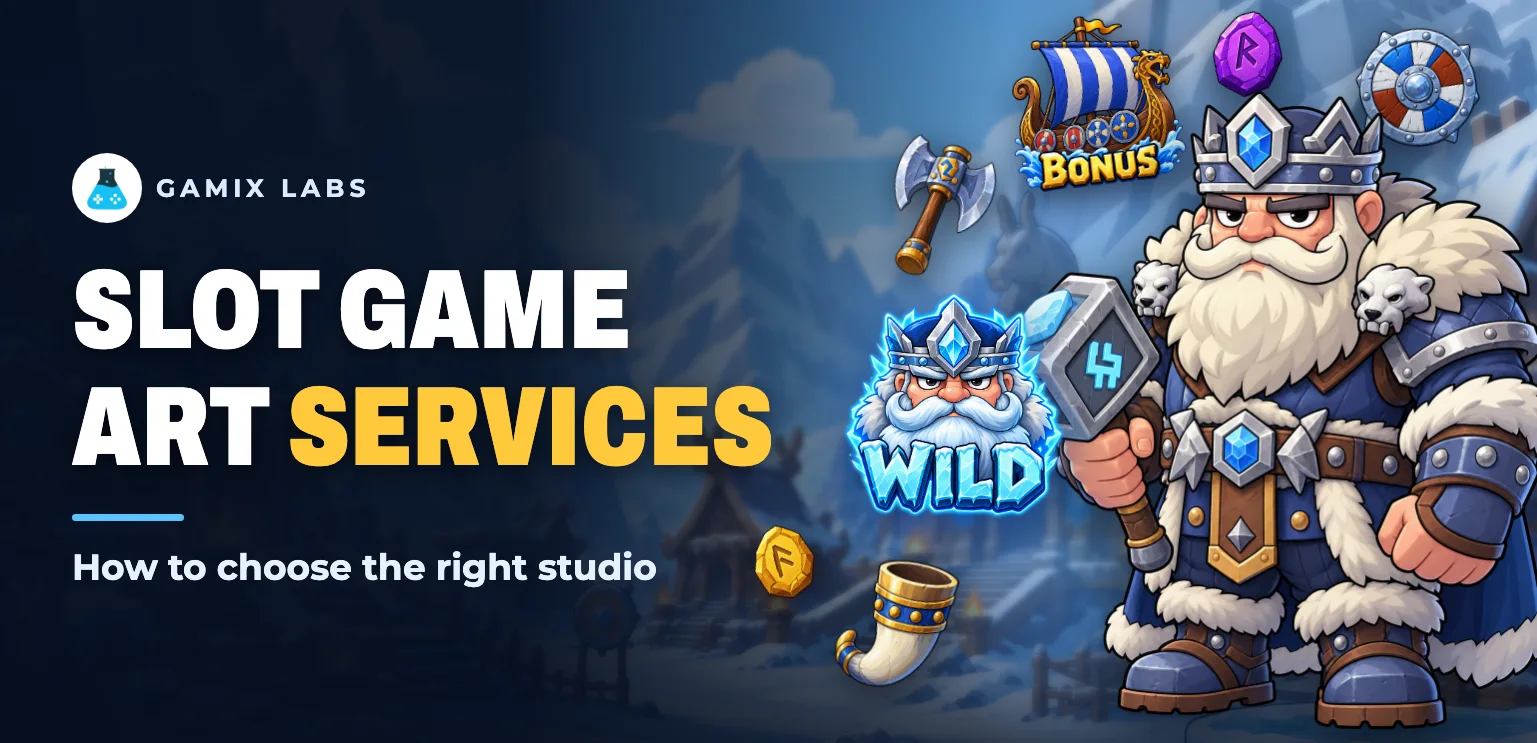
Most slot art looks good in a portfolio. The harder question is whether it still works at phone size, in motion, inside your game. A studio can have a beautiful showreel and still hand you symbols that blur together on a small screen, or layered files your animators can't use.
This guide is for studios and operators hiring outside help for slot art. It covers what the service should include, what to look for in a portfolio, and what to ask before you sign.
What slot game art services should include
A complete art package for one slot usually covers:
- Concept art to agree on the look before production starts
- Characters, if the theme uses them
- Symbols, both high and low pays, plus wilds and scatters
- Backgrounds for the base game and any bonus rounds
- UI such as buttons, the paytable and win displays
- A game logo that holds up in a lobby next to other games
Check two things in any quote. First, is animation included? Art and animation are often priced separately, and static art isn't the finished job. Second, is everything in the list above covered, or only the symbols and background? Missing items tend to surface late, when they are harder to fit in.
Why slot art is its own specialty
General game artists can draw well and still struggle with slots, because a slot has unusual demands.
Symbols have to read instantly. Players scan a grid of small images in a fraction of a second. High pays need to stand out from low pays at a glance, and each symbol needs a shape you can recognize without the detail.
Everything is seen thousands of times. A symbol that looks charming in the first ten spins can feel busy by the thousandth. Strong slot art stays clear and easy on the eye through long sessions.
Art has to be built to move. A character drawn as one flat image can't be animated properly. For Spine, it has to be separated into parts, with the hidden areas painted in. If the artist doesn't plan for this, your animator pays for it later.
File size matters. HTML5 slots have to load quickly on mid-range phones. Oversized textures slow the first load and hurt how smoothly the game runs. We cover this in more depth in creating performance-optimized art for mobile casino games.
What to check in a portfolio
Don't judge a slot art portfolio from large, polished images. Look for the following instead.
- Full reel screens. A single hero character tells you little. You want to see symbols together on a grid, with the UI around them.
- Work at phone size. Open the images on your phone. Can you tell the symbols apart straight away?
- Playable demos. A demo shows how the art behaves in a real game, with its timing, its win moments and its loading speed.
- Art in motion. Ask for animated symbols and characters, including big wins and bonus moments. Then you can judge the art and the animation together.
- Range of styles. If your next game has a different theme, can they match it? Look for different styles, not one house look. Our post on building a cohesive art style for multi-themed slot games explains what keeps a series consistent across themes.
Client confidentiality is normal in this industry, so a studio may not be able to show everything or name everyone. They should still have their own work that you can play and look at closely.
Questions to ask before you hire
Who will work on my game? Ask whether the artists in the portfolio are the ones who will do your project, and who is responsible for keeping the style consistent.
What files do I get? You should receive layered source files, not just exported images. If Spine animation is part of the job, ask for the Spine project files too. Without source files, every later change or reskin has to go back to the same studio.
How many revision rounds are included? Get this in writing, along with what counts as a revision and what counts as new work.
How do you hand over to developers? Ask which engines they have worked with, such as Cocos Creator or PixiJS, and how they prepare files for them. A clean handover avoids a lot of back and forth at the end of the project.
Who owns the art? Read the contract. You should own the art once you have paid in full, with nothing stopping you from reusing it or moving to another team.
Can we start small? A small paid sample, such as one character or a few symbols on your game, tells you more than any portfolio. You see the real quality, communication and turnaround before you commit to a full game.
Plan the schedule around approvals
Art schedules usually slip because of waiting, not drawing. Concepts sit with stakeholders, feedback arrives from several people at once, and direction changes after production has started.
Agree on one person who gives final approval, and lock the concept and style before symbols go into production. Changing direction at the concept stage is far cheaper than repainting finished symbols. For a stage-by-stage view, see our slot game art production timeline.
A quick checklist
Before you sign with a slot art studio, make sure you can answer yes to each of these:
- I have seen their symbols on a full reel screen, at phone size.
- I have played a demo of a game they worked on.
- I have seen their art in motion.
- I know exactly which art is in the quote, and whether animation is included.
- I know which source files I will receive.
- The number of revision rounds is in writing.
- The contract says I own the art on final payment.
- We have agreed who approves the work on my side.
Where Gamix Labs fits
Gamix Labs is a slot game studio specializing in 2D slot art, Spine animation and VFX for HTML5 slots built in Cocos Creator and PixiJS. Studios and operators hire us for the whole visual package or one part of it: concept art, characters, symbols, backgrounds, UI and logos, with Spine animation and VFX when the art needs to move. Art for one game typically takes 3 to 4 weeks, and on final payment you own 100% of the source code and art.
If you want to judge the work for yourself, see our slot art, then tell us about your game. We can start with a small paid sample on your own game.