Video Games & Chance-Based Mechanics: Opportunity or Risk
Video games are increasingly adopting mechanics once associated with casino-style experiences. From loot boxes and mystery rewards to spin-driven mini-games, the boundaries between traditional gameplay and risk-based engagement are becoming less distinct.
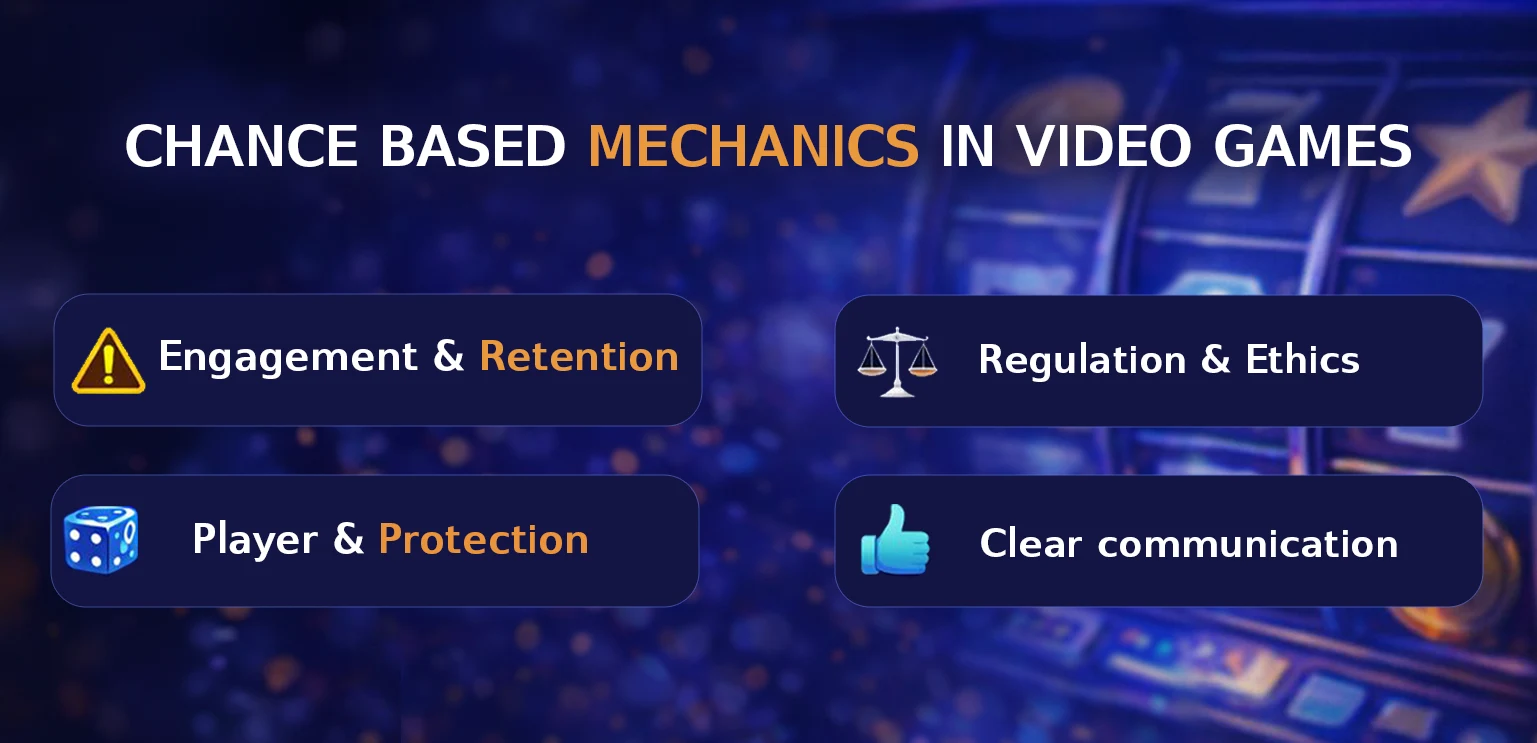
This evolution introduces powerful retention and monetization potential — but it also raises questions around player well-being, regulation, and long-term trust.
At Gamix Labs, this space is approached with a responsibility-first mindset. The goal is to design experiences that deliver excitement while maintaining transparency, control, and fairness for players.
This article explores how these systems are entering modern games, the opportunities they create, the challenges they bring, and how they can be implemented in a player-respectful way.
How Modern Games Are Adopting Chance-Driven Features
🔹 Loot Boxes and Mystery Rewards
Players unlock digital items without knowing the exact outcome in advance. This creates anticipation and engagement, but it also requires clear communication and balanced design.
🔹 Casinos-Style Mini-Games in Virtual Words
Open-world and multiplayer titles now include spin wheels, card tables, or dice-based activities using virtual currencies. These features add variety and social interaction when designed responsibly.
🔹 Competitive Entry Events and Prize Pools
Tournament systems often involve entry tokens and tiered rewards, adding a risk-and-reward layer to competitive play.
🔹 Streaming High-Risk Gameplay Content
Content creators showcase high-stakes reward systems alongside standard gameplay, blending entertainment with spectacle and influencing player perception.
Why This Convergence Is Reshape The Industry
🔹 Strong Engagement Loops
Randomized rewards, progression spikes, and surprise outcomes create powerful return triggers when balanced correctly.
🔹 Expended Digital Economies
Hybrid monetization models — cosmetics, progression passes, and optional reward systems — increase lifetime value without interrupting gameplay flow.
🔹 Cross-Platform Value Systems
Tradeable digital items and ecosystem-wide inventories allow players to carry progression across multiple experiences.
The Challenges: A System That Requires Careful Design
🔹 Compulsive Usage Risks
Uncontrolled reward loops can encourage unhealthy play patterns, particularly among younger audiences.
🔹 Regulatory Pressure
Several regions are introducing rules around paid randomized systems, pushing developers toward greater transparency and control features.
🔹 Trust and Brand Reputation
Players are more aware than ever of hidden mechanics. Clear communication and fair systems directly impact long-term loyalty.
Where Industry Discussions Fall Short
Many discussions focus only on surface features. The deeper design layer — where player protection and progression systems meet — is often ignored.
🔹 Adaptive Player-Safety Systems
Behavior-based limits, spending alerts, and cooldown triggers can reduce risk without breaking immersion.
🔹 Clear Probability Communication
Showing outcome chances in a simple, visible format builds confidence and meets evolving compliance standards.
🔹 Deterministic Progression Alternatives
Time-based unlocks, skill-driven rewards, and guaranteed milestone items provide sustainable monetization without relying entirely on randomness.
Designing Responsible Hybrid Systems
🔹 Visible Outcome Probabilities
Simple, upfront percentage displays improve clarity and player trust.
🔹 Session Limits and Cooldowns
Soft caps and break reminders help maintain healthy play patterns.
🔹 Earned Progression Balance
Daily goals, achievements, and level-based unlocks ensure forward movement without constant spending.
🔹 Parental and Self-Control Tools
Optional access restrictions and spending thresholds support safer participation for younger audiences.
A Responsibility-First Development Approach
At Gamix Labs, hybrid systems are built around transparency and player choice:
- Clearly defined mechanics and outcomes
- Progression-first design philosophy
- Optional reward layers
- Real-time behavioral feedback indicators
- Compliance-ready architecture
This creates experiences that are engaging, scalable, and trusted.
Retention and Revenue — Without Player Friction
Story progression, cosmetic upgrades, and milestone-based rewards create monetization paths that feel earned rather than forced.
When players stay because they want to — not because they feel pressured — long-term value naturally follows.
UX Principles for Player-Respectful Systems
- Visible progress toward the next unlock
- Optional upgrades that never block core gameplay
- Simple explanations of how systems work
- Timely return prompts for new content drops
These elements support retention while preserving player autonomy.
Conclusion: Designing for the Future of Hybrid Gameplay
The blending of video game progression with chance-driven mechanics is reshaping interactive entertainment. Handled carelessly, it can damage trust. Designed responsibly, it creates deeper engagement, stronger economies, and long-term player loyalty.
The studios that succeed will be the ones that balance excitement with clarity, progression with protection, and monetization with respect.
That is the future of sustainable game design.
Frequently Asked Questions
Are loot boxes considered regulated mechanics?
This depends on regional policies. Some territories require probability disclosure or restrict paid randomized rewards.
How can developers stay compliant?
By using transparent odds, earned progression paths, spending controls, and non-cash-out reward structures.
Are parental controls necessary?
Yes. Age gates, play-time reminders, and optional spending limits are becoming standard expectations.
Can games monetize without heavy randomness?
Absolutely. Skill-based systems, milestone rewards, and cosmetic progression models are highly effective.
Can regulations impact live games?
Yes. Building compliance-ready systems early prevents costly redesigns later.
What is the key to player trust in hybrid systems?
Transparency, optional participation, and visible control tools.