Game Animation Fundamentals Every Developer Should Master
Animation is one of the most influential elements in game development, yet it is often misunderstood. Many people associate animation solely with character movement, but in reality, it shapes nearly every aspect of the player's experience. From a character's walk cycle and combat actions to user interface transitions, environmental effects, and reward sequences, animation provides the visual feedback that makes a game feel responsive and alive.
Players may not consciously analyze animation quality, but they immediately notice when it feels unnatural. Delayed responses, stiff character movements, or inconsistent transitions can reduce immersion, making even visually impressive games feel unpolished.
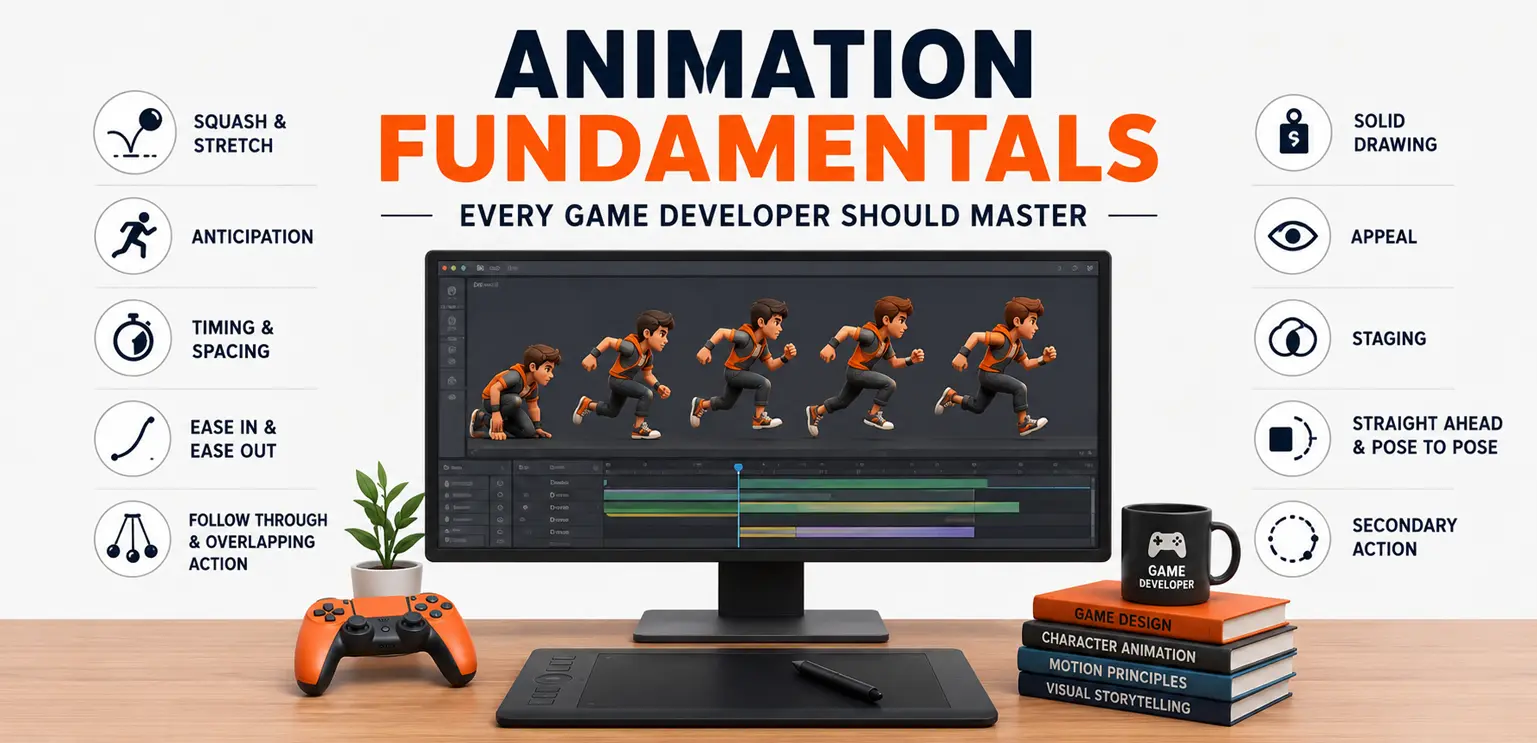
For modern game studios, animation is no longer treated as a finishing touch added after development. It is integrated into production from the earliest stages, influencing gameplay mechanics, visual storytelling, user experience, and technical performance. Understanding animation fundamentals enables developers, designers, artists, and technical teams to build games that are more engaging, intuitive, and enjoyable to play.
Why Animation Matters in Game Development
Every interaction in a game communicates information to the player. Animation transforms those interactions into meaningful visual experiences by providing feedback, reinforcing gameplay mechanics, and guiding player attention. Without animation, games often feel static and disconnected. Buttons provide no response, characters appear lifeless, rewards lose their excitement, and gameplay lacks rhythm. Well-designed animation improves:
- Player immersion
- Gameplay responsiveness
- Visual storytelling
- Combat feedback
- User interface interactions
- Emotional engagement
- Overall production quality
Whether developing a casual mobile title, an RPG, a multiplayer shooter, or a casino game, animation directly influences how players perceive the game's quality.
Understanding the 12 Principles of Animation
Most professional animation techniques are built upon the 12 Principles of Animation, originally developed by Disney animators Frank Thomas and Ollie Johnston. Although these principles were created for traditional animation, they remain highly relevant in modern game development. Rather than applying every principle equally, game developers adapt them based on gameplay requirements and technical constraints.
Squash and Stretch
Squash and stretch give objects and characters a sense of weight, flexibility, and impact. In games, this principle makes movements such as jumps, landings, attacks, and slot symbol animations feel more dynamic and believable.
Anticipation
Anticipation prepares players for an upcoming action by showing a small movement before the main animation begins. Whether it is a character preparing to attack or a bonus symbol about to activate, anticipation improves clarity and player responsiveness.
Staging
Staging directs the player's attention toward the most important action on the screen. By using composition, lighting, camera angles, and motion effectively, developers can communicate gameplay events more clearly without overwhelming players.
Straight Ahead Action and Pose-to-Pose
These are two different animation techniques used throughout game development. Straight Ahead Action creates fluid, natural motion by animating frame by frame, while Pose-to-Pose starts with key poses first, making it easier to maintain consistency and precise timing.
Follow Through and Overlapping Action
Follow Through and Overlapping Action add realism by allowing secondary elements to continue moving after the main action has stopped. Hair, clothing, weapons, and accessories naturally settle after movement, making animations feel smoother and more lifelike.
Slow In and Slow Out
Objects rarely start or stop moving at full speed, and this principle reflects that natural behavior. Gradual acceleration and deceleration create smoother transitions that improve the overall feel of character movement, UI animations, and visual effects.
Arc
Most natural movements follow curved paths rather than perfectly straight lines. Applying arcs to character actions, camera movement, and object animations creates motion that feels more fluid and visually pleasing.
Secondary Action
Secondary Action adds supporting movements that enhance the primary animation without distracting from it. Small details like facial expressions, cloth movement, or glowing effects give characters and game objects more personality and depth.
Timing
Timing controls the speed and rhythm of an animation, influencing how players perceive weight, power, and responsiveness. Well-balanced timing ensures that gameplay feels smooth while making important actions more impactful.
Exaggeration
Exaggeration enhances movement by emphasizing key actions beyond realistic limits without making them feel unnatural. It is commonly used in attacks, special abilities, win celebrations, and visual effects to increase excitement and improve player feedback.
Solid Drawing
Solid Drawing focuses on creating believable proportions, balance, perspective, and volume in animated assets. Even in modern 2D and 3D game development, a strong understanding of form helps produce more convincing animations.
Appeal
Appeal refers to the visual charm and readability of animated characters, objects, and interactions. Strong appeal makes animations more memorable, helping players connect with the game's characters, environments, and overall visual style.
Animation Supports Gameplay, Not Just Visuals
One common misconception is that animation exists purely for aesthetics. In reality, animation is a gameplay communication tool. Players rely on animation to understand:
- Attack timing
- Movement direction
- Object interaction
- Ability activation
- Rewards
- Game state changes
Good animation improves decision-making because it communicates information without requiring additional text or tutorials.
Character Animation Fundamentals
Character animation remains one of the most recognizable areas of game production. Professional pipelines focus on creating movements that feel responsive rather than simply realistic. Developers should understand:
- Idle animations
- Walk cycles
- Run cycles
- Jump transitions
- Attack sequences
- Hit reactions
- Death animations
Consistency between these animations creates smoother gameplay while reducing visual distractions.
Environmental Animation Creates Living Worlds
Modern games rely heavily on environmental animation to make worlds feel dynamic. Small background movements often have a greater impact than players realize. Examples include:
- Moving foliage
- Flowing water
- Animated lighting
- Floating particles
- Weather effects
- Interactive props
These subtle animations contribute significantly to immersion while supporting environmental storytelling.
UI Animation Improves Player Experience
Animation is equally important outside gameplay. Menus, inventory systems, loading screens, and notifications all benefit from thoughtful motion design. Effective UI animation helps players:
- Understand navigation
- Recognize interactions
- Focus attention
- Receive feedback
- Maintain engagement
Simple transitions often outperform overly elaborate interface effects.
Animation in Casino Game Development
Casino games rely heavily on animation because visual feedback directly affects player engagement. Animation is commonly used for:
- Symbol reveals
- Winning combinations
- Reel transitions
- Bonus activations
- Jackpot celebrations
- Coin effects
- Interactive UI elements
The objective is not constant movement but purposeful animation that highlights important gameplay moments. Successful slot games balance excitement with readability, ensuring animations enhance rather than distract from gameplay.
Balancing Creativity with Performance
Beautiful animation is valuable only if it performs efficiently. Game developers must consider technical limitations throughout production. Key optimization areas include:
- Frame count
- Texture memory
- Animation compression
- GPU performance
- Mobile optimization
- Asset reuse
Optimization becomes especially important for mobile, HTML5, and browser-based games where hardware limitations are more significant.
Building an Efficient Animation Pipeline
Animation quality depends as much on workflow as artistic skill. Professional studios establish structured pipelines covering concept creation, production, review, optimization, and implementation. An effective pipeline typically includes:
- Animation planning
- Asset preparation
- Version control
- Technical validation
- Review cycles
- Engine integration
Clear production standards reduce revisions while improving collaboration between artists, animators, and developers.
The Growing Role of AI in Animation
Artificial Intelligence is increasingly supporting animation production. Rather than replacing artists, AI accelerates repetitive workflows and assists with experimentation. Studios now use AI for:
- Motion exploration
- Pose generation
- Asset organization
- Lip-sync assistance
- Animation cleanup
- Workflow automation
Human animators remain responsible for storytelling, timing, style, and emotional impact. The strongest production pipelines combine AI efficiency with creative expertise.
Why Studios Outsource Animation Production
As games become larger and more content-rich, many studios rely on specialized outsourcing partners to expand production capacity. Animation outsourcing commonly includes:
- Character animation
- Slot symbol animation
- UI motion graphics
- Visual effects
- Cinematic sequences
- Promotional animations
Studios such as Gamix Labs integrate seamlessly into existing production pipelines, delivering engine-ready animation assets while maintaining artistic consistency and technical quality.
Common Animation Mistakes Developers Should Avoid
Even experienced teams can reduce animation quality by overlooking fundamental principles. Some of the most common issues include:
- Ignoring anticipation
- Inconsistent timing
- Overusing visual effects
- Poor transition blending
- Weak optimization
- Lack of player feedback
Animation should always support gameplay rather than compete with it.
Future Trends in Game Animation
Animation technology continues evolving alongside modern game engines. Several trends are shaping the future of production:
- AI-assisted animation
- Motion matching
- Procedural animation
- Real-time physics integration
- Cross-platform animation systems
- Cloud-based production workflows
Although tools will continue improving, the core principles of animation will remain essential for creating engaging player experiences.
Strategic Takeaways
Successful animation is built on timeless principles rather than complex software. The most important lessons for developers include:
- Master animation fundamentals before advanced tools
- Use animation to communicate gameplay
- Balance artistic quality with technical performance
- Build structured production pipelines
- Optimize throughout development
- Combine AI with human creativity
- Design animations that improve the player experience
Studios that consistently apply these principles create games that feel more polished, responsive, and enjoyable across every platform.
Conclusion
Animation is one of the defining factors that separates an average game from an exceptional one. It influences how players interact with mechanics, understand gameplay, and connect emotionally with the overall experience.
Whether designing character movement, environmental effects, UI transitions, or casino game animations, mastering the fundamentals of timing, anticipation, motion, and visual feedback provides a strong foundation for long-term success.
As development tools continue to evolve through AI, procedural systems, and advanced game engines, the technology behind animation will change. However, the principles that create believable, engaging movement will remain constant. Developers who invest in these fundamentals will be better equipped to produce games that not only look impressive but also feel satisfying to play.
FAQ: Game Animation Fundamentals
Why are animation fundamentals important in game development?
They help create responsive gameplay, improve visual communication, and make interactions feel natural and engaging.
What are the most important animation principles for games?
Timing, anticipation, squash and stretch, ease in/ease out, and follow-through are among the most widely used principles.
Does every game need complex animations?
No. Effective animation is about clarity and purpose. Simple, well-timed animations often provide a better player experience than overly complex effects.
How does animation affect game performance?
Poorly optimized animations can increase memory usage and reduce frame rates, especially on mobile and browser-based games.
Can AI replace game animators?
No. AI assists with repetitive tasks and workflow automation, but creative direction, storytelling, and high-quality animation still depend on skilled professionals.
Why do studios outsource animation?
Outsourcing gives studios access to specialized animation expertise, scalable production capacity, and faster asset delivery without expanding internal teams.