GLI Certification Explained: Why It Matters for Slot Game Development
Developing a successful slot game involves much more than creating attractive visuals, engaging gameplay, and balanced mathematics. For studios targeting regulated gaming markets, compliance is one of the most important parts of the development process. Without meeting the required technical and regulatory standards, even a well-designed slot game cannot be legally deployed in many jurisdictions.
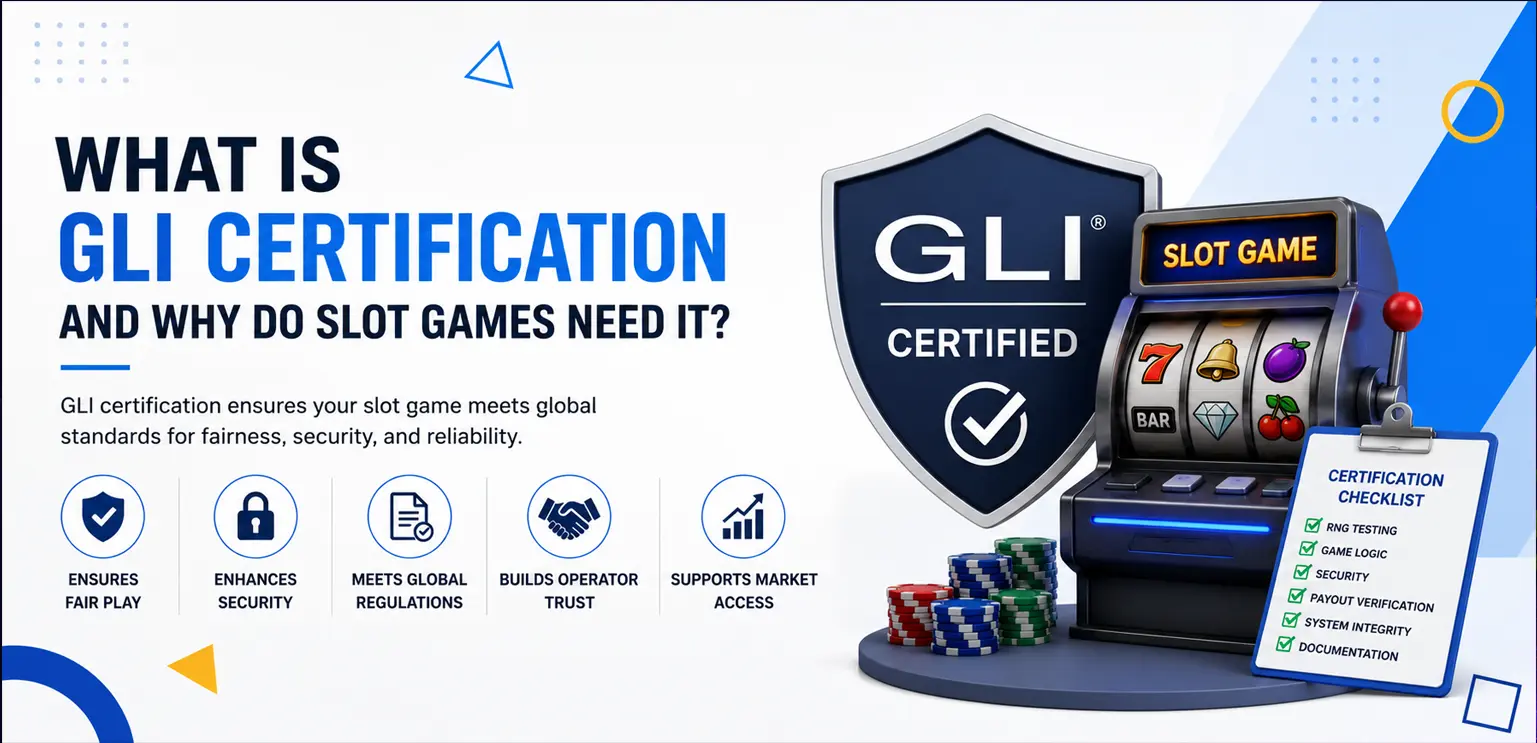
Among the most recognized compliance standards in the gaming industry is GLI Certification. Gaming operators, platform providers, and regulators around the world rely on GLI testing to verify that games function fairly, securely, and reliably. While certification requirements vary depending on the target market, GLI standards have become an industry benchmark for quality and regulatory readiness.
For developers, understanding GLI certification is not just about passing a test at the end of production. It is about building games that are compliant from the beginning. Designing with certification in mind reduces costly revisions, accelerates approvals, and increases the chances of launching successfully in regulated markets.
This guide explains what GLI certification is, why it matters, how the certification process works, and what developers should consider throughout the game development lifecycle.
What Is GLI Certification?
GLI (Gaming Laboratories International) is an independent testing and certification organization that evaluates gaming systems, software, and related technologies against regulatory and technical standards.
Rather than approving gameplay quality or entertainment value, GLI focuses on verifying that gaming products operate as intended, comply with applicable regulations, and meet specific technical requirements established by gaming authorities. Depending on the jurisdiction and project, GLI may evaluate areas such as:
- Game logic
- Random number generation (RNG)
- Security
- System integrity
- Communication protocols
- Data handling
- Reporting functions
- Software stability
The specific requirements vary by market, but the overall objective is consistent: ensuring games operate fairly and reliably.
Why GLI Certification Matters
For studios entering regulated gaming markets, certification is often a prerequisite for commercial deployment. A certified game provides confidence to:
- Gaming regulators
- Platform providers
- Casino operators
- Business partners
- End users
Certification demonstrates that the software has undergone independent technical evaluation and meets the applicable regulatory requirements for its intended market. Without appropriate certification, a game may not be accepted by certain operators or licensed jurisdictions.
Why Slot Games Require Certification
Slot games combine multiple technical systems that must function consistently throughout every gameplay session. These include:
- Random outcome generation
- Game logic
- Bonus features
- Mathematical models
- Credit calculations
- Player interaction
- Event logging
Because these systems directly affect gameplay outcomes and financial transactions, regulators require independent verification that they operate according to approved specifications. Certification helps reduce operational risks while promoting fairness and transparency.
GLI Certification Is More Than RNG Testing
Many people assume GLI certification focuses only on Random Number Generators. In reality, certification reviews much broader aspects of the software. Typical evaluation areas include:
Software architecture: GLI reviews how the game's software is structured to ensure it operates consistently, securely, and according to regulatory requirements.
Random Number Generator (RNG): The randomness system is examined to verify that game outcomes are unpredictable, statistically sound, and aligned with the approved mathematical model.
Error handling: The game should respond safely to unexpected situations, such as interruptions or invalid inputs, without compromising fairness or stability.
Security controls: Security measures help protect the game from unauthorized modifications, data manipulation, and other risks that could affect integrity.
Communication protocols: If the game exchanges information with servers or gaming platforms, these communications must be reliable, accurate, and secure.
System logging: Proper logging allows operators and regulators to review important game events, diagnose issues, and maintain audit trails when required.
Every component that influences compliance may be reviewed during the certification process.
Designing for Compliance from Day One
One of the biggest misconceptions is that certification begins after development is complete. Experienced studios instead build compliance into the production pipeline from the earliest planning stages. This includes establishing:
- Secure development practices
- Structured documentation
- Version control
- Controlled configuration management
- Consistent testing procedures
- Clear technical specifications
Early preparation significantly reduces the risk of delays during certification.
Documentation Plays a Critical Role
Technical documentation is an essential part of regulatory compliance. Certification teams often require detailed information explaining how systems function and how software has been developed. Documentation may include:
- Functional specifications
- Mathematical documentation
- Software architecture
- Version history
- Test reports
- Configuration details
Well-maintained documentation supports both certification and long-term product maintenance.
The Importance of Quality Assurance
Internal quality assurance should identify potential compliance issues long before external testing begins. Professional QA typically validates:
- Feature functionality
- Mathematical accuracy
- UI behavior
- Error recovery
- Platform compatibility
- Stability under different conditions
A strong QA process helps minimize issues that could delay certification reviews.
Security Is a Core Requirement
Modern gaming platforms process sensitive operational and player-related data. As a result, security is a major focus during development. Studios commonly implement:
- Secure authentication
- Controlled access
- Data validation
- Encryption where applicable
- Audit logging
- Version protection
Building security into development rather than adding it later creates a more reliable production process.
Certification Supports Business Growth
Beyond regulatory requirements, certification can create commercial opportunities. Games developed according to recognized compliance standards are generally easier to evaluate by platform providers and operators entering regulated markets. Benefits include:
Improved market readiness: Building compliance into the development process from the start helps studios prepare games for regulated markets more efficiently while minimizing last-minute changes and certification delays.
Greater operator confidence: Operators are more comfortable integrating games that have been independently evaluated against recognized technical standards.
Simplified technical reviews: Well-prepared documentation and compliant development practices make the review process smoother for both testing laboratories and platform providers.
Reduced deployment risks: Identifying compliance issues earlier in production minimizes delays during launch and helps avoid unexpected release setbacks.
Certification should therefore be viewed as a strategic investment rather than simply a regulatory obligation.
How Production Pipelines Support Certification
Well-organized production pipelines simplify compliance preparation. Professional development teams establish workflows covering:
- Planning
- Development
- Documentation
- Internal reviews
- Quality assurance
- Technical validation
- Release management
These structured processes improve consistency while reducing production risks throughout the project lifecycle.
The Role of Technical Teams
Compliance depends on collaboration between multiple disciplines. Developers, mathematicians, technical artists, QA engineers, producers, DevOps specialists, and compliance teams all contribute to preparing games for certification. Successful collaboration ensures technical requirements are addressed before formal testing begins.
How AI Is Improving Compliance Workflows
Artificial Intelligence is beginning to assist compliance-focused development by automating repetitive production tasks. Studios increasingly use AI for:
Documentation support: AI can help organize technical documentation, summarize changes, and improve consistency across development records.
Code analysis: AI-assisted tools can identify potential issues, suggest improvements, and help developers review code more efficiently.
Regression testing: Automated testing tools can quickly detect whether recent updates have unintentionally affected existing features.
Workflow automation: AI reduces repetitive production tasks, allowing development teams to focus more on design, engineering, and quality improvements.
Although AI improves efficiency, regulatory reviews and compliance decisions continue to depend on human expertise and independent testing.
Why Many Studios Work with External Development Partners
Certification-ready development often requires specialized expertise that smaller studios may not possess internally. External development partners can assist with:
- Game engineering
- Mathematics implementation
- Technical documentation
- QA support
- Art production
- Engine integration
- Compliance-oriented development practices
Studios such as Gamix Labs help clients build GLI Certification ready slot games using structured workflows, scalable development processes, and technical standards that support certification and regulated market deployment.
Common Mistakes That Delay Certification
Many certification challenges result from avoidable production issues rather than complex technical failures. Some common mistakes include:
- Incomplete documentation
- Weak version control
- Late compliance planning
- Inconsistent testing
- Poor configuration management
- Limited internal QA
- Unclear technical specifications
Addressing these areas early reduces project delays and minimizes costly revisions.
Future Trends in Compliance
The regulatory landscape continues evolving alongside technology. Several trends are shaping future compliance processes:
- Automated compliance testing
- AI-assisted documentation
- Cloud-native gaming platforms
- Enhanced cybersecurity requirements
- Continuous monitoring
- Faster certification workflows
Studios that integrate compliance into everyday development will be better prepared for future regulatory expectations.
Strategic Takeaways
GLI certification is not simply a final approval step—it is the result of disciplined development practices followed throughout production. The most important principles include:
- Plan for compliance early
- Maintain detailed documentation
- Build secure development workflows
- Integrate QA throughout production
- Keep version control organized
- Encourage collaboration across technical teams
- Use automation to improve efficiency
- Treat certification as part of long-term product quality
Studios that follow these practices improve both regulatory readiness and overall software quality.
Conclusion
GLI certification has become an important benchmark for slot game development in regulated gaming markets. While certification requirements differ across jurisdictions, the underlying objective remains consistent: ensuring games operate fairly, securely, and reliably.
Developers that consider compliance from the earliest stages of planning are better positioned to reduce production delays, simplify certification, and deliver games that meet operator and regulatory expectations. Strong documentation, structured workflows, continuous quality assurance, and secure development practices all contribute to a smoother certification journey.
Ultimately, GLI certification is more than a regulatory requirement—it reflects a commitment to quality, reliability, and professional game development standards.
FAQ: GLI Certification
What is GLI certification?
GLI certification is an independent testing and evaluation process that verifies gaming software meets applicable technical and regulatory standards for specific jurisdictions.
Does every slot game require GLI certification?
Not necessarily. Certification requirements depend on the jurisdiction, operator, and regulatory framework where the game will be offered.
Does GLI certification only test RNGs?
No. While RNG testing is important, evaluations may also include software integrity, security, game logic, documentation, communication protocols, and other compliance-related components.
When should developers prepare for certification?
The best approach is to consider compliance from the beginning of development rather than waiting until production is complete.
Can AI help with compliance?
AI can assist with documentation, testing, and workflow automation, but compliance decisions and certifications remain the responsibility of qualified experts and independent testing organizations.
Why is documentation important for certification?
Accurate documentation helps explain how the software functions, supports regulatory reviews, and simplifies maintenance throughout the product lifecycle.